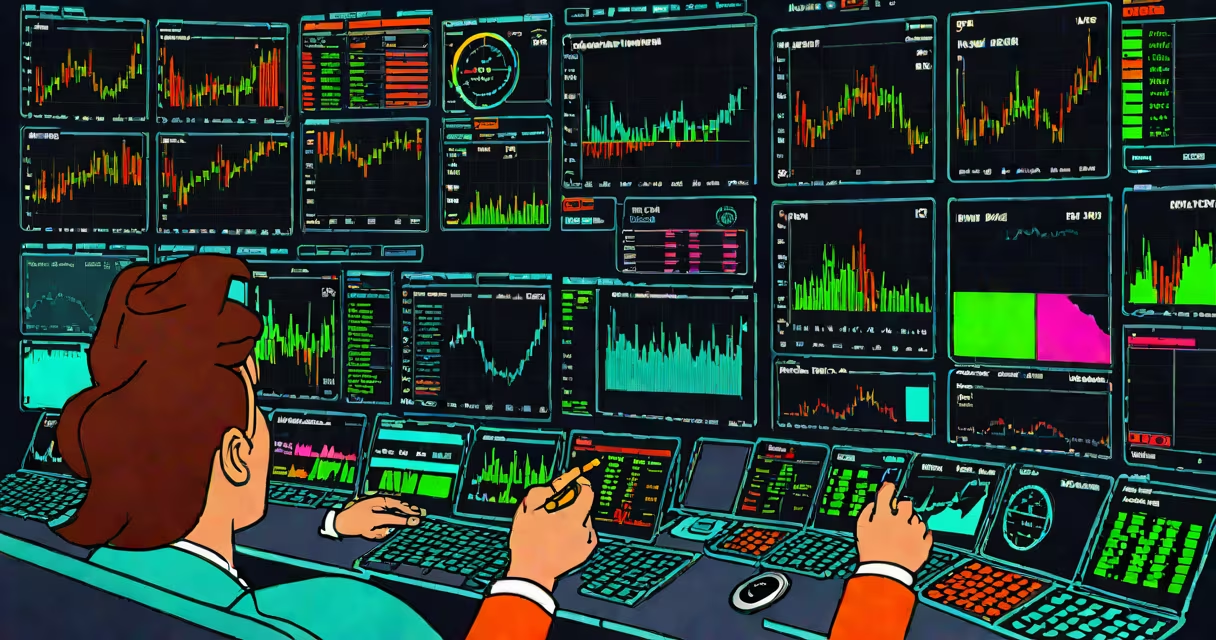
A fake trading game is a simulated investment environment where users trade stocks, cryptocurrencies, or other assets using virtual money. It mimics real market conditions without financial risk, allowing players to test strategies, learn market behavior, and build confidence before using real capital.
These games replicate live market data through delayed feeds or historical datasets. Users place buy and sell orders, monitor price movements, and track portfolio performance-all within a controlled digital space. Unlike real trading, no money changes hands, and losses don't affect bank accounts or credit scores.
Platforms like Investopedia's Stock Simulator, Wall Street Survivor, and TradingSim offer free access to fake trading games. They're used by students, beginners, and even experienced investors testing new approaches. The core purpose is education, not profit.
Each fake trading game runs on a server that pulls real-time or near-real-time market data. The system updates prices based on actual exchanges, but with a delay-typically 15 to 20 minutes-to prevent arbitrage and ensure fairness. Some platforms use historical data to simulate past market events.
Users start with a virtual balance-commonly $100,000 or $500,000-and select assets to buy or sell. Orders execute instantly, and portfolios update in real time. The interface resembles a professional trading platform, complete with candlestick charts, volume indicators, and news feeds.
For example, in Investopedia's simulator, a user can enter a limit order to buy Apple stock at $175. If the market reaches that price, the order fills. The user sees their position grow or shrink based on the simulated price movement. There's no fee, no margin call, and no liquidation-just learning.
Not all fake trading games are the same. They differ in realism, data quality, and educational focus. Here's a breakdown:
| Type | Data Source | Best For | Example Platform |
|---|---|---|---|
| Real-time delayed | Actual market prices with 15-20 min lag | Learning market timing and emotional control | Investopedia Stock Simulator |
| Historical replay | Price data from past dates (e.g., 2008 crash) | Studying market cycles and crisis behavior | TradingSim's "Market Crash" mode |
| Custom scenario | User-defined rules, events, or asset pools | Testing specific strategies or hypothetical markets | Stock Market Game (K-12 program) |
Some platforms include gamification features like leaderboards, badges, and timed challenges. These encourage engagement but can distort learning by prioritizing speed over strategy.
One non-obvious distinction: many fake trading games don't account for transaction costs. A real trade incurs fees, slippage, and bid-ask spreads. But most simulations ignore these, creating a false sense of efficiency. A $100,000 portfolio might appear profitable in a game-but in reality, high-frequency trades would erode returns.
People often assume that success in a fake trading game translates directly to real-world skill. That's incorrect. A winning streak in a simulation doesn't predict future performance. Markets behave differently under stress, and emotions like fear or greed aren't replicated accurately in software.
Another myth: "I can't lose." While true for cash, users still face psychological consequences. Losing virtual money can trigger frustration, leading to impulsive decisions-like doubling down after a loss-just as in real trading. This behavior is harder to spot because no real harm occurs.
I once ran a workshop with 30 college students using the Investopedia simulator. After two weeks, 60% had beaten the S&P 500 in their virtual portfolios. But when asked to explain their strategy, most couldn't. They'd followed tips from Reddit or YouTube, not fundamentals. The game taught them to act, not think.
They serve as low-stakes training grounds for financial literacy. According to the National Financial Educators Council, 60% of adults lack basic investing knowledge. Fake trading games help close that gap by letting people experiment safely.
Research from the Journal of Financial Education shows that students who used simulated trading platforms scored 22% higher on financial literacy tests than peers who only read textbooks. The hands-on nature improves retention and decision-making skills.
For educators, fake trading games are tools for teaching economics, behavioral finance, and risk management. Schools use them to run competitions, assign projects, or demonstrate market volatility during lessons on inflation or recessions.
Even professionals use them. Hedge fund analysts sometimes run internal simulations to test new models before deploying capital. The goal isn't to win-it's to validate assumptions.
Still, they're not a substitute for real experience. You can't feel the weight of a losing trade, the pressure of a margin call, or the relief of a well-timed exit in a simulation. But they're a critical step toward responsible investing.
Fake trading games are not real investing. They're practice fields. Their value lies in building awareness, testing ideas, and reducing the shock of early mistakes. Use them wisely, and treat results as data-not destiny.