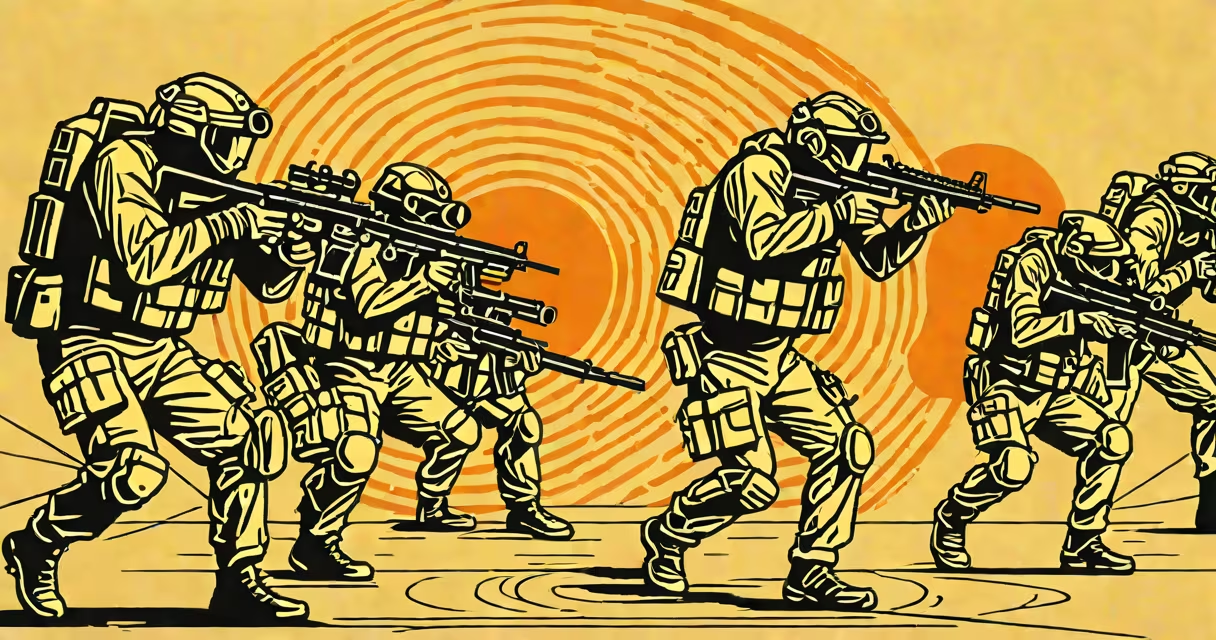
IPSCs are organized competitive shooting events governed by the International Practical Shooting Confederation, where participants shoot firearms in changing scenarios that simulate real-world defensive situations. Competitors must engage multiple targets using handguns, rifles, or shotguns while going through obstacles, moving between positions, and managing reloads-all under time constraints.
The core objective of an IPSC match is to complete a course of fire as quickly and accurately as possible. Each stage presents a unique challenge involving movement, shooting from various positions (e.g., standing, kneeling, behind cover), and transitioning between targets. Scoring combines time penalties for missed shots and slow execution, with faster, cleaner runs earning higher scores.
IPSC was founded in 1976 by Jeff Cooper, a U.S. Marine Corps officer and firearms instructor, who sought to create a sport that reflected real-world defensive shooting principles. Today, IPSC operates in over 100 countries through national associations, with standardized rules enforced globally. Matches are held at local ranges, regional events, and international championships, including the IPSC World Shoot.
Each IPSC stage is designed as a simulated tactical scenario. A competitor enters a stage, observes the layout, and begins shooting upon command. Targets are placed at varying distances and angles, requiring shooters to move, aim, and fire efficiently. Obstacles such as walls, barriers, and cones force participants to change position and manage their line of sight.
Scoring uses a point system based on accuracy, speed, and compliance with safety rules. Missed shots incur time penalties-typically 1 second per shot missed-and poor technique (like failing to clear a malfunction) results in disqualification from that stage. The final score is calculated by subtracting penalty time from the raw time taken to complete all stages.
For example, in a standard stage with five targets, a shooter fires 10 rounds (two shots per target). If they complete the stage in 12 seconds and hit all targets, their score is 12.00 seconds. If they miss one target, 1 second is added, making the score 13.00. The fastest cumulative time across all stages wins.
IPSC competitions are divided into categories based on firearm type, caliber, and equipment restrictions. This ensures fair competition among participants with different skill levels and gear setups. The main categories include:
| Category | Firearm Type | Caliber Restrictions | Common Use |
|---|---|---|---|
| Production | Handguns | 9mm or .45 ACP, factory magazines | Beginner-friendly, limited modifications |
| Open | Handguns | Any caliber, unlimited modifications | High-performance gear, advanced shooters |
| Standard | Handguns | 9mm, .40 S&W, .45 ACP, magazine capacity ≤15 rounds | Balance of performance and regulation |
| Rifle | Centerfire rifles | Any caliber, regulated by country | Long-range precision and rapid engagement |
| Shotgun | Double-barrel or semi-auto shotguns | 12-gauge or 20-gauge, limited modifications | Close-quarters defense simulation |
Shooters must use approved safety gear, including eye and ear protection, and wear a vest certified to withstand impact from high-velocity projectiles. All weapons are inspected before competition to ensure compliance with IPSC's technical standards.
IPSC is not just a sport-it's a training methodology. The drills emphasize real-world skills: quick target acquisition, controlled fire, movement under stress, and situational awareness. These elements align with modern defensive firearm training frameworks promoted by organizations like the National Rifle Association (NRA) and the U.S. Department of Defense's Combat Pistol program.
A 2021 study published in the Journal of Applied Psychology found that participants in practical shooting sports showed measurable improvements in reaction time, hand-eye coordination, and decision-making under pressure compared to non-participants. The study tracked 147 shooters over six months and measured performance gains across 12 standardized drills.
One common misconception is that IPSC is solely about speed. In reality, accuracy and safety are weighted equally. A shooter who fires rapidly but misses targets will lose points. The sport rewards disciplined execution, not reckless aggression. As noted in the 2023 IPSC Rulebook, "The goal is not to shoot fast-but to shoot effectively and safely."
IPSC is often mistaken for USPSA (United States Practical Shooting Association), another major competitive shooting organization. While both share similar goals-promoting realistic, changing shooting-they differ in structure and rule enforcement. USPSA is primarily U.S.-based and uses a different scoring system, including a "penalty point" model rather than time-based deductions.
Another frequent error is assuming all IPSC events are high-intensity. In fact, many local matches are low-pressure environments for beginners. The IPSC USA website reports that 68% of new competitors start in Production or Standard divisions, which have fewer equipment restrictions and lower entry thresholds.
I once attended a regional IPSC qualifier in Colorado. The course included a stage with a drop target behind a barrier. My first attempt failed because I didn't account for recoil-induced movement. After adjusting my stance and trigger control, I completed the stage in under 10 seconds-proof that small technique changes make a big difference.
Understanding what are IPSCs reveals a structured, globally recognized sport rooted in practical firearms proficiency. It blends athleticism, marksmanship, and mental focus in ways that mirror real-world defensive scenarios. evaluating training methods, IPSC offers a proven structure for skill development.
For those interested in trying a match, visit the official IPSC website to find local clubs and upcoming events. Registration typically requires proof of firearm safety certification and a valid ID.