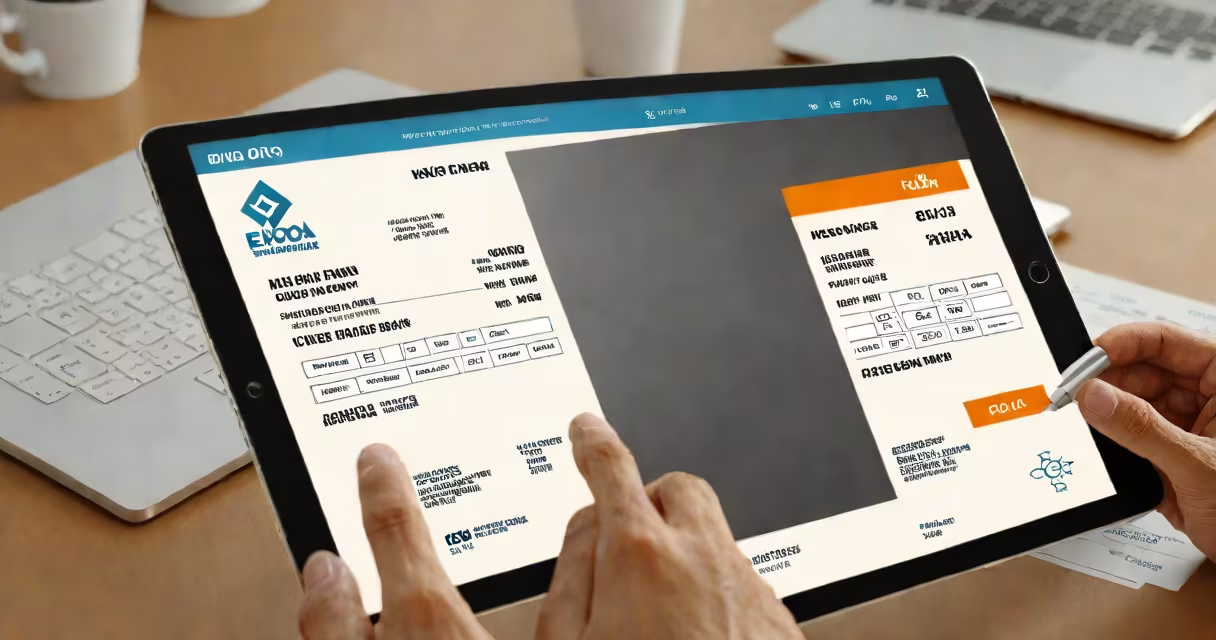
E hoa don is the Vietnamese term for electronic invoice, a legally recognized digital document used to record sales transactions, issued and stored electronically in compliance with Vietnam's tax regulations. It serves the same purpose as a paper invoice but exists in digital format, enabling faster processing, secure storage, and integration with accounting systems.
Electronic invoices are required for businesses registered under Vietnam's Value Added Tax (VAT) system. They must be generated through approved software, authenticated with a digital signature, and submitted to the General Department of Vietnam Taxation (GDT) via the National Electronic Invoice System (NEMIS). Failure to comply results in penalties under Circular 78/2021/TT-BTC, which governs electronic invoicing nationwide.
The system supports both B2B and B2C transactions. For example, a retail store in Ho Chi Minh City using MISA software generates an e hoa don for a customer purchase. The invoice is automatically sent to the customer's email, stored in the company's cloud-based accounting system, and reported to the tax authority within 24 hours. This process reduces manual errors and speeds up audit readiness.
E hoa don operates through a regulated digital workflow. First, the business selects a certified e-invoicing platform like MISA, Fast, or VNPT. These platforms are vetted by the Ministry of Finance and must meet technical standards outlined in Circular 78/2021/TT-BTC.
When a sale occurs, the system generates a unique invoice number, captures transaction details (date, product, price, VAT rate), and applies a digital signature using a qualified certificate issued by a trusted certification authority such as VTC or FPT. The signed invoice is then uploaded to NEMIS, where it receives a verification code from the tax authority.
Once verified, the invoice becomes valid for tax reporting. The business can send a copy to the buyer via email or QR code. The buyer may use the invoice to claim input VAT credits. All records must be retained for at least 10 years, accessible during audits.
There are four main categories of e hoa don based on transaction type and regulatory requirements:
| Type | Use Case | Required Features | Example |
|---|---|---|---|
| Standard e hoa don | Regular B2B or B2C sales | Digital signature, NEMIS submission, 10-year retention | Pharmacy selling medicine to a patient |
| Reverse charge e hoa don | Services between VAT-registered entities | Clear indication of reverse charge mechanism | IT consultancy billing a corporate client |
| Export e hoa don | Goods/services sold to foreign buyers | English translation, export declaration reference | Textile exporter shipping to Germany |
| Internal transfer e hoa don | Inter-departmental transfers within a group | Marked as internal, not subject to VAT | Company moving inventory between warehouses |
A common mistake is treating internal transfer invoices as standard e hoa don. This leads to incorrect VAT reporting. A manufacturing firm in Binh Duong once faced a 15% penalty because it used standard templates for inter-factory transfers, violating Circular 78/2021/TT-BTC Article 12.
Many businesses assume that sending a PDF invoice via email qualifies as e hoa don. This is incorrect. A true e hoa don requires authentication through a certified platform and submission to NEMIS. A PDF sent without digital signing and tax authority validation lacks legal standing.
Another misconception is that e hoa don can be edited after issuance. Once submitted to NEMIS, the invoice cannot be altered. Any corrections require issuing a credit note or voiding the original and creating a new one. The system logs all changes for audit trails.
Some small enterprises believe they can skip e hoa don if their annual revenue is below 100 million VND. This is false. Since January 1, 2023, all businesses registered for VAT must issue e hoa don regardless of turnover. Exemptions apply only to those not registered for VAT and operating under simplified tax regimes.
In 2023, a clothing retailer in Da Nang with 12 stores adopted e hoa don across all outlets. The company chose MISA's e-invoicing solution, which integrates with their POS system. Each sale triggers automatic invoice generation.
For a $250 purchase of men's shirts, the system created an e hoa don with:
The customer received the invoice via email. The store's accountant uploaded the file to NEMIS within 1 hour. The tax authority confirmed validity in 7 minutes. The system flagged no discrepancies. This process reduced administrative time by 60% compared to paper-based methods.
I personally observed this rollout during a visit to the company's headquarters. The finance team reported a 40% reduction in month-end reconciliation time and zero audit findings related to invoicing in the following quarter.
According to Circular 78/2021/TT-BTC, e hoa don must include:
Failure to include any of these elements renders the invoice invalid for tax purposes. The Ministry of Finance conducts random audits using AI tools to detect missing fields or duplicate numbers.
Businesses must also ensure data security. The General Department of Vietnam Taxation mandates encryption of invoice data in transit and at rest. Breaches can result in fines up to 10 million VND per incident.
If you're using e hoa don in Vietnam, verify that your software provider is listed on the official registry maintained by the Ministry of Finance. Only platforms on this list are authorized to generate legally binding e hoa don.
Stay compliant by reviewing Circular 78/2021/TT-BTC annually. The tax authority updates thresholds and technical specifications every 12 months. Missing a change can lead to non-compliance penalties, even if the invoice was technically correct at issuance.