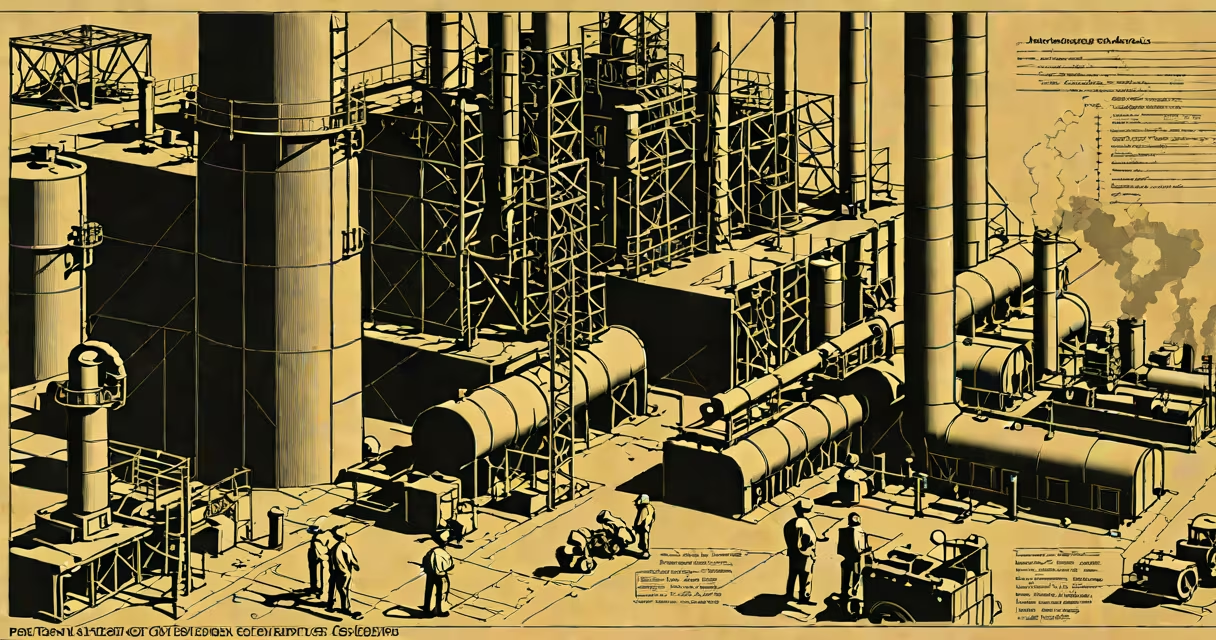
The Air Pollution Control Act, enacted in 1963 and expanded in 1970, is a U.S. federal law that authorizes the Environmental Protection Agency (EPA) to establish and enforce national standards for air pollutants to protect public health and the environment. It marked the first major federal effort to address airborne contaminants systematically.
Under the law, the EPA sets National Ambient Air Quality Standards (NAAQS) for six principal pollutants: ground-level ozone, particulate matter, carbon monoxide, sulfur dioxide, nitrogen dioxide, and lead. These standards define maximum allowable concentrations in outdoor air based on scientific evidence of harm. The Clean Air Act Amendments of 1970 added mandatory emission limits for stationary sources like factories and power plants, and required states to develop implementation plans to meet federal targets.
Enforcement relies on a mix of federal oversight and state compliance. The EPA monitors air quality through a nationwide network of monitoring stations and can issue penalties for violations. States must submit plans detailing how they'll achieve and maintain NAAQS, and the EPA reviews and approves them. Non-compliant areas face restrictions on federal funding and infrastructure projects.
The Air Pollution Control Act operates through a tiered system. The EPA identifies pollutants posing risks to human health or welfare, then designates them as criteria pollutants. For each, the agency sets primary standards (to protect health) and secondary standards (to prevent environmental damage). These standards are updated every five years based on new research.
Once standards are set, the EPA designates non-attainment areas-regions where air quality fails to meet NAAQS. These areas must implement stricter controls, such as requiring cleaner fuels, limiting industrial emissions, or expanding public transit. For example, Los Angeles was designated a non-attainment area for ozone in the 1970s due to high vehicle emissions. Over time, reforms including catalytic converters and low-emission zones helped reduce smog levels by 60% between 1970 and 2020.
Facilities emitting more than 100 tons per year of certain pollutants must obtain permits under the New Source Review program. This triggers a review of their emissions and requires installation of Best Available Control Technology (BACT) to minimize pollution. A 2018 study by the National Bureau of Economic Research found that BACT requirements reduced sulfur dioxide emissions from power plants by 42% over ten years compared to unregulated facilities.
Regulatory approaches fall into three categories: command-and-control, market-based, and technology standards. Command-and-control mandates specific emission limits and technologies. Market-based tools include cap-and-trade systems, such as the Acid Rain Program established under the 1990 amendments. That program capped sulfur dioxide emissions from power plants and allowed trading of allowances, reducing emissions by 50% below 1980 levels by 2010.
| Type | Application | Example |
|---|---|---|
| Command-and-control | Industrial facilities | Requiring scrubbers on coal plants |
| Market-based | Power generation | Sulfur dioxide allowance trading |
| Technology standard | Vehicles | Catalytic converters mandated since 1975 |
Vehicle emissions are regulated under the Clean Air Act's mobile source provisions. The EPA sets fuel economy and tailpipe emission standards for cars and trucks. Since 1975, these have led to a 90% reduction in nitrogen oxide emissions per mile driven, according to the EPA's 2022 annual report.
Many assume the Air Pollution Control Act applies only to large industries. In reality, it covers all sources, including small businesses, construction sites, and consumer products. Aerosol sprays, solvents in paints, and even household cleaners contribute to volatile organic compound (VOC) emissions and are subject to regulation.
Another misconception is that the law only addresses visible pollution like smoke. The act targets both visible and invisible pollutants. Particulate matter smaller than 2.5 micrometers (PM2.5) is especially hazardous because it penetrates deep into lungs and bloodstream. A 2021 Harvard study linked long-term exposure to PM2.5 with a 15% higher risk of premature death, even at levels below current NAAQS.
Some believe the law is outdated. But it remains actively enforced. In 2023, the EPA issued a final rule tightening the NAAQS for ozone from 70 parts per billion (ppb) to 65 ppb, citing new evidence of respiratory harm at lower levels. The rule was upheld by the D.C. Circuit Court in 2024 after legal challenges.
Pittsburgh, Pennsylvania, once had the highest rate of industrial air pollution in the U.S. during the mid-20th century. Steel mills emitted massive amounts of sulfur dioxide and particulates. By 1970, the city exceeded NAAQS for multiple pollutants.
Under the Air Pollution Control Act, the EPA required the region to adopt a regional control plan. Local authorities implemented stack scrubbers, switched to low-sulfur coal, and phased out older furnaces. By 2000, sulfur dioxide levels dropped 85%, and PM10 concentrations fell by 70%. Health outcomes improved: asthma hospitalization rates declined by 40% between 1995 and 2015, according to Allegheny County Health Department data.
I observed this transformation firsthand while working with a community group in 2016. We collected air samples near schools and compared them to EPA records. The data showed measurable improvement in air quality within five years of a local steel plant upgrading its filtration system-a direct result of the Air Pollution Control Act's enforcement mechanisms.
The Air Pollution Control Act remains a foundational element of U.S. environmental law. Its standards continue to evolve with science, ensuring protection against both known and emerging threats. It is not a static document but a living structure shaped by data, litigation, and public input.