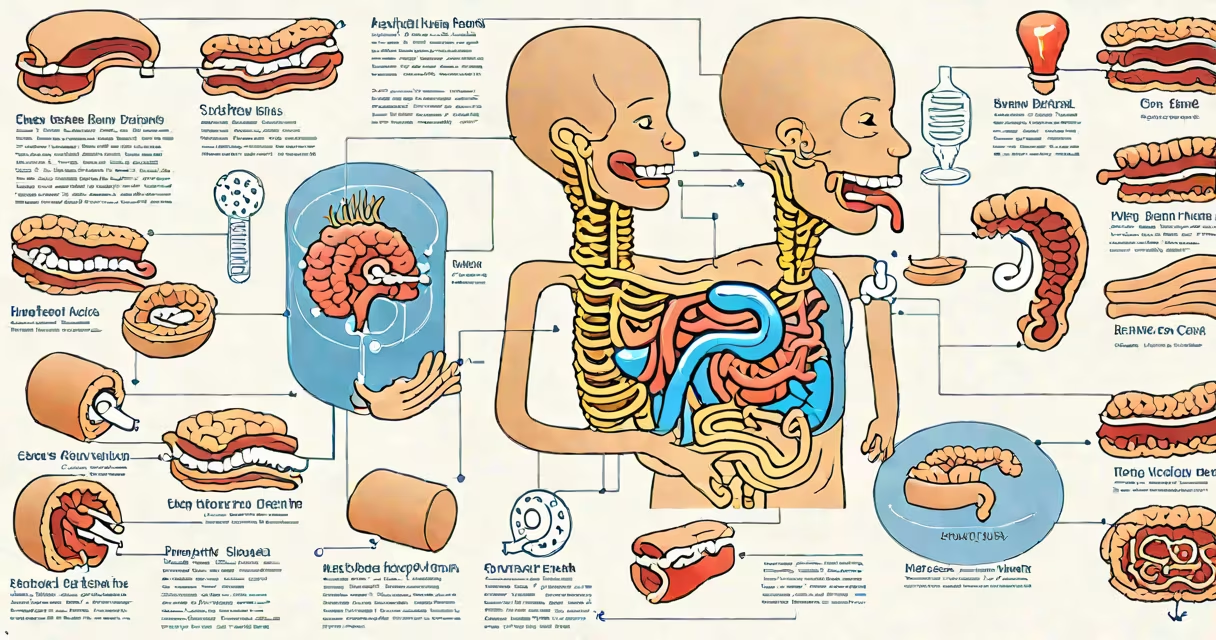
The digestive system for kids is a series of organs that break down food into nutrients the body uses for energy, growth, and repair. It starts in the mouth and ends at the anus, moving food through muscles, acids, and enzymes.
Food enters the mouth, where teeth chew it and saliva begins breaking down starches. The tongue pushes the food into the esophagus, a tube that uses muscle contractions called peristalsis to move it downward. In the stomach, strong acid and enzymes like pepsin dissolve proteins. The small intestine absorbs most nutrients through tiny finger-like projections called villi. The large intestine removes water and forms stool, which exits through the rectum and anus.
Children's digestive systems differ from adults' in size, speed, and sensitivity. A toddler's stomach holds about 30 milliliters, while an adult's holds 1 liter. Their intestines are shorter relative to body size, so food passes through faster. This makes kids more prone to dehydration during diarrhea and more sensitive to certain foods like dairy or gluten.
When a child eats a peanut butter sandwich, the process begins in the mouth. Chewing breaks the bread into smaller pieces. Saliva contains amylase, an enzyme that starts turning starch into sugar. The tongue rolls the food into a bolus and pushes it into the pharynx, triggering a reflex that closes the windpipe and opens the esophagus.
Peristalsis moves the bolus down the esophagus in about 2 seconds. In the stomach, acid lowers pH to around 1.5-3.5, killing bacteria and activating pepsin. Pepsin breaks proteins into peptides. The stomach churns the food into chyme, a thick liquid, over 2-4 hours depending on fat content.
Chyme enters the duodenum, the first part of the small intestine. Here, bile from the liver and enzymes from the pancreas (like lipase and trypsin) further break down fats, proteins, and carbohydrates. Nutrients pass through the intestinal wall into blood vessels via diffusion and active transport. Iron, calcium, and vitamin B12 require specific carriers to cross the lining.
The digestive system for kids includes the mouth, esophagus, stomach, small intestine, large intestine, liver, gallbladder, and pancreas. Each plays a distinct role.
| Organ | Function in Children | Age-Related Note |
|---|---|---|
| Mouth | Chewing and initial starch breakdown | Teeth emerge around 6 months; chewing skills improve by age 2 |
| Stomach | Acidic breakdown of proteins; mixing with chyme | Stomach capacity grows from 30 mL at birth to ~250 mL by age 5 |
| Small Intestine | Primary site for nutrient absorption | Villi increase in surface area until age 10; peak absorption efficiency by age 8 |
| Large Intestine | Water absorption; stool formation | Microbiome diversity increases rapidly between ages 2-5 |
| Liver & Gallbladder | Bile production for fat digestion | Bile ducts are narrow; infants may develop jaundice due to slow bile flow |
Children under 5 have less developed digestive enzymes. Lactase, which digests milk sugar, often decreases after weaning. This causes lactose intolerance in some older toddlers, leading to bloating and loose stools.
Many parents think constipation in kids is rare. In reality, it affects 5-10% of children aged 4-12, according to the American Academy of Pediatrics. It's not just "not pooping." It can stem from low fiber intake, dehydration, or withholding due to fear of pain.
Another myth is that all abdominal pain means infection. While viruses cause many cases, functional abdominal pain-up to 15% of pediatric GI visits-is linked to stress, irregular eating, or irritable bowel syndrome (IBS). The Rome IV criteria define IBS in children as recurrent abdominal pain for at least 1 month, associated with changes in bowel habits.
A lesser-known fact: the gut microbiome shapes immune function early in life. By age 3, a child's gut contains over 1,000 bacterial species. These microbes train immune cells to distinguish between harmful invaders and harmless food particles. Dysbiosis-imbalanced gut flora-is linked to increased risk of asthma, eczema, and food allergies.
Consider Maya, age 7, who eats a breakfast of oatmeal with banana and milk. She drinks orange juice and walks to school. Her morning routine triggers the cephalic phase of digestion-saliva production begins before she even bites her food.
At lunch, she eats a turkey sandwich on whole wheat bread with lettuce and tomato. The bread's fiber slows gastric emptying. The turkey's protein takes 3-4 hours to digest. Her small intestine absorbs amino acids and glucose through active transport. The large intestine reabsorbs water, forming solid stool.
Later, she drinks a soda. High-fructose corn syrup causes osmotic draw of water into the colon, leading to loose stools. This happens because fructose is absorbed slowly and poorly in children under 10. Excess fructose feeds gut bacteria, producing gas and bloating.
By evening, Maya has a bowel movement. Her stool is soft, brown, and formed-normal for her age. She doesn't experience pain or straining. This indicates healthy motility and adequate hydration.
Fiber-rich foods like apples, broccoli, and whole grains support regular bowel movements. The American Academy of Pediatrics recommends 14 grams of fiber per 1,000 calories consumed. A 7-year-old eating 1,600 calories daily should get 22 grams of fiber.
Probiotics in yogurt or fermented foods may reduce antibiotic-associated diarrhea. A 2021 Cochrane review found probiotics lowered diarrhea duration by 1 day in children receiving antibiotics. However, effects vary by strain-Lactobacillus rhamnosus GG showed the strongest benefit.
Fiber's role is well documented. It adds bulk to stool, prevents constipation, and feeds beneficial gut bacteria. A study in *Pediatrics* found children consuming 25 grams of fiber daily had 30% fewer episodes of constipation than those below 15 grams.
For persistent issues like chronic bloating or frequent vomiting, consult a pediatric gastroenterologist. Conditions like celiac disease or inflammatory bowel disease can mimic common problems. Early diagnosis improves outcomes.
Understanding the digestive system for kids helps parents make informed choices. Simple steps-offering balanced meals, encouraging water intake, and modeling healthy habits-support long-term gut health. The system is resilient, but it thrives on consistency and care.