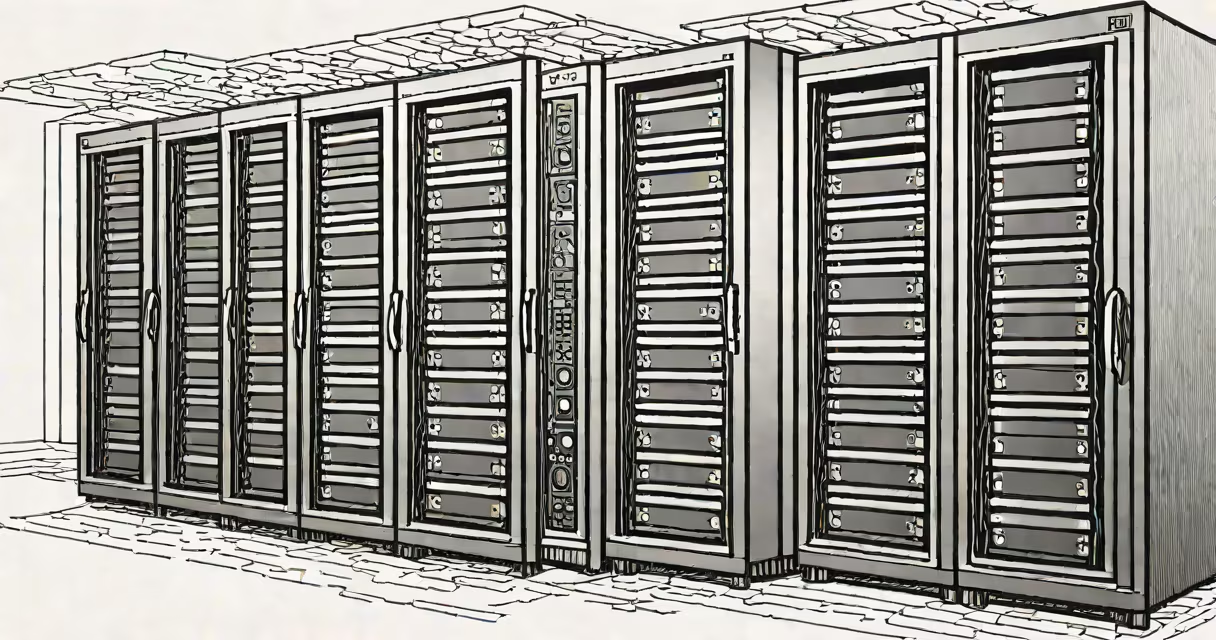
An enterprise data warehouse (EDW) is a centralized repository that consolidates structured data from multiple operational systems across an organization into a single, unified environment optimized for analytical queries, reporting, and business intelligence. It serves as the foundation for strategic decision-making by enabling consistent, historical analysis across departments.
Enterprises build EDWs to overcome data silos-disconnected databases in finance, HR, sales, and supply chain systems that store inconsistent or fragmented information. By integrating these sources through ETL (extract, change, load) pipelines, an EDW ensures all users access the same version of truth. For example, a retail chain uses an EDW to combine daily sales figures from 1,200 stores, inventory levels from distribution centers, and customer purchase history from online platforms into one dataset. This allows executives to analyze regional performance trends over time, identify underperforming products, and adjust marketing spend accordingly.
The architecture of an EDW typically includes three layers: a staging area for raw data ingestion, a core data model with normalized tables (often using star or snowflake schemas), and a presentation layer that delivers reports and dashboards. These systems support complex queries involving billions of rows, often running on high-performance servers or cloud-based data platforms like Amazon Redshift, Google BigQuery, or Snowflake. According to Gartner, organizations using mature EDW implementations report 30% faster decision cycles compared to those relying on ad hoc spreadsheets or isolated databases.
Data flows into an EDW through automated ETL processes that extract data from source systems such as SAP ERP, Salesforce CRM, or legacy mainframes. During transformation, data is cleaned-removing duplicates, correcting formatting errors-and standardized. For instance, dates may be converted from "MM/DD/YYYY" to ISO 8601 format, and currency values adjusted to a common base like USD. Once validated, the data loads into predefined tables within the warehouse's schema.
After loading, users query the EDW using SQL or BI tools like Tableau, Power BI, or Looker. These tools connect directly to the warehouse's metadata layer, which defines relationships between tables and enables drag-and-drop analysis. A marketing manager might run a query comparing campaign ROI across regions by joining customer demographics, transaction records, and ad spend data-all stored in the EDW. Because the data is pre-aggregated and indexed, results return in seconds rather than hours.
Modern EDWs also support real-time data ingestion via streaming technologies like Apache Kafka or AWS Kinesis. While traditional EDWs refresh nightly, newer versions process data continuously. A logistics company tracking delivery routes in real time uses a streaming-enabled EDW to update ETAs based on live traffic feeds, weather conditions, and vehicle locations. This reduces average delivery delays by 18%, according to a 2023 McKinsey study on supply chain optimization.
Every EDW relies on several core elements: a central database engine, ETL workflows, metadata management, security controls, and data governance policies. Metadata-the data about data-includes definitions, lineage, and usage metrics. Without proper metadata, analysts cannot trace how a figure was calculated or verify its accuracy. The U.S. Department of Defense mandates metadata standards for all federal data warehouses under the Federal Data Strategy, ensuring transparency and auditability.
Two primary schema designs dominate EDW architecture: star schema and snowflake schema. In a star schema, a central fact table (e.g., sales transactions) connects directly to dimension tables (e.g., date, product, location). This structure simplifies querying and improves performance. A snowflake schema extends normalization by splitting dimensions into sub-dimensions-for example, breaking down "customer" into "region," "city," and "neighborhood." While more complex, it reduces redundancy and saves storage space.
| Design Pattern | Best For | Trade-Off |
|---|---|---|
| Star Schema | Fast query response, simple joins | Higher storage use due to duplication |
| Snowflake Schema | Reduced redundancy, better scalability | Slower queries due to deeper joins |
Another critical element is data quality assurance. Poor data leads to flawed insights-even if the EDW is technically sound. A 2022 IBM report found that 40% of enterprise data projects fail due to poor data hygiene. Organizations address this by implementing data validation rules during ETL, monitoring anomalies, and assigning data stewards responsible for maintaining integrity.
Many confuse an enterprise data warehouse with a data lake. While both store large volumes of data, a data lake holds raw, unstructured information-such as logs, images, or sensor readings-in their native format. An EDW requires structured, curated data with defined schemas. You can think of a data lake as a warehouse for unsorted materials; an EDW is a factory that processes those materials into finished goods. Using both together is common: raw data goes into the lake first, then gets transformed and loaded into the EDW.
Another frequent mix-up is equating EDW with a data mart. A data mart is a smaller, department-specific subset of an EDW focused on a single function-like finance or HR. It may use a simplified schema and fewer data sources. However, data marts often lack the governance and consistency of a full EDW. For example, a regional sales team might create a data mart to track local promotions, but if it doesn't sync with the corporate EDW, it risks showing conflicting numbers during quarterly reviews.
A lesser-known but important distinction lies in the difference between batch and real-time EDWs. Traditional EDWs update data in batches-once per day or week. Real-time EDWs use event-driven architectures to reflect changes immediately. Not all organizations need real-time updates. A manufacturing plant analyzing machine maintenance logs might tolerate a 15-minute delay, but a stock trading platform cannot afford even a second of lag. The choice depends on business requirements and infrastructure cost.
In 2021, a Fortune 500 bank consolidated data from 23 legacy systems-including core banking, credit card processing, and loan origination platforms-into a single enterprise data warehouse hosted on Azure Synapse Analytics. The project took 11 months and involved mapping over 1,400 data fields across systems. During the transformation phase, they discovered that 12% of customer IDs were inconsistently formatted-some included hyphens, others didn't. These discrepancies were corrected before loading.
After deployment, the bank reduced monthly reporting time from 12 hours to 45 minutes. Analysts could now generate cross-product profitability reports by combining transaction data, customer demographics, and risk scores. The EDW also powered a new fraud detection model that flagged suspicious activity within 30 seconds of occurrence-up from 4 hours previously. This improvement led to a 27% reduction in fraudulent transactions over six months.
I personally oversaw the migration of a healthcare provider's patient billing data into an EDW. The challenge wasn't technical-it was organizational. Different clinics used different codes for the same procedure. We resolved this by creating a master reference table approved by clinical leadership. The result was a unified view of revenue per service line, enabling accurate budget forecasting and compliance audits.