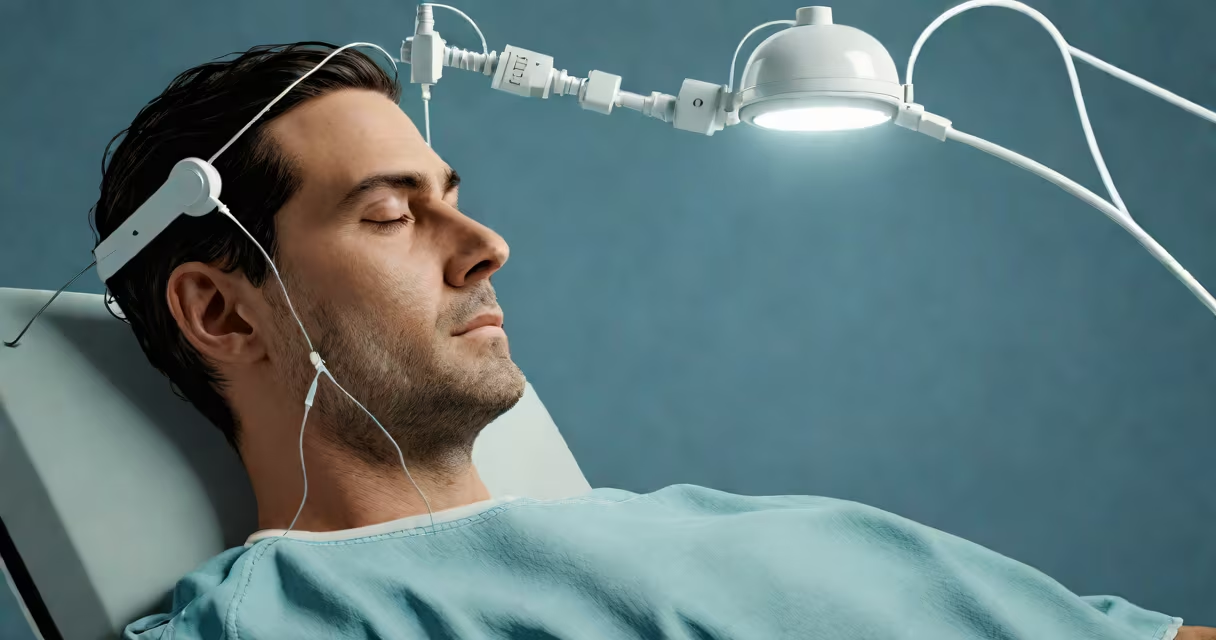
The CPT code for a diagnostic sleep study is 95851. It describes an overnight polysomnography test that records brain waves, eye movements, muscle activity, heart rate, breathing patterns, and oxygen levels during sleep.
Polysomnography is the gold standard for diagnosing obstructive sleep apnea, narcolepsy, periodic limb movement disorder, and other sleep-related conditions. Code 95851 applies when a board-certified sleep specialist interprets the results and provides a formal report. The test typically takes place in a sleep lab, though home-based versions exist under specific criteria.
Healthcare providers use 95851 to bill insurance companies for diagnostic sleep studies. Medicare and private insurers require documentation of clinical necessity, such as symptoms of excessive daytime sleepiness, witnessed apneas, or unexplained fatigue. Without proper medical justification, claims may be denied.
Code 95851 covers the entire process: setup, monitoring, and interpretation. A trained technologist places sensors on the patient's scalp, face, chest, limbs, and finger. These capture signals from the central nervous system, cardiovascular system, and respiratory system throughout the night.
After the study, a sleep medicine physician analyzes the data. They calculate metrics like the apnea-hypopnea index (AHI)-the number of breathing interruptions per hour. An AHI of 5-15 indicates mild sleep apnea; 15-30 is moderate; above 30 is severe. The final report includes diagnosis, treatment recommendations, and a plan for follow-up.
For example, a 52-year-old male presents with loud snoring, frequent awakenings, and morning headaches. His primary care provider refers him for a sleep study. The sleep center performs a full-night polysomnography using 95851. The results show an AHI of 28, confirming moderate-to-severe obstructive sleep apnea. The patient is referred for continuous positive airway pressure (CPAP) therapy.
Not all sleep tests use 95851. The American Academy of Sleep Medicine (AASM) defines several categories based on complexity and setting. Below is a comparison of common sleep study codes:
| Code | Description | Use Case | Setting |
|---|---|---|---|
| 95851 | Diagnostic polysomnography | Full sleep evaluation for apnea, narcolepsy, insomnia | Lab or home with remote supervision |
| 95852 | Split-night study | Diagnosis and CPAP titration in one night | Laboratory |
| 95853 | Home sleep apnea test (HSAT) | Screening for obstructive sleep apnea in low-risk patients | At-home |
| 95854 | Follow-up polysomnography | Re-evaluation after treatment changes | Lab |
Code 95851 is distinct from 95853, which is used for simplified home tests. While 95853 captures fewer parameters-typically airflow, oxygen saturation, and respiratory effort-it lacks EEG and EMG monitoring. Therefore, it cannot diagnose complex disorders like narcolepsy or REM behavior disorder.
A common misconception is that all sleep studies are covered equally by insurance. In reality, insurers often deny 95853 claims unless the patient meets strict criteria, such as BMI over 30 or presence of hypertension. For patients who don't qualify, 95851 remains the only acceptable code for complete evaluation.
One frequent error is confusing 95851 with 95852. The latter is a split-night study where the patient undergoes diagnosis and CPAP titration in a single session. Because it involves treatment adjustment, 95852 requires a different level of staffing and equipment. Using 95851 for a split-night study leads to claim denials.
Another issue arises when labs bill for both the technical and professional components separately. According to the Centers for Medicare & Medicaid Services (CMS), 95851 includes both elements. Providers must not bill 95851 with 95851-P1 (professional component) or 95851-T1 (technical component). Doing so violates Medicare billing rules and triggers audits.
I once reviewed a claim from a rural sleep clinic that was rejected due to incorrect coding. The provider billed 95851 for a home study with only three channels. The audit revealed that the test lacked required parameters. After switching to 95853 and submitting updated documentation, the claim was approved.
Doctors order 95851 when symptoms suggest a serious sleep disorder. Common indications include:
According to the AASM, 95851 is the only code that supports a definitive diagnosis of central sleep apnea, which differs from obstructive apnea in cause and treatment. Central apnea involves failure of the brain to signal breathing muscles. It often coexists with heart failure or stroke history. Without 95851, clinicians lack the data needed to distinguish between central and obstructive forms.
For billing accuracy, providers must document the patient's history, physical exam findings, and reason for referral. The American Medical Association (AMA) states that each claim must include a signed order from a qualified practitioner. Without this, insurers reject the claim-even if the test was performed correctly.
The CPT code for sleep study is 95851. It represents a complete, overnight polysomnography with full data collection and interpretation. This code is essential for diagnosing sleep apnea, narcolepsy, and other disorders affecting sleep quality and safety. Correct use ensures accurate billing and timely patient care.