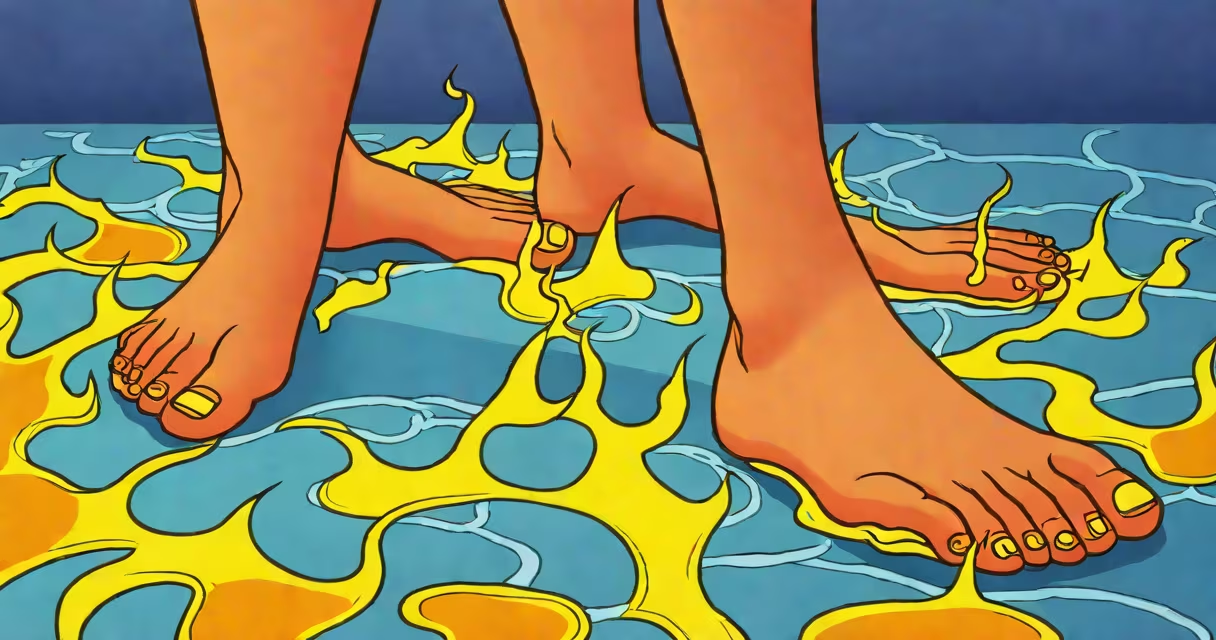
A burning sensation in feet results from nerve irritation or damage, often due to underlying medical conditions such as diabetes, vitamin deficiencies, or peripheral neuropathy. This symptom typically affects both feet symmetrically and may worsen at night.
Neuropathic pain arises when sensory nerves malfunction, sending incorrect signals to the brain. These signals are interpreted as heat, burning, or electric shocks-even when no external stimulus exists. The condition is not a standalone illness but a symptom of disrupted neurological function.
According to the National Institute of Neurological Disorders and Stroke (NINDS), peripheral neuropathy affects approximately 20 million people in the U.S., with diabetes being the leading cause. Symptoms include burning, tingling, numbness, or sharp pains in the feet and hands.
The feet contain thousands of nerve endings responsible for detecting temperature, pressure, and pain. When these nerves are damaged or compressed, they misfire, producing abnormal sensations. Damage can occur gradually over months or years, especially in chronic diseases.
Nerve injury disrupts signal transmission along the axon-the long fiber extending from the nerve cell body. If the myelin sheath (protective coating) is compromised, electrical impulses travel slowly or erratically. This leads to distorted perceptions, including burning, crawling, or stabbing feelings.
For example, a 58-year-old patient with uncontrolled type 2 diabetes reported persistent burning in both feet for six months. Nerve conduction studies revealed reduced amplitude in sensory nerve responses, confirming diabetic peripheral neuropathy. After initiating gabapentin and improving blood sugar control, symptoms improved by 60% within eight weeks.
Burning sensations in the feet stem from multiple origins. The most frequent causes fall into four categories: metabolic, mechanical, infectious, and autoimmune.
| Category | Common Causes | Prevalence Estimate |
|---|---|---|
| Metabolic | Diabetes mellitus, vitamin B12 deficiency, hypothyroidism | ~60% of cases |
| Mechanical | Carpal tunnel syndrome (foot version), Morton's neuroma, flat feet | ~15% |
| Infectious | Shingles (herpes zoster), Lyme disease, HIV-associated neuropathy | ~10% |
| Autoimmune/Idiopathic | Guillain-Barré syndrome, CIDP, idiopathic neuropathy | ~15% |
Diabetes accounts for nearly two-thirds of peripheral neuropathy cases. High blood glucose levels impair small blood vessels supplying nerves, reducing oxygen delivery and causing cumulative damage. The American Diabetes Association reports that 50% of people with type 2 diabetes develop neuropathy over time.
Vitamin B12 deficiency is another frequent culprit. A 2021 study in *The Journal of Clinical Endocrinology & Metabolism* found that 12% of adults with unexplained neuropathy had low B12 levels. Supplementation reversed symptoms in 78% of participants within three months.
Many patients assume burning feet are due to poor circulation or aging. However, these explanations rarely account for bilateral, symmetrical burning pain. True vascular insufficiency usually presents with coldness, pallor, or intermittent claudication during walking-not burning.
Another misconception is that burning feet result from wearing tight shoes. While footwear can exacerbate symptoms, it doesn't cause the underlying nerve dysfunction. A 2019 review in *Neurology* noted that 34% of patients initially diagnosed with "shoe-related foot pain" were later found to have undiagnosed diabetic neuropathy.
One non-obvious factor is medication side effects. Certain chemotherapy drugs (e.g., vincristine), antiretrovirals (e.g., didanosine), and statins can induce peripheral neuropathy. A 2020 report in *Pharmacotherapy* documented that 1 in 12 patients on long-term simvastatin developed burning foot sensations after 18 months.
Red flags indicating urgent evaluation include loss of balance, muscle weakness, foot deformities, or skin changes like ulcers or discoloration. These suggest advanced nerve damage requiring prompt intervention.
I once observed a 63-year-old man who dismissed his burning feet as "just getting old." He delayed care until he developed a foot ulcer. By then, infection had spread to bone. Early diagnosis could have prevented hospitalization and potential amputation.
Diagnostic steps include nerve conduction studies, electromyography (EMG), blood tests for glucose, HbA1c, B12, folate, and thyroid function. Imaging may be needed if structural compression is suspected.