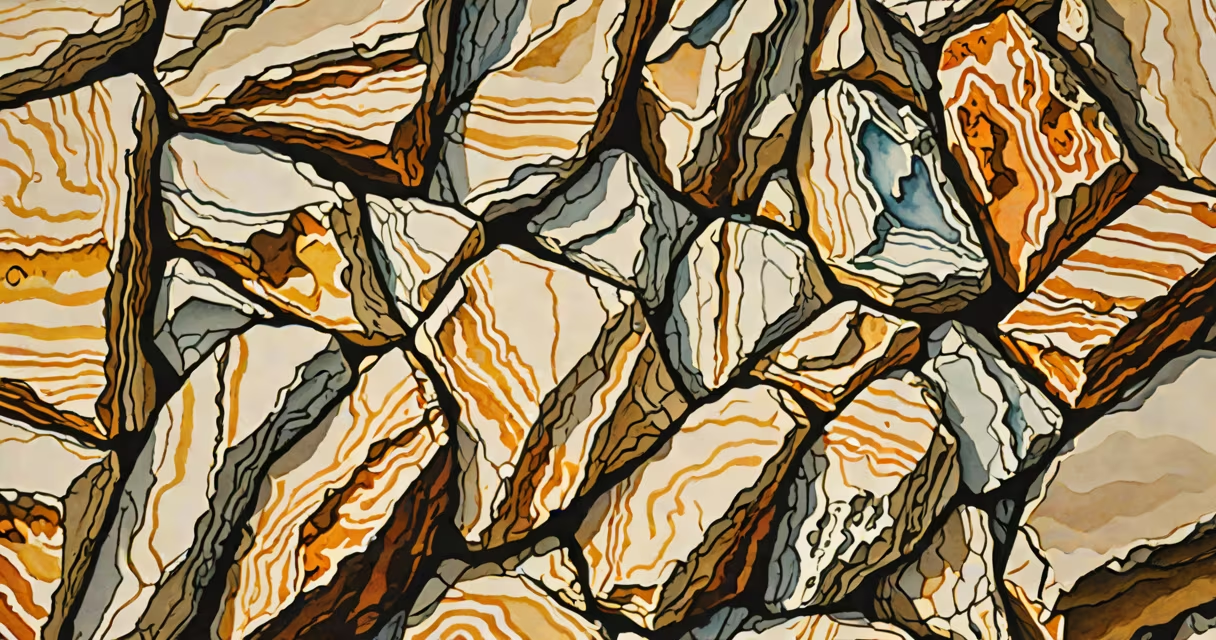
What type of rock is this? It's a question answered by examining texture, mineral makeup, and origin-whether formed from cooled lava, compacted sediment, or transformed by heat and pressure. Geologists classify rocks into three main categories based on how they form: igneous, sedimentary, and metamorphic.
Igneous rocks form when molten material cools and solidifies. Granite and basalt are common examples. Basalt forms from fast-cooling lava at volcanic sites, like those in Hawaii. Its fine-grained texture results from rapid cooling. Granite, found in mountain ranges, cools slowly underground, forming large interlocking crystals visible to the naked eye.
Sedimentary rocks develop from accumulated particles-sand, clay, or organic matter-compressed over time. Sandstone, shale, and limestone are typical. Sandstone forms from wind- or water-deposited sand grains cemented together. Limestone often contains fossil fragments, especially in marine environments. A single layer of limestone may represent thousands of years of shell accumulation.
Metamorphic rocks change from existing rock due to intense heat and pressure, altering their structure without melting. Slate, marble, and gneiss are key types. Slate forms from shale under moderate heat and pressure, splitting cleanly along flat planes. Marble develops from limestone heated and recrystallized, creating a crystalline texture. Gneiss shows alternating bands of light and dark minerals, a result of high-grade metamorphism.
| Type | Formation Process | Common Minerals | Visual Clues |
|---|---|---|---|
| Igneous | Cooling of magma or lava | Quartz, feldspar, mica | Crystals, glassy surface, vesicles (holes) |
| Sedimentary | Compaction and cementation of sediments | Calcite, quartz, clay minerals | Layers, fossils, grainy texture |
| Metamorphic | Heat and pressure altering pre-existing rock | Plagioclase, garnet, amphibole | Banding, foliation, recrystallized grains |
When identifying a rock, start with texture. Is it smooth and glassy? Likely igneous. Does it show distinct layers or contain shells? Probably sedimentary. Look for banding or alignment of minerals-signs of metamorphism. A hand lens helps spot crystal shapes and mineral colors.
One non-obvious clue: reaction to acid. Limestone fizzes when exposed to dilute hydrochloric acid due to calcium carbonate content. This test confirms sedimentary origin and identifies carbonate-rich rocks. Not all sedimentary rocks react-sandstone won't fizz-but this simple test separates many types.
A real-world example: a rock collected near a riverbank has visible pebbles embedded in a fine matrix. It feels gritty and splits into thin layers. Under magnification, it reveals tiny shell fragments. These features indicate it's a clastic sedimentary rock-specifically, a shale with fossil content. The presence of fossils points to deposition in a quiet water environment, such as a lake or deep sea floor.
Many people confuse slate with shale. Both are fine-grained and form from clay-rich sediments. But shale fractures irregularly, while slate splits into flat sheets due to metamorphic realignment of minerals. This difference matters in construction-slate is used for roofing because of its cleavage planes.
During a field trip in the Sierra Nevada, I found a gray rock with visible banding and coarse grains. It contained mica flakes and quartz. I tested it with a pocket knife-it scratched easily. Field guides confirmed it was gneiss, formed from granite subjected to high-grade metamorphism during mountain-building events. The banding matched regional deformation patterns studied by the U.S. Geological Survey.
Understanding what type of rock is this begins with observation and context. Use the rock's color, grain size, layering, and response to simple tests. Reference databases like the Smithsonian's National Museum of Natural History rock collection or the USGS Mineral Resources Program for visual comparisons.
Knowing what type of rock is this helps interpret Earth's history. A single stone can reveal ancient climates, past tectonic activity, or extinct life forms. With practice, anyone can read the story written in stone.