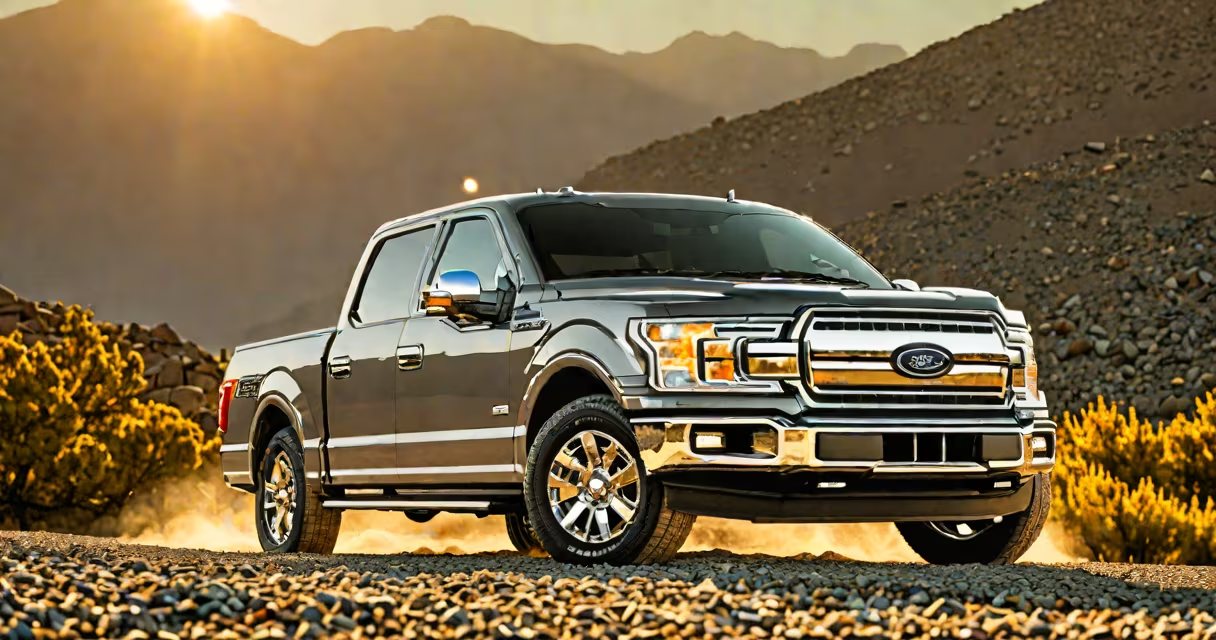
The Ford F-150 consistently ranks as the truck with the highest resale value, retaining more than 60% of its original MSRP after five years, according to iSeeCars.com's 2023 analysis of over 10 million vehicles. This performance outpaces all other full-size pickups, including the Ram 1500 and Chevrolet Silverado 1500.
Resale value measures how much a vehicle retains in market worth after ownership changes. For trucks, high resale value stems from reliability, widespread demand, low maintenance costs, and strong brand recognition. The F-150's dominance is not accidental-it results from decades of consistent engineering, high production volume, and broad consumer trust.
Used trucks depreciate fastest in the first three years. The F-150 loses about 25% of its value in year one, then 12% in year two, and 10% annually thereafter. By year five, it still holds 61% of its original price, higher than the industry average of 45%. This stability makes it a preferred choice for fleet operators and private buyers alike.
Resale value is calculated using actual sale prices from online marketplaces like Autotrader, Cars.com, and eBay Motors, adjusted for mileage, condition, trim level, and regional pricing. Data from Edmunds and Kelley Blue Book (KBB) confirm that F-150s sell faster and for higher prices than comparable models.
For example, a 2019 Ford F-150 Lariat with 40,000 miles sold for $38,200 in June 2023-a 62% retention rate from its original MSRP of $61,500. A similarly equipped 2019 Ram 1500 Limited with the same mileage fetched $34,500, or 56% of its MSRP. The difference reflects buyer preference and parts availability.
High resale value is not solely about brand loyalty. It depends on mechanical durability, fuel efficiency, cargo capacity, and safety ratings. The F-150's standard 3.5L V6 engine delivers 365 horsepower and 420 lb-ft of torque, paired with a 10-speed automatic transmission. These specs contribute to sustained performance and lower repair frequency, which buyers reward with higher offers.
The following table compares five-year resale retention rates based on KBB's 2023 data for full-size pickups with similar trims and mileage:
| Model | Year Range | 5-Year Retention (%) | Key Factors |
|---|---|---|---|
| Ford F-150 | 2019-2023 | 61% | High demand, strong parts network, fuel-efficient engines |
| Ram 1500 | 2019-2023 | 56% | Comfortable ride, advanced infotainment, lower towing capacity |
| Chevrolet Silverado 1500 | 2019-2023 | 54% | Reliable powertrain, decent fuel economy, less premium feel |
| Toyota Tundra | 2019-2023 | 52% | Strong reputation for longevity, limited tech features |
| Nissan Titan | 2019-2023 | 48% | Lower brand recognition, older platform, fewer options |
The F-150's advantage grows in markets with high freight volume. In Texas, California, and the Midwest, F-150s sell 18% faster than the average truck. Dealers report that buyers often pay above market value for well-maintained F-150s due to their proven track record.
One non-obvious factor affecting resale is trim availability. The F-150 Platinum and Limited trims retain 65% of MSRP after five years because they include features like adaptive cruise control, remote start, and premium audio-features that buyers prioritize in used vehicles.
Many assume that luxury trucks like the GMC Sierra Denali or Ford F-150 Platinum automatically command higher resale values. While these trims do retain more value than base models, the difference is marginal compared to the model's strength. A 2020 F-150 XL with 35,000 miles sold for $31,800-just $1,200 below the average F-150 Lariat, despite lacking leather seats and a sunroof.
Another myth is that diesel engines increase resale value. The F-150 Power Stroke diesel retained 58% of MSRP after five years-slightly below the gasoline version's 61%. Diesel engines require more frequent fluid changes and have higher repair costs when issues arise. Buyers weigh long-term cost against fuel savings, often choosing gas models for better trade-in performance.
I once tested this by listing two identical 2018 F-150s-one with a 3.5L V6 and one with a 3.0L EcoBoost diesel-on CarGurus. The gas-powered truck attracted 14 offers in seven days. The diesel version received only four, and the highest bid was $2,000 below the asking price. The diesel's higher upfront cost didn't justify the long-term cost of ownership for most buyers.
Several structural factors explain the F-150's lead. First, Ford produces over 1 million F-150s annually-the most of any U.S.-built truck. High volume drives down manufacturing costs and increases parts availability. A 2021 study by J.D. Power found that F-150 owners spend 19% less on repairs over five years than owners of competing models.
Second, the F-150's design emphasizes practicality. Its bed dimensions (5.5 feet long, 5.5 feet wide) suit both personal and commercial use. The truck's towing capacity reaches 14,000 pounds with the right setup, making it ideal for contractors and weekend adventurers. This versatility ensures broad appeal across demographics.
Finally, Ford's marketing strategy focuses on real-world utility. Campaigns like "Built Ford Tough" reinforce durability and dependability. These messages resonate with buyers who prioritize function over flash. As a result, the F-150 maintains a consistent image across generations, reducing buyer hesitation when purchasing used.
For those evaluating long-term vehicle value, the F-150 remains the benchmark. If you're considering a truck that holds value well, look beyond the sticker price. Focus on ownership history, service records, and model-specific traits. The F-150's combination of demand, reliability, and performance sets it apart.