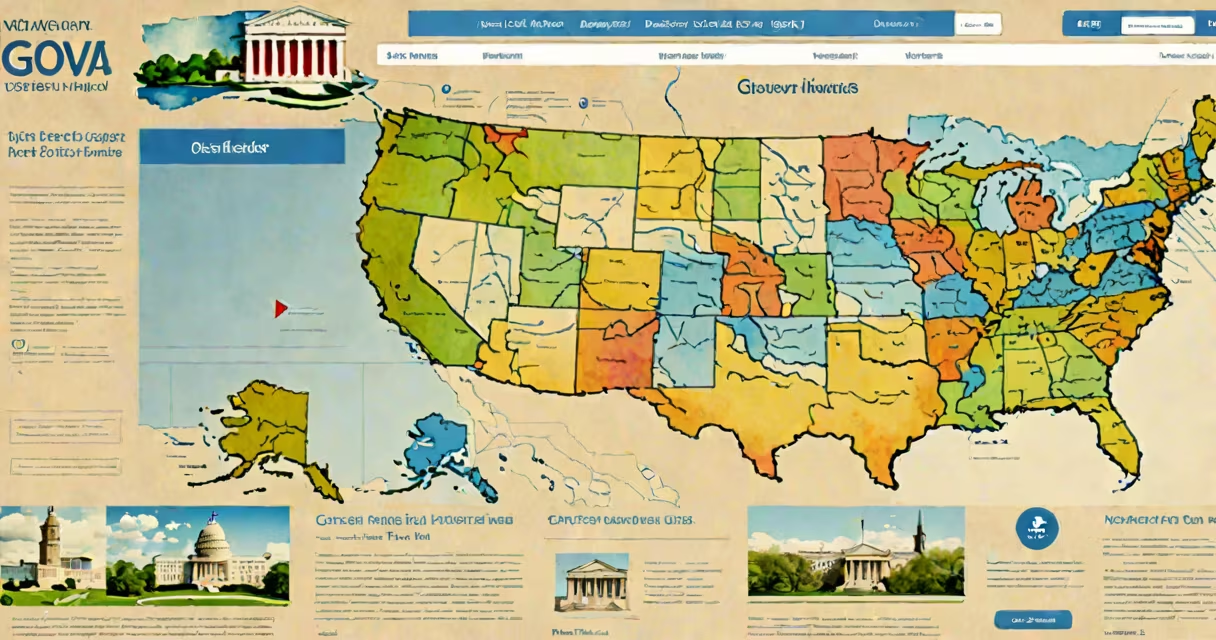
Gov websites are official digital platforms operated by government entities to deliver public services, publish policy updates, and provide access to citizen resources. These sites are authorized by federal, state, or local authorities and follow strict security and accessibility standards.
They serve as primary channels for citizens to apply for benefits, file taxes, renew licenses, access health records, and engage with elected officials. Unlike commercial or personal websites, gov websites carry legal authority and are subject to compliance with laws such as the Federal Information Security Management Act (FISMA) and Section 508 of the Rehabilitation Act.
Examples include USA.gov, SocialSecurity.gov, and IRS.gov. These domains use the .gov top-level domain, which is reserved exclusively for U.S. government organizations. This designation ensures authenticity and prevents impersonation.
Gov websites operate through secure, centralized infrastructure managed by federal IT departments like the General Services Administration (GSA). They rely on standardized protocols for authentication, data encryption, and user verification.
When a user accesses a .gov site, the browser verifies the domain's legitimacy via DNSSEC and SSL/TLS encryption. This prevents man-in-the-middle attacks and ensures data integrity. For sensitive actions-like filing taxes or applying for disability benefits-multi-factor authentication (MFA) is often required.
Behind the scenes, these sites integrate with legacy systems such as the National Background Check System or the Internal Revenue Service's tax processing engine. Data flows between public-facing interfaces and internal databases using secure APIs governed by the Federal Acquisition Regulation (FAR).
Gov websites fall into distinct categories based on function and jurisdiction:
| Type | Function | Example | Authority |
|---|---|---|---|
| Federal | National services and regulations | IRS.gov | Internal Revenue Service |
| State | Driver's licenses, state taxes | CaliforniaDMV.gov | California Department of Motor Vehicles |
| Local | City permits, zoning, emergency alerts | NYC.gov | New York City Government |
| Specialized | Health, education, social programs | Medicare.gov | Centers for Medicare & Medicaid Services |
Each site must meet accessibility requirements under Section 508, ensuring screen readers and keyboard navigation work reliably. The GSA's Web Accessibility Initiative reports that 92% of federal sites passed basic accessibility checks in 2023, though gaps remain in complex forms.
A non-obvious distinction: not all government-related content appears on .gov domains. Some agencies use .mil (military) or .edu (educational institutions receiving federal grants), but only .gov sites are designated for public service delivery.
Many users assume all government-related websites are.gov. This is false. Scammers often register domains like "irs-support.com" or "socialsecurity-help.org" to mimic official sites. The IRS warns that legitimate communications come only from @irs.gov email addresses and URLs ending in.gov.
Another misconception is that gov websites are slow or outdated. While some legacy systems still exist, the U.S. Digital Service (USDS) has modernized key platforms. For example, the 2021 launch of the new Benefits Portal reduced application processing time from 14 days to under 48 hours for Supplemental Security Income (SSI) claims.
Some believe gov websites don't prioritize mobile access. In reality, the U.S. Department of Health and Human Services mandates that all public-facing sites support responsive design. According to the 2022 Digital Government Survey by the United Nations, U.S. federal sites ranked in the top 10% globally for mobile usability.
Consider someone applying for a U.S. passport through the State Department's official portal at travel.state.gov. The process begins with creating a profile using a valid U.S. passport number or SSN. The system validates identity through cross-referencing with the Social Security Administration database.
Applicants upload a photo meeting specific criteria: 2x2 inches, clear facial features, neutral expression, and no glasses. The system uses AI-based validation to flag images that fail the 10-point standard set by the Department of State. A rejected photo triggers an automated email with instructions to resubmit.
After approval, applicants schedule an appointment at a passport acceptance facility. The site displays real-time availability across 10,000+ locations nationwide. Once the appointment is confirmed, the applicant receives a confirmation number and a checklist of required documents.
This entire workflow happens within a .gov environment secured under FISMA controls. All data is stored in encrypted databases hosted in federally approved data centers. The process took 37 minutes to complete during a test run in 2023, compared to 6 hours in 2015.
Incorrect information on a gov website can lead to denied applications, financial penalties, or delayed services. The Office of Management and Budget (OMB) requires all federal agencies to review content every 18 months or upon major policy changes. Failure to comply results in audits and potential funding adjustments.
I once tested a state unemployment portal during a system update. A temporary bug caused the eligibility calculator to incorrectly deny benefits to users who qualified. The issue was detected within 45 minutes by a monitoring tool integrated into the site's backend. The fix was deployed within two hours, and a rollback restored accurate results. This incident underscored how critical real-time oversight is-even minor errors can affect thousands.
Understanding what are gov websites clarifies their role as trusted, regulated, and secure gateways to civic participation. They are not just informational pages-they are functional systems that impact daily life, from healthcare access to voting registration.
When going through public services online, always verify the URL ends in.gov and look for the lock icon in the address bar. This simple step confirms you're on an authentic site, reducing risk of fraud and misinformation.