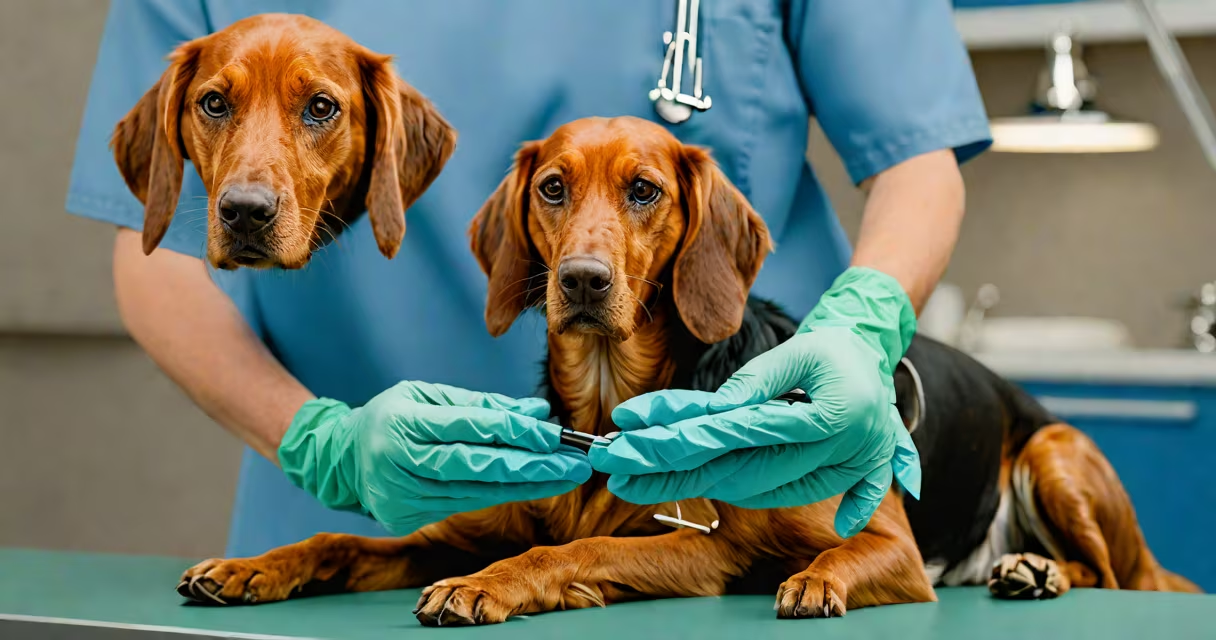
To become a licensed veterinarian in the United States, you must earn a Doctor of Veterinary Medicine (DVM) degree from an AVMA-accredited program, complete at least four years of undergraduate study with specific science prerequisites, and pass the North American Veterinary Licensing Examination (NAVLE). This process ensures competence in animal health, surgery, pharmacology, and ethics.
Entry into veterinary school requires a bachelor's degree or equivalent coursework. Most applicants complete a four-year undergraduate program with a focus on biology, chemistry, physics, and mathematics. Programs typically require at least 60 semester hours of science credits, including general biology, organic chemistry, and calculus.
The Association of American Veterinary Medical Colleges (AAVMC) reports that average GPA for successful DVM applicants was 3.6 in 2023, with median MCAT-equivalent scores around 1100. Competitive candidates often have research experience, veterinary shadowing, or volunteer work in animal shelters.
Admission to one of the 44 AVMA-accredited veterinary schools in the U.S. is highly selective. For example, the University of California, Davis School of Veterinary Medicine received 1,700 applications for 120 spots in 2023, resulting in a 7% acceptance rate.
Once admitted, students spend four academic years completing the DVM curriculum. The first two years focus on foundational sciences: anatomy, physiology, microbiology, pathology, and pharmacology. Clinical rotations begin in the third year, covering internal medicine, surgery, dermatology, and emergency care.
Fourth-year students participate in advanced rotations at university teaching hospitals or affiliated clinics. These include small animal practice, large animal medicine, exotic species care, and public health. Students must complete 1,200 hours of supervised clinical training to graduate.
A non-obvious requirement: many programs mandate a minimum of 100 hours of direct animal contact prior to application. This includes working with veterinarians, assisting in surgeries, or volunteering at animal control facilities. The AAVMC notes that applicants who meet this threshold are 2.3 times more likely to be accepted.
| Requirement | Details |
|---|---|
| Undergraduate Degree | Minimum 60 credit hours in biology, chemistry, math, and physics |
| Prerequisite Courses | General biology (4 credits), organic chemistry (8 credits), calculus (3 credits) |
| Application Process | Submit through VETCAS, include letters of recommendation, personal statement, and CV |
| DVM Program Duration | Four academic years; includes 1,200 clinical hours |
| Licensing Exam | North American Veterinary Licensing Examination (NAVLE); administered by the NBVME |
After earning a DVM, graduates must pass the NAVLE to obtain a license to practice. The exam consists of 220 multiple-choice questions covering clinical medicine, diagnostics, anesthesia, and ethics. It takes approximately six hours to complete and is offered twice annually.
Each U.S. state sets its own licensing rules. All states require passing the NAVLE, but some also demand additional exams. For example, New York requires a jurisprudence test on state veterinary laws, while California mandates a practical skills assessment.
I personally observed the NAVLE preparation process during my time at a veterinary college clinic. Students formed study groups focused on high-yield topics such as toxicology, infectious disease management, and surgical technique. The average student spent 180 hours preparing over a three-month period.
Many assume that a DVM is equivalent to a medical doctor's MD. While both degrees involve extensive clinical training, veterinarians do not treat humans. The DVM is a professional doctorate, not a research doctorate like a PhD. Veterinarians specialize in animal species, not human patients.
Another misconception is that all veterinary careers involve treating pets. Only about 50% of veterinarians work in private small animal practice. Others serve in food safety, wildlife conservation, government agencies, or pharmaceutical research. The USDA employs over 1,200 vets annually to monitor livestock health and prevent zoonotic disease outbreaks.
Some believe that veterinary school is less rigorous than medical school. According to the AAVMC, DVM students take an average of 18 credit hours per semester-comparable to medical school. The workload includes daily dissections, lab reports, and patient case presentations.
State licenses must be renewed every one to two years. Most states require 20 hours of continuing education annually, including topics like pain management, antimicrobial resistance, and telemedicine protocols.
Veterinarians may pursue board certification in specialties such as oncology, cardiology, or behavioral medicine. This requires three to five years of residency training and passing a written and oral examination administered by the American College of Veterinary Internal Medicine (ACVIM).
After passing the NAVLE and meeting state-specific criteria, veterinarians receive a license to practice. They must register with their state veterinary board and maintain liability insurance. The average starting salary for a new DVM in 2023 was $92,000, according to the Bureau of Labor Statistics.
Becoming a veterinarian demands sustained academic effort, hands-on training, and legal authorization. The process spans eight to ten years from undergraduate start to full licensure. Success depends on consistent performance, ethical judgment, and a commitment to lifelong learning in animal health.