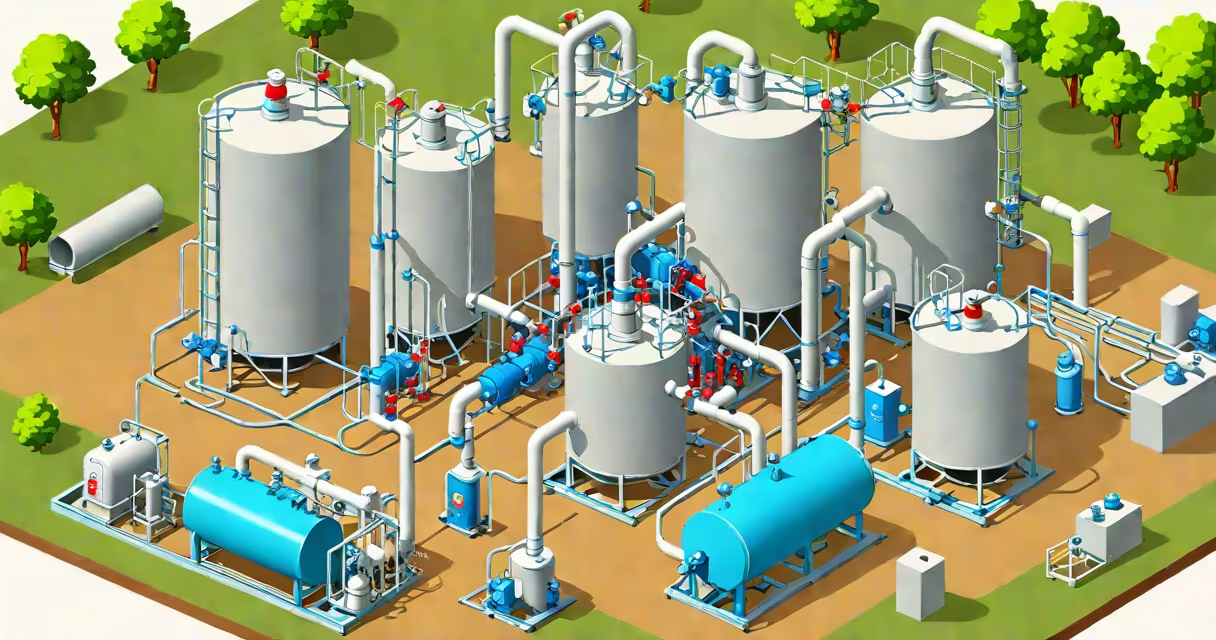
Ozone in water treatment is a disinfection method that uses ozone gas (O₃) to destroy microorganisms, oxidize organic and inorganic pollutants, and improve water clarity. It's used in municipal drinking water systems, wastewater reuse, and industrial processes where high-purity water is required.
Ozone is generated on-site by passing oxygen through an electrical discharge. Unlike chlorine, it doesn't leave residual chemicals in the water, reducing health risks associated with byproducts like trihalomethanes. The process relies on ozone's strong oxidizing power-its ability to break chemical bonds in contaminants.
The Environmental Protection Agency (EPA) recognizes ozone as an effective alternative to chlorine for disinfecting drinking water. According to the EPA's 2021 Guidelines for Water Quality, ozone reduces microbial load by 99.99% in typical municipal systems when applied at 0.5-2 mg/L.
Ozone molecules (O₃) are unstable and rapidly decompose into atomic oxygen (O), which reacts aggressively with pollutants. This reaction breaks down complex compounds into simpler, less harmful forms such as carbon dioxide and water.
When introduced into water, ozone attacks bacteria, viruses, and protozoa by rupturing their cell membranes. It also degrades taste- and odor-causing substances like geosmin and MIB (2-methylisoborneol), which chlorine often fails to eliminate completely.
A 2019 study published in *Water Research* showed that ozone reduced cryptosporidium viability by 99.9% within 1 minute at 1.5 mg/L concentration-outperforming chlorine, which requires longer contact times and higher doses.
Ozone systems consist of three core elements: an oxygen supply, an ozone generator, and a contact chamber. Oxygen can come from ambient air or pure oxygen sources. Pure oxygen feed increases ozone yield by 3-5 times compared to air-fed systems.
Two common generator types exist: corona discharge and ultraviolet (UV) light. Corona discharge is the most widely used in water treatment due to higher efficiency. UV-based generators are limited to low-capacity applications and are typically used in small-scale or laboratory settings.
| Type | Feed Source | Typical Ozone Output | Use Case |
|---|---|---|---|
| Corona Discharge | Compressed air or pure O₂ | 1-10 g/h per kW | Municipal plants, industrial facilities |
| UV Light | Room air | 0.1-0.5 g/h per kW | Small-scale, lab, aquariums |
After generation, ozone is injected into water via diffusers or venturi injectors. Contact time in the reactor must be sufficient-typically 10-20 minutes-to ensure complete oxidation. Residual ozone is then destroyed using catalytic reactors or activated carbon filters to prevent downstream impacts.
Ozone is used in over 6,000 municipal water treatment plants worldwide. In the U.S., cities like Los Angeles and Denver use ozone as a primary disinfectant, especially in surface water systems vulnerable to algal blooms and microbial contamination.
For industrial applications, ozone treats cooling tower water, preventing biofilm formation and scaling. A semiconductor manufacturer in Arizona reported a 70% reduction in membrane fouling after switching from chlorine to ozone in their rinse water system.
In wastewater reclamation, ozone enables safe reuse for irrigation and industrial cooling. The Orange County Water District in California uses ozone alongside granular activated carbon (GAC) to treat 100 million gallons daily of recycled water for groundwater replenishment.
Ozone is not a residual disinfectant. Unlike chlorine, it does not persist in distribution systems. This means secondary disinfection methods like chloramines are still needed in pipelines to maintain protection against recontamination.
Some assume ozone removes all heavy metals. It does not. While it oxidizes ferrous iron (Fe²⁺) to ferric iron (Fe³⁺), which then precipitates, it cannot remove lead or mercury effectively. These require additional filtration or ion exchange.
A common error is assuming ozone systems are maintenance-free. In reality, corona discharge units require regular cleaning of dielectric plates and replacement of electrodes every 3-5 years. Failure to maintain leads to reduced ozone output and increased energy costs.
The City of Portland's Bull Run Water Treatment Plant began using ozone in 2012 after elevated levels of Giardia were detected in raw water. The plant installed a 100 kg/day ozone generator fed with liquid oxygen.
Results showed a 99.999% reduction in Cryptosporidium oocysts and a 90% decrease in organic halogen byproducts compared to chlorine-only systems. Taste and odor complaints dropped by 65% within six months.
Energy consumption averaged 12 kWh per kg of ozone produced. Maintenance logs show annual downtime of 1.8 days, primarily due to electrode degradation. The system now serves 1.2 million residents with water meeting all EPA standards.
Chlorine remains the most widely used disinfectant globally due to low cost and residual protection. However, it forms regulated byproducts like chloroform and bromate under certain conditions.
Ozone produces fewer regulated byproducts but requires more capital investment and technical expertise. It also lacks residual effect, so it must be combined with other treatments for long-distance distribution.
| Feature | Ozone | Chlorine | UV Light |
|---|---|---|---|
| Disinfection Speed | Seconds to minutes | Minutes to hours | Minutes (requires exposure) |
| Byproduct Formation | Low (no halogenated compounds) | High (THMs, HAAs) | Negligible |
| Residual Effect | No | Yes | No |
| Capital Cost (per 1 MGD) | $1.2M-$2.5M | $0.3M-$0.8M | $0.5M-$1.0M |
I've observed ozone systems in action during a site visit to a food processing facility in Wisconsin. The plant used ozone to sanitize packaging lines. The operator confirmed that ozone reduced bacterial counts by 99.9% in 30 seconds-faster than steam or chemical rinses-and left no residue on surfaces.
Ozone in water treatment is a proven, high-efficiency method for eliminating pathogens and improving water quality. Its strength lies in rapid oxidation and minimal byproduct formation. While it requires upfront investment and ongoing maintenance, its performance makes it ideal for advanced water purification.
For systems needing high reliability and compliance with strict regulations, ozone offers a measurable advantage over older methods. If you're evaluating options for your facility, consider aeration water treatment as a complementary step to improve dissolved oxygen and support biological breakdown.