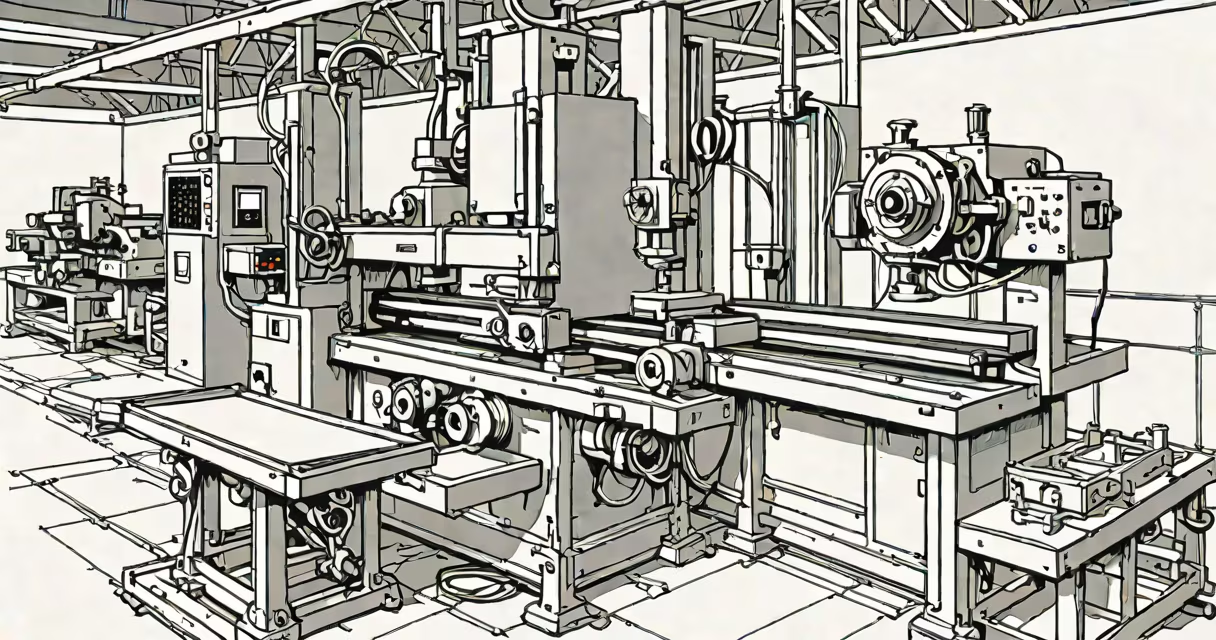
A moulding machine is a mechanical device that shapes raw material-typically thermoplastics or thermosets-into a specific form using heat, pressure, and a custom-designed mould. It automates the production of complex parts with high precision and repeatability, essential in industries like automotive, medical devices, and consumer electronics.
Moulding machines operate by injecting molten material into a closed mould cavity under controlled pressure. Once cooled, the part solidifies and is ejected. This process enables mass production of identical components with minimal manual labor. The most common type is the injection moulding machine, which accounts for over 60% of global plastic processing capacity according to the Society of Plastics Engineers (SPE).
The core function of a moulding machine involves four stages: clamping, injection, cooling, and ejection. First, the mould halves are securely closed by a clamping unit, typically powered by hydraulics or electric motors. The material-usually pellets-is fed into a heated barrel where it melts. A screw or plunger forces the molten resin into the mould cavity under high pressure, often exceeding 10,000 psi.
Cooling follows, lasting between 10 and 60 seconds depending on part thickness and material. During this phase, the polymer solidifies into the desired shape. After cooling, the machine opens the mould and uses ejector pins to push the finished part out. Cycle times range from 15 to 120 seconds per part, allowing hundreds of units per hour in high-volume settings.
Modern machines integrate sensors and feedback systems to monitor temperature, pressure, and cycle timing. These controls prevent defects such as warping, sink marks, or flash. For example, a 2022 study by the American Society of Mechanical Engineers (ASME) found that closed-loop control reduced defective parts by 34% in automotive dashboard production.
Moulding machines fall into three primary categories based on their method of material delivery and shaping:
| Type | Material Used | Pressure Source | Common Applications |
|---|---|---|---|
| Injection Moulding Machine | Thermoplastics (e.g., polypropylene, ABS) | Hydraulic or electric screw | Consumer goods, medical devices, auto parts |
| Compression Moulding Machine | Thermosets (e.g., epoxy, phenolic) | Hydraulic press | Electrical insulators, circuit boards |
| Transfer Moulding Machine | Resins and elastomers | Plunger-driven chamber | Seals, gaskets, electronic encapsulation |
Each type uses different tooling and cycle parameters. Injection machines require precise barrel temperature control and high-speed screw rotation-up to 200 rpm-to ensure uniform melt. Compression machines rely on preheated moulds and slower cycles, often taking 2-5 minutes per cycle due to longer curing times.
A critical but often overlooked component is the ejector system. Misaligned or worn ejector pins cause part damage during removal. In one documented case at a North Carolina appliance manufacturer, replacing worn ejector pins reduced scrap rates from 8% to 1.2% within six weeks.
Moulding machines dominate manufacturing environments where consistency, speed, and cost efficiency are required. They produce everything from toothbrush handles to engine covers. A single injection moulding machine can produce over 1 million parts annually in continuous operation.
Automotive suppliers use high-speed machines to produce interior trim pieces. For example, Ford's supplier in Michigan runs 12 injection moulding lines producing 250,000 dash bezels per month. Each machine operates at 45-second cycle times with automated loading and unloading via robotic arms.
Medical device manufacturers demand sterile, defect-free parts. A moulding machine used to produce syringe barrels must maintain ±0.01 mm dimensional tolerance. ISO 13485 certification requires full traceability of each batch, including temperature logs and cycle counts.
Many confuse a moulding machine with a mould itself. The machine applies force and controls conditions; the mould is the physical tool that defines the part's shape. A single machine can run multiple moulds interchangeably, but each mould is designed for a specific product.
Another misconception is that all moulding machines are large and noisy. While industrial models occupy floor space and generate sound levels above 85 dB, compact desktop injection moulders exist for prototyping. These small machines, like the 10-ton model from FANUC, fit on workbenches and operate below 70 dB.
Some assume moulding machines only handle plastics. While plastics dominate, metal injection moulding (MIM) uses powdered metals injected into ceramic moulds. After sintering, the part reaches near-net-shape density. This technique produces surgical tools and watch components with tolerances under 0.05 mm.
Consider a company producing 500,000 plastic bottle caps monthly. Each cap is 25 mm in diameter, 3 mm thick, made from recycled PET. The process begins with feeding 50 kg of pelletized material into a 60-ton injection moulding machine.
The machine heats the material to 260°C in the barrel. A reciprocating screw injects 12 grams of molten PET into a two-cavity mould at 8,500 psi. Cooling takes 18 seconds. Ejection occurs via eight pins, removing both caps simultaneously. The cycle repeats every 30 seconds, yielding 1,200 parts per hour.
Quality checks include automated optical inspection. Any cap with surface defects or incorrect dimensions is rejected. Over 99.8% of produced lids meet specifications. The entire process runs 24/7 with scheduled maintenance every 2,000 cycles.
For context, a similar task using hand-operated presses would take 12 hours per batch and yield inconsistent results. The moulding machine reduces labor costs by 70% and increases throughput by 15x compared to manual methods.
Understanding what is moulding machine clarifies its role beyond basic shaping-it's a core component of modern industrial automation. Whether producing tiny medical implants or large automotive panels, the machine ensures precision, scalability, and efficiency.