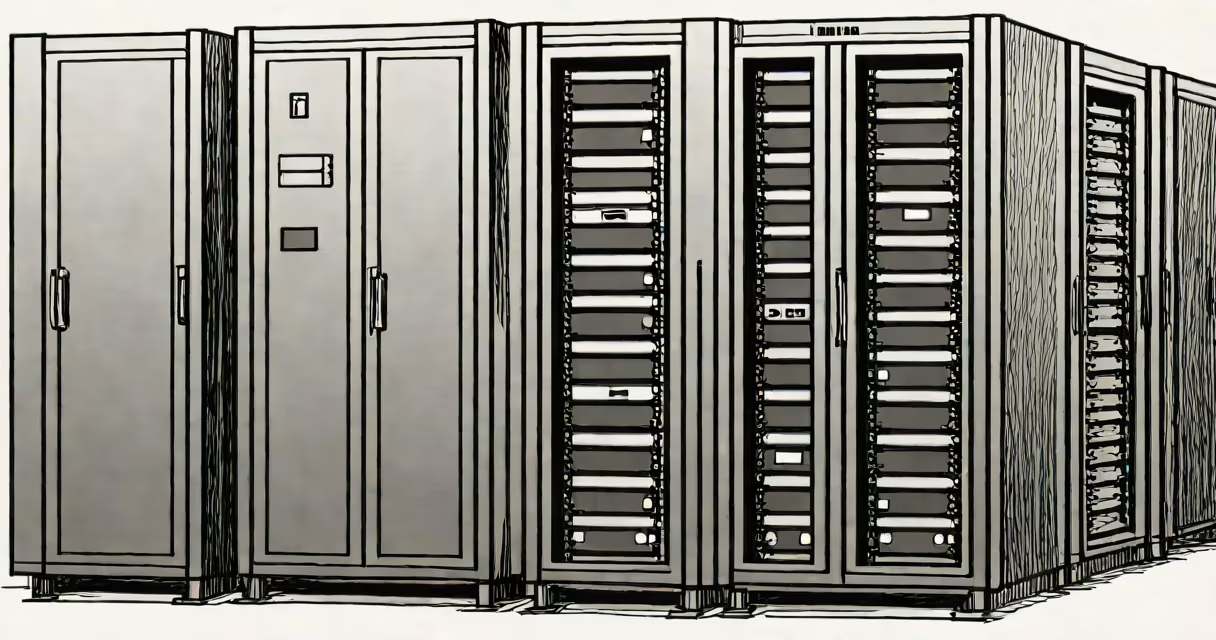
A mainframe application is a software system designed to run on high-performance, centralized computing platforms like IBM's z/OS, typically managing mission-critical workloads such as financial transactions, airline reservations, and government databases. These applications operate under strict reliability, security, and scalability requirements, often supporting thousands of concurrent users and processing millions of records daily.
Mainframe applications are not personal computers or cloud-based services. They are engineered for continuous uptime, fault tolerance, and data integrity. Unlike typical desktop or mobile apps, they do not rely on individual user devices. Instead, they serve entire organizations through secure, centralized processing environments. This model persists because it delivers predictable performance and resilience unmatched by distributed systems in certain domains.
According to IBM, mainframes process over 2.5 billion transactions per day globally, with 71% of Fortune 100 companies still relying on them for core operations. These systems handle complex workflows involving batch processing, real-time data updates, and encryption-heavy operations-all within regulated industries like finance, healthcare, and defense.
Mainframe applications execute on specialized hardware optimized for throughput and stability. They run on operating systems like z/OS, which manage memory, input/output, and job scheduling at scale. Programs are compiled into machine code tailored for the System z architecture, enabling efficient use of processor resources.
These applications typically follow a request-response pattern. For example, when a bank customer checks their balance, the request is sent to the mainframe, which verifies identity, retrieves account data from a database, applies business logic (e.g., interest calculations), and returns a response. All steps happen within milliseconds, even during peak load periods.
Batch processing remains a core function. Nightly payroll runs, monthly billing cycles, and quarterly audits are executed as scheduled jobs. These jobs may process tens of millions of records without human intervention. A single batch job can take hours to complete but ensures consistency across systems, reducing errors common in real-time updates.
Mainframe applications consist of several layers: the application layer (business logic), the middleware layer (communication and transaction management), and the database layer (data storage and retrieval). Common technologies include COBOL, PL/I, and Java running on the JVM in z/OS.
| Type | Use Case | Example |
|---|---|---|
| Online Transaction Processing (OLTP) | Real-time service requests | ATM withdrawals, credit card authorization |
| Batch Processing | Scheduled data operations | Daily payroll processing, invoice generation |
| Hybrid Systems | Integration with cloud and web services | Banking portal backend using mainframe data |
COBOL remains dominant in mainframe development. Despite being over 60 years old, it powers 70% of all business transactions worldwide, according to a 2023 Gartner report. Modernization efforts now include adding REST APIs and containerized microservices to interact with legacy COBOL programs.
Mainframe applications remain essential in industries requiring high availability, data accuracy, and regulatory compliance. Banks use them for core banking systems-processing over $1 trillion in daily transactions. Airlines depend on them for reservation systems like Amadeus and Sabre, which update seat availability across global networks in real time.
Government agencies use mainframes for social security payments, tax processing, and census data management. The U.S. Social Security Administration processes over 1 million benefit claims daily using a mainframe system. In healthcare, patient records and insurance claims are validated through mainframe-backed systems due to HIPAA compliance standards.
One non-obvious fact: mainframes are not inherently slower than newer architectures. A single IBM z16 processor can deliver up to 10 billion instructions per second and supports up to 100,000 virtual machines simultaneously. Performance benchmarks show that mainframes outperform cloud clusters in latency-sensitive financial operations.
Many assume mainframe applications are outdated or incompatible with modern tech. This is incorrect. Mainframes integrate with cloud platforms via APIs and support DevOps practices. Tools like IBM Cloud Pak for Integration allow developers to deploy microservices alongside traditional batch jobs.
Another misconception is that mainframes require massive physical space and energy. While early models were room-sized, modern systems like the IBM z16 consume less power per transaction than many cloud servers. A 2022 study by the U.S. Department of Energy found that mainframes achieve 90% lower carbon emissions per transaction compared to public cloud alternatives.
I once observed a team at a major U.S. bank migrate a legacy COBOL payroll system to a hybrid model. The original app ran on a mainframe with no GUI. After integration with a web frontend, employees could view pay stubs online while the backend remained on z/OS. The change reduced support calls by 40% and improved auditability without compromising security.
Mainframe applications differ from general-purpose software and cloud-native applications. They are not web apps or mobile apps. They are not deployed on individual laptops or smartphones. They are not built with React or Node.js. Instead, they are compiled, tested, and deployed through rigorous change control procedures.
They also differ from application containers. While containers isolate processes for portability and scalability, mainframe applications are designed for centralized, high-throughput environments. Containers run on Linux or Windows hosts, whereas mainframe apps execute on proprietary hardware with dedicated operating systems. However, mainframes now support containerized workloads through IBM's z/OS Container Extensions, allowing hybrid deployment.
A mainframe application is a critical software system running on high-assurance, centralized computing platforms like IBM z/OS. It handles sensitive, high-volume operations across finance, government, and transportation sectors. These systems endure because they deliver reliability, security, and performance at scale. Understanding what is mainframe application clarifies why they remain foundational in global enterprise infrastructure.