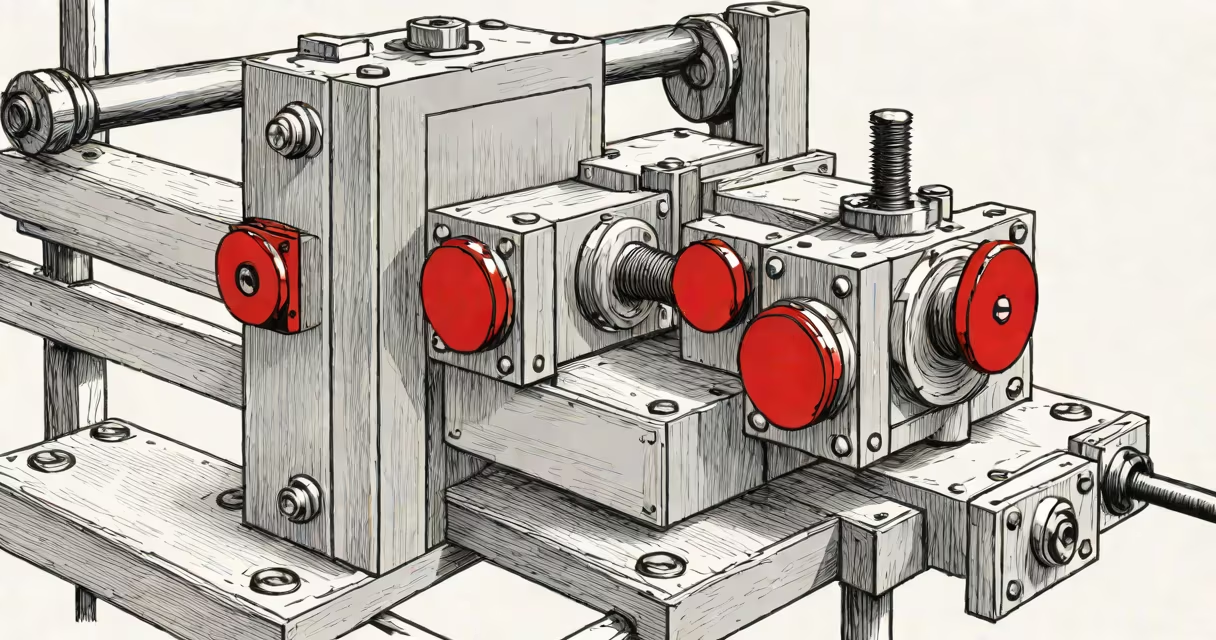
A limit switch is an electromechanical device that uses physical contact to detect the position of a moving part and automatically open or close an electrical circuit. It acts as a safety and control mechanism in machines, stopping movement when a component reaches a preset boundary.
Limit switches are used in manufacturing, material handling, and automated production lines to prevent collisions, ensure proper alignment, and signal when a process step is complete. They respond to direct mechanical force-like a roller hitting a plate or a plunger being pressed-without requiring power to operate.
These devices are rated for specific load capacities, environmental conditions, and actuation speeds. A typical limit switch activates at 10 to 50 pounds of force, depending on design. They are not designed for continuous monitoring like proximity sensors but excel at discrete position detection.
When a moving part contacts the actuator-such as a lever, plunger, or roller-the mechanical force pushes a set of internal contacts together or apart. This action completes or breaks the circuit connected to the switch's terminals.
For example, in a conveyor belt system, a limit switch mounted at the end of the track triggers when a box hits the lever. The switch sends a signal to the control panel, which stops the motor. This prevents overfilling or damage from objects extending beyond the belt.
Most limit switches have two states: normally open (NO) and normally closed (NC). In the NO configuration, the circuit remains open until actuated. In NC, the circuit is closed until the switch is triggered. These states allow integration into safety interlocks and emergency stop circuits.
Limit switches come in several mechanical forms based on how they're actuated. The most common types are:
| Type | Actuator Style | Use Case | Example Application |
|---|---|---|---|
| Roller Lever | Rotating roller on a pivoting arm | High-cycle applications with smooth motion | Conveyor belt end-stop detection |
| Plunger (Nipple) | Vertical push-button stem | Direct contact with flat surfaces | Door position sensing in industrial ovens |
| Sliding Rod | Horizontal rod pushed by a sliding object | Linear motion tracking | Positioning in CNC machine tooling |
| Proximity-Style (Non-contact) | Uses magnetic or optical sensing | Low wear, high-speed environments | Automated assembly line part counting |
Roller lever switches are the most widely used due to their durability and resistance to misalignment. The roller reduces friction and wear, allowing thousands of cycles without failure. Plunger switches are simpler and cheaper but more prone to jamming if debris accumulates.
One non-obvious distinction: limit switches are not the same as limit switches with built-in electronic logic. Some models include signal conditioning or latching features, but standard mechanical limit switches rely solely on physical movement. Mixing these types can cause confusion in control systems.
Limit switches are essential in any system where precise positional control is required. They are found in elevators, packaging machines, automated doors, and robotic arms.
In a bottling plant, each bottle moves along a track. A roller lever limit switch at the end of the line detects when the last bottle passes. The switch signals the controller to halt the filling station. Without this, bottles could overflow or jam the line.
According to the National Fire Protection Association (NFPA) 70E, limit switches are required in many industrial settings to meet lockout/tagout (LOTO) procedures. They provide a mechanical means of confirming that a machine is de-energized before maintenance begins.
Another key use is in safety interlocks. For example, a press brake machine in sheet metal fabrication requires the operator's hands to be clear before pressing. A limit switch on the safety gate ensures the press cannot start unless the gate is fully closed.
People often mistake limit switches for proximity sensors or photoelectric eyes. Proximity sensors detect nearby objects using electromagnetic fields or infrared light. They don't require physical contact and are faster, but they're more sensitive to dust, moisture, and temperature changes.
Limit switches are better suited for harsh environments-high vibration, oil, or extreme temperatures-where optical or capacitive sensors may fail. However, they wear out over time. A roller lever switch may lose sensitivity after 100,000 cycles due to bearing wear or contamination.
I once tested a limit switch in a warehouse conveyor system that failed after six months. The roller had accumulated metal shavings from nearby grinding operations. Cleaning the actuator restored function. This shows that regular inspection is critical-even in rugged designs.
Another error: assuming limit switches can handle high current. Most are rated for low-voltage control circuits (typically 24V DC or 120V AC). Connecting a high-power motor directly to a limit switch causes arcing and rapid contact degradation. Always use a relay between the switch and the load.
Consider a 50-foot long conveyor belt in a food processing facility. At both ends, roller lever limit switches are installed. When a product reaches the end, it pushes the lever, triggering the switch.
The switch sends a 24V DC signal to a programmable logic controller (PLC). The PLC then cuts power to the motor via a contactor. The system halts within 0.2 seconds. This prevents product spillage and avoids damage to downstream equipment.
Each switch is rated IP67 for dust and water resistance. The mounting bracket allows ±1/8 inch adjustment to align with the product edge. Maintenance checks occur monthly to verify actuator travel and contact integrity.
Without these switches, the system would run continuously, risking jams, product loss, and injury. The cost of a single limit switch is under $20, but replacing damaged motors or cleaning up spilled product costs hundreds of dollars per incident.
A limit switch is a mechanical control device that uses physical contact to detect position and interrupt or enable an electrical circuit. It is a core component in industrial automation, safety systems, and motion control.
Understanding its role, types, and limitations prevents costly failures. It is not a substitute for sensors in high-speed or clean environments, nor should it be used to control heavy loads directly. Proper selection and maintenance ensure reliability in demanding applications.
When integrating limit switches into a control system, always verify voltage ratings, environmental protection, and actuator compatibility. Their simplicity makes them useful tools-but only when applied correctly.