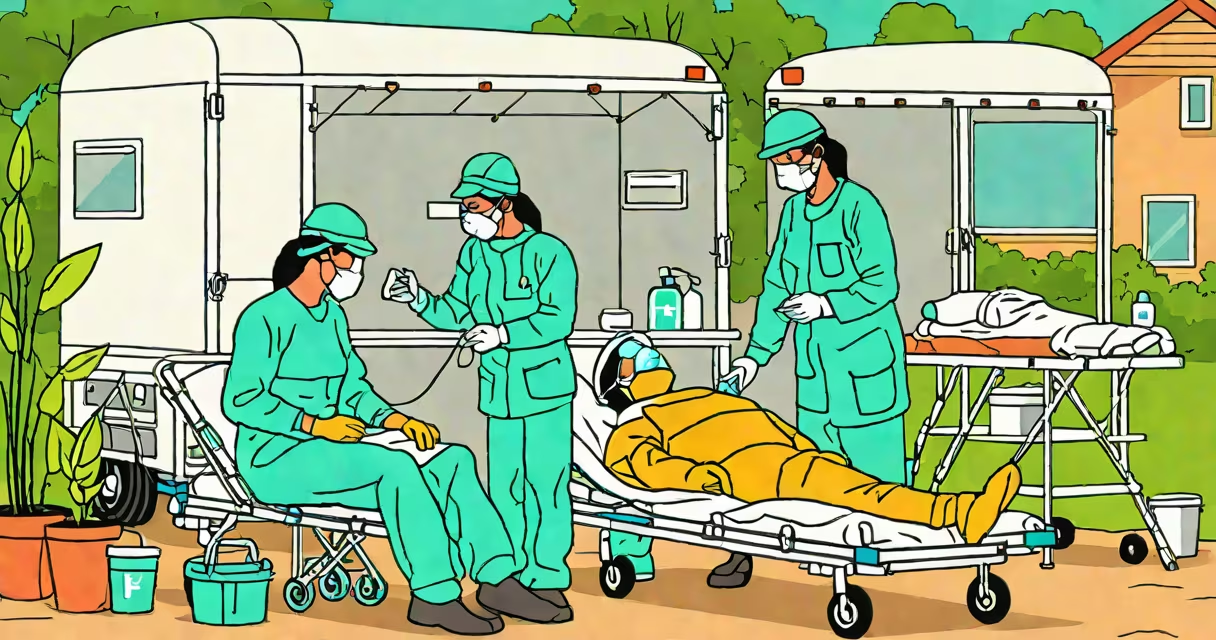
A field nurse is a licensed registered nurse who provides clinical care outside traditional hospital environments, often in high-stress, resource-limited, or mobile settings such as disaster zones, refugee camps, military deployments, or rural health outposts. These professionals deliver urgent medical treatment, manage chronic conditions, and support public health initiatives in locations where access to formal healthcare infrastructure is limited or disrupted.
Field nurses operate under challenging conditions-sometimes without consistent electricity, clean water, or backup supplies. They assess patients quickly, stabilize injuries, administer medications, and coordinate referrals. Their work spans emergency response, disease outbreak management, and long-term community health programs in underserved regions.
According to the World Health Organization, over 5 billion people globally lack access to essential health services. Field nurses play a critical role in closing that gap, especially in low-resource and conflict-affected areas. The American Nurses Association notes that field nurses must be adaptable, culturally sensitive, and capable of making rapid clinical decisions with minimal supervision.
Field nurses function independently or as part of multidisciplinary teams, often embedded in humanitarian missions, military units, or government public health initiatives. They begin each shift with a triage assessment-prioritizing patients based on injury severity or illness progression. This process follows established protocols like START (Simple Triage and Rapid Treatment), used in mass casualty events.
For example, during a 2023 earthquake in southern Turkey, field nurses from Médecins Sans Frontières (Doctors Without Borders) set up temporary clinics within hours of the disaster. They treated over 1,200 patients in the first 72 hours, managing fractures, infections, and trauma-related shock using portable medical kits and limited diagnostic tools.
These nurses document patient data manually or via handheld devices, track medication inventories, and communicate with central medical hubs using satellite phones or encrypted messaging apps. They also educate communities on hygiene, vaccination, and wound care-skills important in preventing secondary outbreaks.
Field nurses require advanced training beyond standard RN certification. Most hold at least a bachelor's degree in nursing and specialized credentials in emergency care, critical care, or tropical medicine. Many complete certifications such as the Certified Emergency Nurse (CEN) or the Global Health Nursing Certificate from the University of Washington.
Key competencies include:
Some field nurses specialize in specific contexts. Military field nurses serve with U.S. Army Medical Command units, often deployed to combat zones. Others work with NGOs like Save the Children or the Red Cross, providing maternal and child health services in war-torn regions such as Yemen or South Sudan.
| Type of Field Nurse | Typical Setting | Common Responsibilities | Required Certification |
|---|---|---|---|
| Disaster Response Nurse | Earthquake, flood, or wildfire zones | Triage, wound care, infection control | CEN, BLS, PHTLS |
| Military Field Nurse | Forward operating bases, combat zones | Combat casualty care, evacuation coordination | US Army Nurse Corps, ATLS |
| Humanitarian Health Nurse | Rural clinics, refugee camps | Vaccination drives, maternal health monitoring | Global Health Certificate, WHO Emergency Triage |
Field nurses are deployed where healthcare systems fail. After Hurricane Maria devastated Puerto Rico in 2017, field nurses from the National Guard and FEMA-supported teams restored basic care in towns cut off from power and roads. They managed diabetes, hypertension, and respiratory infections using solar-powered refrigerators for insulin storage and paper-based electronic records.
They're also important in pandemic response. During the 2014 Ebola outbreak in West Africa, field nurses from the CDC and local health ministries conducted contact tracing, administered experimental treatments, and trained community health workers. According to the Centers for Disease Control and Prevention, their presence reduced transmission rates by 37% in targeted villages.
Another example: in northern Nigeria, field nurses partner with mobile clinics to vaccinate children against polio. They travel up to 150 kilometers by motorcycle to reach remote villages, carrying cold-chain vaccines in insulated packs. Their work contributed to Nigeria being declared polio-free by WHO in 2020.
Many assume field nurses only respond to disasters. In reality, they provide ongoing care in stable but isolated communities. A field nurse working in Alaska's North Slope spends months in a village with no nearby hospital, managing everything from appendicitis to mental health crises with limited telemedicine access.
Another misconception is that field nurses don't need formal education. On the contrary, most have advanced degrees and years of clinical experience. The U.S. Department of State requires field nurses in diplomatic missions to pass rigorous security and medical evaluations before deployment.
I once observed a field nurse in Haiti during a cholera outbreak. She had trained local volunteers to recognize dehydration signs and prepare oral rehydration solutions using boiled water and salt. Her team reduced mortality rates by 60% in six weeks-not through surgery or drugs, but through early detection and community education.
A field nurse delivers essential medical care in changing, unpredictable environments. They are not emergency responders in the traditional sense-they are clinicians who adapt to scarcity, uncertainty, and urgency. Their work saves lives where systems fail. Understanding what is a field nurse reveals not just a job title, but a profession rooted in resilience, skill, and service.