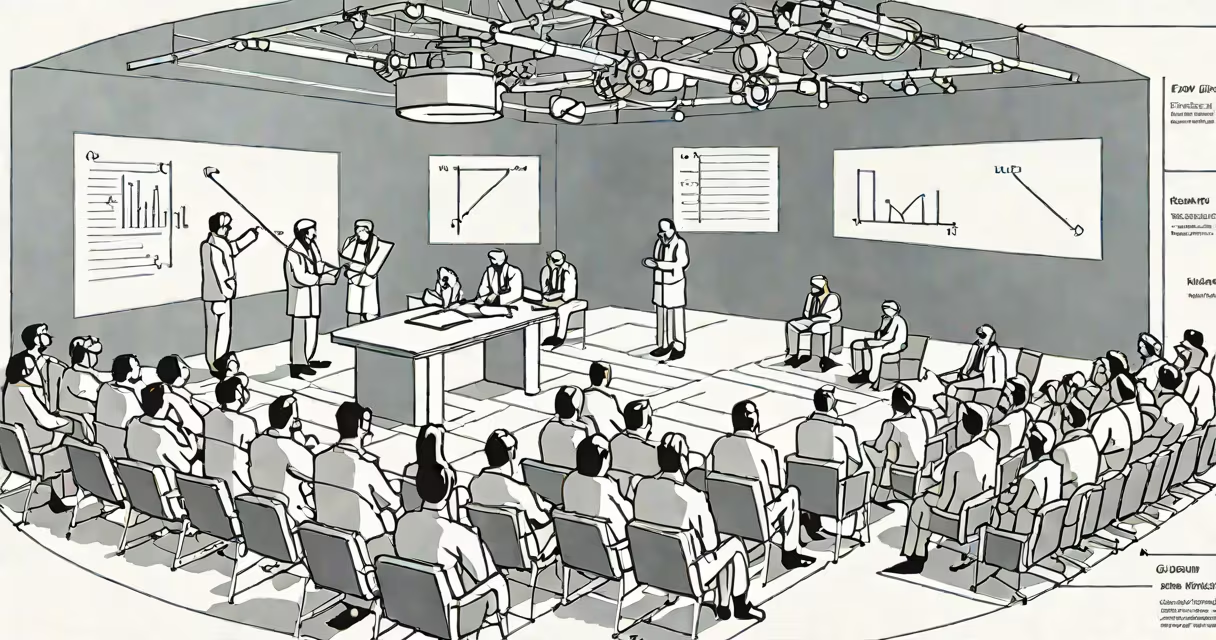
CME medical, or Continuing Medical Education, is a structured learning program designed for licensed physicians, nurses, and allied health professionals to maintain and improve their clinical knowledge, skills, and professional performance. These programs are required in most U.S. states for license renewal and are often mandated by specialty boards.
CME medical activities are formally approved by accrediting bodies such as the Accreditation Council for Continuing Medical Education (ACCME) and must meet specific standards for content validity, independence, and educational effectiveness. Participation earns participants contact hours or credit units recognized by state licensing boards and national certification agencies.
For example, a cardiologist in California must complete 50 hours of CME every two years to renew their medical license. Failure to meet this requirement results in suspension of practice privileges. This system helps clinicians stay current with evolving treatment guidelines, new medications, and advances in diagnostic techniques.
CME medical operates under a structure of accreditation, activity design, and documentation. A provider-such as a university medical center, professional society, or hospital network-develops a course, submits it for review, and then delivers it to learners. After completion, participants receive a certificate verifying their participation and the number of credits earned.
Accreditation requires that CME content be free from commercial bias. The ACCME mandates that no single company can fund more than 25% of a CME activity's cost, and speakers must disclose financial relationships with pharmaceutical or device manufacturers. This prevents conflicts of interest and helps educational content remains evidence-based and unbiased.
For instance, a CME session on managing type 2 diabetes sponsored by a pharmaceutical company must include balanced discussion of multiple drug classes, not just the sponsor's product. The speaker must disclose any consulting fees or research funding received from the company, and the curriculum must reflect current guidelines from organizations like the American Diabetes Association.
CME medical activities fall into several categories based on format, duration, and delivery method. The most common types include live events, enduring materials, and online modules.
| Type | Format | Examples | Typical Credit Hours |
|---|---|---|---|
| Live Activity | In-person or virtual lectures, workshops, or symposia | Annual American College of Cardiology meeting, regional trauma care seminars | 1-6 hours per session |
| Enduring Material | Pre-recorded webinars, podcasts, or printed journals with assessment | AMA Ed Hub modules, NEJM Knowledge+ quizzes | 0.5-2 hours per module |
| Self-Assessment | Interactive cases with feedback and scoring | ABIM board review tools, AAFP self-study exams | 1-3 hours depending on complexity |
Some CME programs also offer "Category 1" and "Category 2" credits. Category 1 is the highest standard, awarded for activities that directly improve patient care or clinical decision-making. Category 2 includes administrative or leadership training, which may count toward certain state requirements but not all specialty board recertification processes.
CME medical is required across the United States for maintaining medical licensure, board certification, and hospital privileging. State medical boards set minimum hour requirements-typically between 20 and 50 hours every 1-2 years-depending on the profession and jurisdiction.
Specialty boards such as the American Board of Internal Medicine (ABIM) require physicians to earn 100 MOC (Maintenance of Certification) points every 10 years, with at least 50 points coming from CME activities. This helps specialists remain up to date in rapidly changing fields like oncology, neurology, and infectious diseases.
A real-world example: Dr. Elena Torres, a family medicine physician in Texas, completed a 4-hour CME course on updated hypertension guidelines from the American Heart Association. She submitted her certificate to the Texas Medical Board and renewed her license without delay. Without this requirement, she would have been unable to prescribe controlled substances or perform procedures requiring active licensure.
Many people assume CME medical is equivalent to academic medical school education or residency training. This is incorrect. CME is not part of initial medical education. It is supplementary, focused on updating existing practitioners rather than teaching foundational knowledge.
Another misconception is that all CME courses are free. While many are offered at low cost or subsidized by professional societies, high-quality CME events-especially those held at major conferences-can cost $200 or more. Some institutions charge for access to premium content, such as advanced surgical simulation modules or rare disease case reviews.
CME medical is not a substitute for peer-reviewed research. It summarizes findings from clinical trials and systematic reviews but does not conduct original science. For example, a CME on new Alzheimer's treatments may cite the 2023 FDA approval of lecanemab, but it won't publish new trial data. The role of CME is synthesis and application-not discovery.
I once attended a CME workshop on telehealth integration in rural clinics. The session included a live demonstration of a secure video platform, followed by a case study involving a diabetic patient in Montana. The presenter emphasized HIPAA compliance and reimbursement policies under Medicare Part B. That hands-on component-rare in online modules-made the material stick far better than reading a journal article.
While CME medical focuses on ongoing learning, it is not related to the use of medical abbreviations. However, understanding abbreviations is critical during CME sessions. For example, a CME lecture on sepsis management may reference "SOFA score," "q6h," or "IVF" without explanation. Participants must recognize these terms to follow the content.
When in doubt, refer to standardized lists such as the Joint Commission's "Do Not Use" list, which prohibits dangerous abbreviations like "U" (for unit) or "MS" (which can mean morphine sulfate or multiple sclerosis). Misinterpretation of abbreviations can lead to medication errors-even in accredited CME settings.
CME medical is essential for keeping healthcare providers current, compliant, and clinically effective. It supports public safety by ensuring that doctors, nurses, and allied health workers apply the latest evidence-based practices in real-world settings.