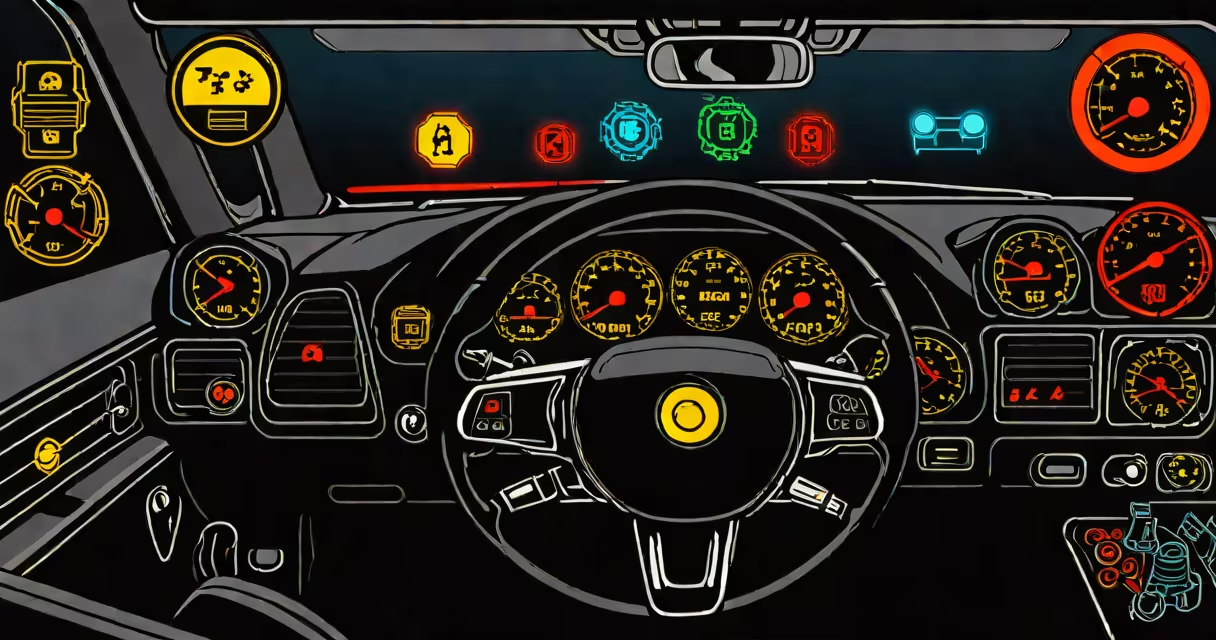
Car signs are visual alerts displayed on a vehicle's dashboard or roadside that communicate critical information about the car's status or road conditions. They include warning lights, symbols, and traffic signage designed to inform drivers of mechanical issues, safety risks, or regulatory requirements.
These signs fall into two categories: those generated by the car's onboard systems (like the check engine light) and those placed by authorities (like stop signs or speed limit markers). Recognizing them correctly reduces accident risk and prevents costly repairs.
Modern vehicles use electronic control units (ECUs) to monitor sensors throughout the system. When a sensor detects abnormal behavior-such as low oil pressure or a malfunctioning oxygen sensor-the ECU triggers a corresponding warning sign on the dashboard.
For example, a yellow triangle with an exclamation mark inside indicates a general warning. This symbol appears when the vehicle's computer detects a potential issue, such as a loose gas cap or a tire pressure imbalance. The system doesn't diagnose the problem-it alerts the driver to investigate.
External signs, like those on roads, rely on standardized color and shape codes. Red means stop, yellow means caution, and green means go. These are governed by the Manual on Uniform Traffic Control Devices (MUTCD), which ensures consistency across U.S. states.
Car signs fall into three functional groups: safety warnings, performance indicators, and traffic regulations. Each uses distinct colors, shapes, and symbols to convey urgency and intent.
| Sign Type | Color | Common Symbols | Meaning |
|---|---|---|---|
| Urgent Safety Warning | Red | Exclamation mark in triangle, flame icon | Immediate action required (e.g., engine overheating, brake failure) |
| Caution/Advisory | Yellow/Amber | Triangle with exclamation, battery symbol | Monitor the issue (e.g., low fuel, worn brakes) |
| Informational/Status | Blue or Green | Checkmark, steering wheel icon | System functioning normally or confirming activation (e.g., cruise control on) |
A red triangle with an exclamation mark signals a serious fault. If this light stays on, the vehicle may be unsafe to drive. A steady amber light, like the battery symbol, warns of a developing issue-such as a failing alternator-but allows continued operation for a short time.
Some signs are location-specific. For example, the "CNG" label on a fuel door indicates compressed natural gas. This is not a warning-it's a fuel type identifier. Misreading it as a malfunction could lead to refueling errors. Always confirm the context of a sign before acting.
Dashboard signs exist to prevent mechanical failure and protect occupants. According to the National Highway Traffic Safety Administration (NHTSA), nearly 16% of vehicle breakdowns stem from ignored warning lights. Drivers who respond promptly reduce repair costs by up to 40%.
Roadside signs serve public safety. The MUTCD mandates that stop signs be octagonal and red. A 2021 study by the Federal Highway Administration found that 98% of drivers recognize stop signs correctly-yet 12% still fail to halt completely at intersections.
One real-world example: a driver saw the "check engine" light flash during highway travel. Ignoring it led to catalytic converter damage costing $2,300 to replace. A scan revealed a misfiring spark plug-fixable for under $150. The sign had warned early; the driver didn't act.
Many drivers mistake dashboard symbols based on color alone. A yellow battery icon does not mean "replace the battery." It means the charging system is failing. The battery itself may still be functional. Replacing it prematurely wastes money and time.
Another frequent error: confusing the "service engine soon" light with a routine maintenance reminder. The light flashes when the ECU detects a fault in emissions or engine management. It is not a schedule-based alert. Waiting until the next oil change could allow a minor issue to escalate into major engine damage.
Some signs are context-dependent. The "ABS" light (anti-lock braking system) turns on briefly when the car starts-a normal startup sequence. If it remains on while driving, it indicates a fault in the ABS module. Not all drivers realize this behavior is standard.
I once observed a driver panic upon seeing a red triangle with a wrench symbol. The light meant "service required," not imminent danger. After checking the owner's manual, he discovered it was triggered by a scheduled oil change. He had avoided unnecessary towing fees.
Understanding what car signs mean prevents avoidable breakdowns and enhances safety. Dashboard warnings are not suggestions-they are real-time diagnostics. Road signs follow national standards to ensure universal recognition.
Always refer to the vehicle's manual for model-specific meanings. For example, a blinking "cruise control" icon means the system is active, not broken. Knowing the difference avoids confusion.