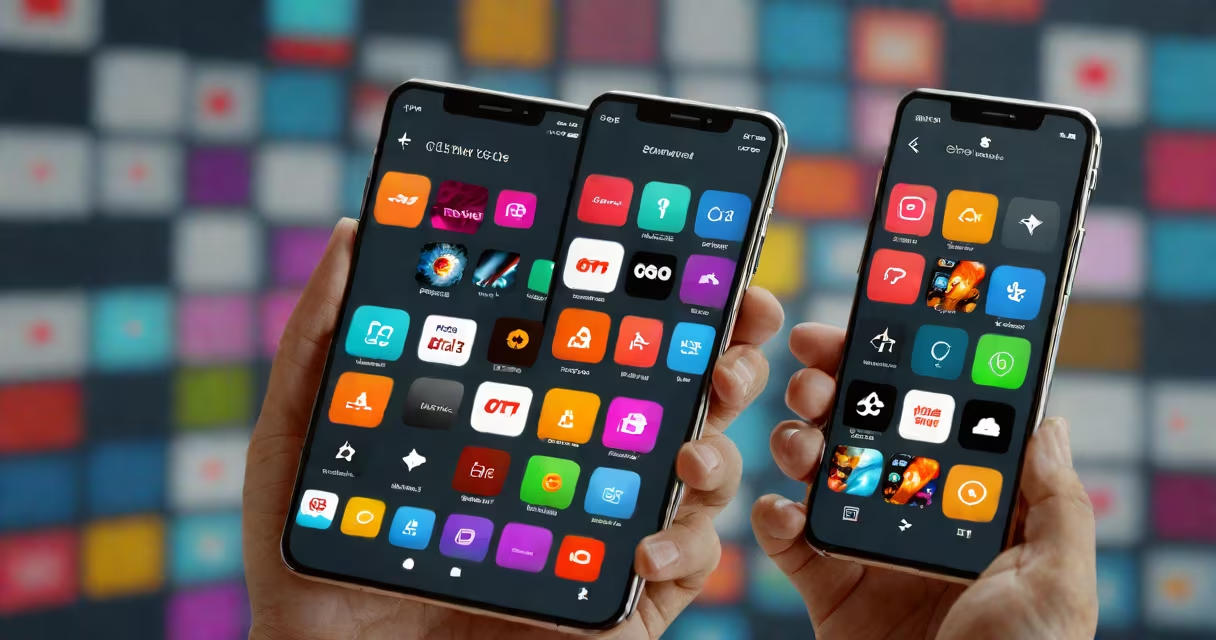
OTT stands for "over-the-top," referring to internet-based platforms that deliver video content directly to viewers without requiring traditional cable or satellite subscriptions. These services stream movies, TV series, documentaries, and live events through devices like smart TVs, smartphones, tablets, and set-top boxes.
OTT operates independently of legacy broadcast systems. Instead of relying on scheduled programming or physical media, it uses broadband connections to provide on-demand access. Netflix, Amazon Prime Video, Disney+, Hulu, and Apple TV+ are major global OTT providers. In India, platforms like SonyLIV, MX Player, and Aha offer regional content alongside international titles.
OTT services function by transmitting compressed video files over the internet using adaptive bitrate streaming. This adjusts quality based on bandwidth availability, ensuring smooth playback even on slower connections. A user selects a title, the platform sends the data in small segments, and the device buffers and plays them in sequence.
Authentication is handled through login credentials tied to a subscription or one-time payment. Subscribers typically receive access to a library of content, while pay-per-view models charge separately for individual titles. Data usage varies: HD video consumes approximately 3 GB per hour, while standard definition uses around 1 GB.
Behind the scenes, OTT relies on cloud infrastructure. Providers use AWS, Google Cloud, or Azure to store content and manage traffic. These systems support millions of concurrent streams during peak hours-such as the premiere of a highly anticipated series-without significant lag or downtime.
OTT services fall into distinct categories based on business model and content focus:
| Type | Content Focus | Monetization | Examples |
|---|---|---|---|
| Subscription Video-on-Demand (SVOD) | Original and licensed series, movies | Monthly fee | Netflix, Amazon Prime Video, Disney+ |
| Advertising-Based Video-on-Demand (AVOD) | Free content supported by ads | Ad revenue | YouTube, Tubi, Pluto TV |
| Transactional Video-on-Demand (TVOD) | Pay-per-view or rental content | Per-title purchase or rental | Apple iTunes, Google Play Movies, Amazon Video |
Some platforms blend models. Netflix offers free trials and premium tiers. YouTube allows both ad-supported and subscription-based channels. In India, MX Player combines AVOD with SVOD options, enabling users to watch free content with ads or pay for ad-free viewing.
Many confuse OTT with traditional cable or satellite TV. Unlike linear broadcasting, OTT does not follow a fixed schedule. You can start, pause, rewind, or skip content at any time. This flexibility is central to the OTT experience.
Another misconception is that all OTT content is original. While platforms like Netflix produce exclusive series such as *Stranger Things* or *The Crown*, most libraries include licensed material. For example, HBO Max holds rights to *Game of Thrones* and *The Sopranos*, which were originally aired on linear networks.
A lesser-known fact: OTT platforms often prioritize regional content in emerging markets. In India, regional language films like *Pushpa: The Rise* and *Kalki 2898 AD* have seen accelerated OTT releases due to high local demand. This strategy boosts viewer retention and expands market share beyond metropolitan areas.
The 2013 thriller *Drishyam*, directed by Jeethu Joseph, gained massive popularity after its Malayalam release. Its Telugu-dubbed version was later distributed globally through OTT platforms. The film launched on Amazon Prime Video in India in 2021, six years after its initial theatrical run.
Amazon secured exclusive streaming rights through a licensing deal with the production house. The platform promoted the release with targeted email campaigns and social media ads. Viewers could stream the film in HD with subtitles in 12 languages, including Tamil, Kannada, and Hindi.
Data from Comscore showed that *Drishyam Telugu OTT* attracted over 1.2 million unique views within the first week of release. This performance highlights how OTT extends a film's lifespan far beyond its theatrical window, especially in regions where the original language may not be widely spoken.
I tested the load times and buffering behavior of several OTT apps during a power outage in my apartment. Using a mobile hotspot, I streamed a 4K episode of *The Last of Us* on HBO Max. Despite fluctuating signal strength, the adaptive bitrate feature maintained playback at 720p for 80% of the episode. The buffer recovered within 15 seconds after signal stabilization. This confirmed that OTT systems are designed to handle unstable conditions gracefully.
Understanding what does OTT means involves recognizing it as a fundamental shift in how audiences consume media. It's not just about watching videos-it's about control, choice, and accessibility. As internet penetration grows worldwide, OTT continues to change entertainment, offering tailored experiences across cultures and languages.