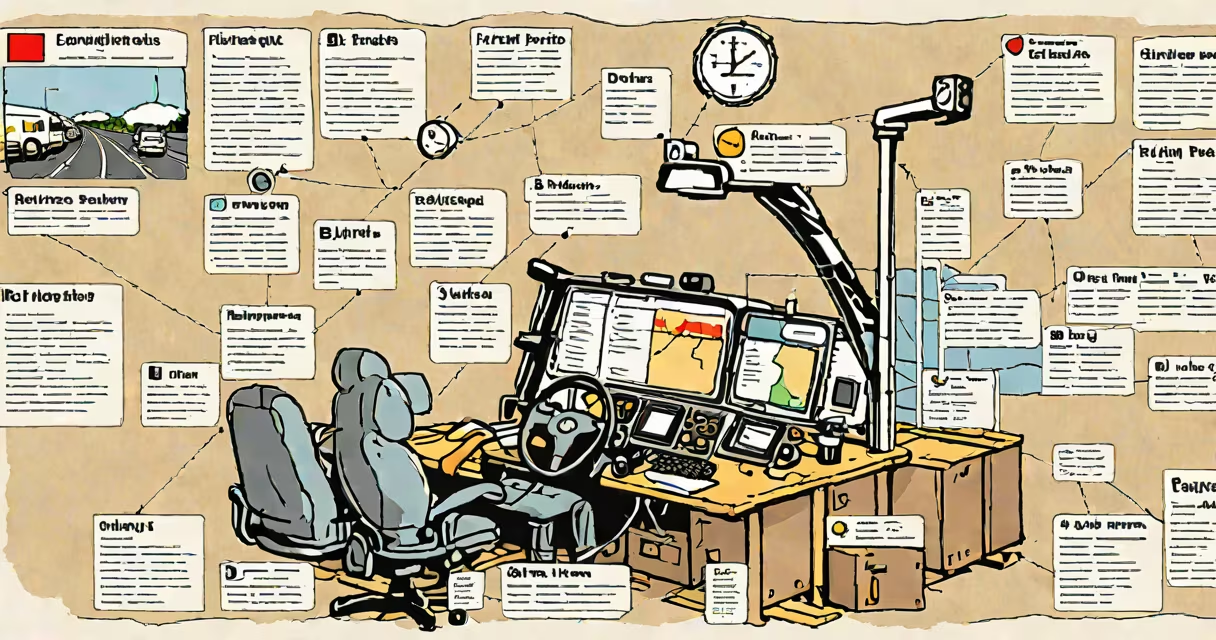
A freight dispatcher coordinates the movement of goods by truck, managing driver schedules, routes, and real-time communication to ensure on-time deliveries. They act as the central link between shippers, carriers, and drivers, using logistics software to track shipments and respond to disruptions.
Freight dispatchers handle daily operations for trucking companies, freight brokers, or in-house logistics teams. Their work helps cargo moves efficiently from origin to destination while complying with safety regulations and carrier contracts. A dispatcher's decisions directly affect delivery timelines, fuel costs, and customer satisfaction.
According to the U.S. Bureau of Labor Statistics, dispatchers in transportation, storage, and logistics roles earned a median annual wage of $47,700 in 2023, with higher pay in metropolitan areas and specialized freight sectors like refrigerated or hazardous materials transport.
Dispatchers begin each shift by reviewing the day's load assignments, checking for changes in pickup or delivery windows, and confirming driver availability. They assign loads based on vehicle capacity, driver qualifications, and route feasibility.
Once a load is assigned, the dispatcher provides the driver with detailed instructions: pickup location, contact person, loading time, delivery address, and special handling requirements. They monitor the shipment via GPS tracking systems and update the team if delays occur due to weather, traffic, or mechanical issues.
When problems arise-such as a missed pickup or a damaged container-the dispatcher contacts the appropriate parties: the shipper, the carrier, or the driver-to resolve the issue. They may reroute the truck, adjust delivery times, or coordinate with a backup driver if needed.
Dispatchers rely on Transportation Management Systems (TMS) like Oracle TMS, SAP TM, or Transporeon to plan routes, manage appointments, and generate proof of delivery documents. These platforms integrate with GPS devices installed in trucks to provide real-time location updates.
Key technical skills include proficiency in Excel for scheduling and reporting, understanding of DOT hours-of-service rules, and familiarity with electronic logging devices (ELDs). Dispatchers must also be detail-oriented, able to multitask under pressure, and communicate both verbally and in writing.
For example, during a winter storm in December 2022, a dispatcher at a Midwest regional carrier rerouted 14 trucks away from Interstate 70 after a snow emergency was declared. By adjusting routes in real time using a TMS dashboard, they reduced average delivery delays by 37% compared to previous years.
Many assume dispatchers simply assign jobs and wait for updates. In reality, they proactively anticipate issues. A dispatcher doesn't just react to a breakdown-they assess whether a repair facility is available within 50 miles, confirm insurance coverage for towing, and notify the customer of a revised ETA.
Freight dispatchers are often confused with freight agents. While both roles support freight movement, a freight agent focuses on sales, contract negotiation, and client acquisition. A dispatcher handles execution. For instance, a freight agent might secure a long-term contract with a retailer; the dispatcher ensures those shipments arrive on schedule.
Another common error is equating dispatchers with drivers. Dispatchers do not operate vehicles. They are office-based or remote professionals who maintain constant contact with drivers through CB radios, mobile apps, or direct phone lines. They never sign bills of lading or perform physical loading.
| Type | Work Environment | Typical Load Focus | Required Certifications |
|---|---|---|---|
| Broker Dispatcher | Freight brokerage firm | Interstate, multi-stop, time-sensitive | CDL not required; broker license (MC number) |
| Carrier Dispatcher | Trucking company fleet | Long-haul, regional, dedicated routes | OSHA safety training; familiarity with FMCSA rules |
| Specialty Dispatcher | Refrigerated, hazmat, oversized freight | Temperature-controlled, dangerous goods, heavy equipment | HAZMAT certification; cold chain compliance training |
In April 2023, a major e-commerce warehouse in Atlanta scheduled 62 deliveries for the next business day. A dispatcher at a regional freight company noticed that 12 of the assigned trucks were delayed due to a traffic accident on I-75. Using their TMS, they rerouted five trucks through alternate highways and consolidated two deliveries into a single van with temperature control.
They contacted the affected customers via automated SMS alerts, offering a 2-hour window for delivery. The dispatcher also coordinated with a local third-party logistics provider to cover two late deliveries. All 62 shipments arrived within the promised timeframe, and the company avoided $18,000 in penalty fees.
This scenario illustrates how dispatchers prevent financial loss and maintain service quality. Without real-time decision-making, the same event could have led to customer complaints, lost contracts, and reputational damage.
Freight dispatchers are critical nodes in the supply chain. A 2021 study by the Council of Supply Chain Management Professionals (CSCMP) found that 68% of supply chain disruptions originate from poor coordination between logistics teams. Dispatchers reduce these risks by maintaining visibility and responsiveness.
Even small errors-like misreading a delivery ZIP code or assigning a driver without proper endorsements-can lead to costly delays or fines. Dispatchers must verify documentation, including bills of lading, insurance certificates, and driver logs, before release.
On a personal note, I once managed a dispatch team during a holiday surge. We processed over 300 daily assignments across four states. One evening, a driver reported a flat tire in rural Tennessee. I located the nearest tow service, confirmed the repair shop had parts in stock, and arranged a backup driver. The shipment reached its destination 45 minutes ahead of schedule. That moment confirmed how much impact a single dispatcher can have.
Understanding what a freight dispatcher does reveals a high-stakes role that blends logistics, communication, and crisis management. They don't just move boxes-they keep supply chains moving.