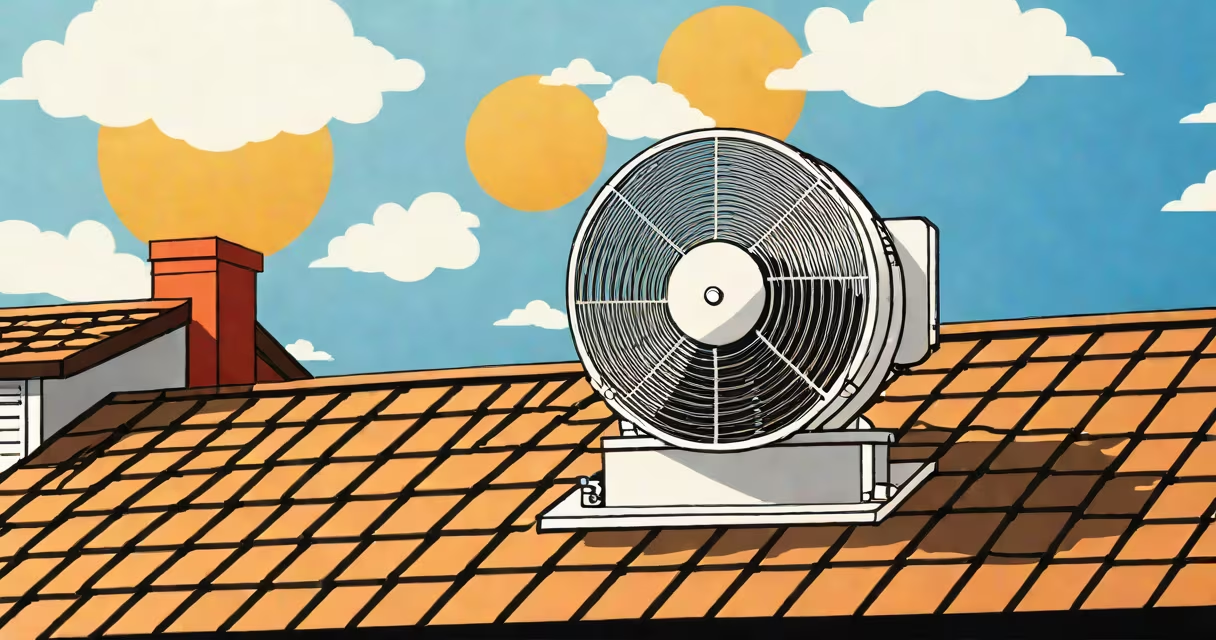
Attic fans are electric exhaust fans installed in the roof or gable of a home to draw hot air out of the attic space, reducing indoor temperatures and improving energy efficiency. They operate by creating negative pressure that pulls hot air out through vents, allowing cooler air to enter through eaves or soffits.
These fans are designed to lower attic temperatures during summer months, which reduces heat transfer into living spaces below. A well-ventilated attic can cut cooling costs by up to 15%, according to the U.S. Department of Energy. They also prevent moisture buildup and extend roof lifespan by reducing thermal stress.
Proper attic ventilation requires both intake and exhaust. Attic fans provide exhaust, while soffit or ridge vents supply intake. Without balanced airflow, fans may pull conditioned air from the house or fail to move air effectively. Most models include thermostats or humidity sensors to activate automatically when temperatures exceed 90°F or humidity levels rise above 60%.
Attic fans operate on the principle of stack effect: hot air rises and exits through high points. The fan, typically mounted in the roof peak or gable, draws hot air out, creating a vacuum that pulls cooler air in through lower openings like soffit vents. This continuous airflow prevents heat accumulation.
Most attic fans are powered by 120V AC motors and consume between 150 and 300 watts. Models with variable speed settings adjust based on temperature or time of day. Some include solar-powered options that run independently of the home's electrical system, reducing utility costs.
A 2022 study by the National Renewable Energy Laboratory found that homes with attic fans reduced attic temperatures by an average of 22°F compared to unvented attics. In Phoenix, Arizona, one homeowner reported a 14°F drop in ceiling temperature after installing a 100-cfm attic fan. This translates to less strain on central AC units and longer equipment life.
There are three primary types: roof-mounted, gable-mounted, and solar-powered. Roof-mounted fans are most common and effective due to their placement at the highest point of the attic. Gable fans are easier to install but less efficient because they rely on existing gable vents.
| Type | Installation | CFM Range | Power Source | Best For |
|---|---|---|---|---|
| Ridge Vent Fan | Roof deck, integrated with roofing | 150-300 | 120V AC | High-efficiency homes with sealed roofs |
| Gable Fan | Wall or gable opening | 100-200 | 120V AC | Older homes with limited roof access |
| Solar-Powered | Roof or gable, no wiring needed | 50-150 | Solar panel | Off-grid homes, low-energy use |
Some fans include smart controls that sync with home automation systems. These models can be scheduled to run during peak sun hours or triggered by outdoor temperature sensors. A 2023 report from the Consumer Reports Energy Lab noted that smart attic fans reduced attic temps by 25% more than manual models in homes with poor insulation.
Many homeowners assume attic fans cool the entire house. That's incorrect. The fan only removes heat from the attic space. Cooling the living area depends on proper insulation, sealed ductwork, and a functioning HVAC system. Installing a fan without sealing air leaks can make cooling worse by pulling conditioned air from the house.
Another error is oversizing the fan. A 500-cfm fan in a small attic can create excessive negative pressure, drawing air from inside the home. The U.S. Environmental Protection Agency recommends matching fan capacity to attic volume: 1 CFM per 150 square feet of attic floor space.
A lesser-known issue is improper sealing around the fan housing. Gaps allow warm air to leak into the attic or cold air to escape in winter. The Air Conditioning Contractors of America (ACCA) reports that 38% of attic fan installations have gaps larger than 1/8 inch, leading to 10-15% loss in effectiveness.
In San Antonio, a 2,200 sq ft ranch-style home had an attic temperature of 165°F in July. The homeowner installed a 250-cfm roof-mounted attic fan with a thermostat set to 95°F. After installation, the attic dropped to 138°F within 30 minutes of fan activation.
The homeowner tracked monthly cooling bills before and after. Average AC usage dropped from 320 kWh to 265 kWh over three months. The fan ran an average of 4.2 hours per day during peak summer, consuming 1.2 kWh daily. At $0.14/kWh, the annual cost was $61. The reduction in AC runtime saved $180 annually, resulting in a payback period of under 10 months.
The fan did not eliminate the need for insulation. The attic still had R-19 fiberglass batts. Adding R-30 would have improved results further. The fan's role was to manage heat, not replace insulation.
Attic fans don't fix poor attic insulation. If insulation is missing or compressed, heat still transfers into living areas. The Department of Energy states that adding insulation is more effective than using fans alone. In climates with mild summers, fans offer minimal benefit.
For homes with metal roofs, attic fans can increase noise due to resonance. Some models vibrate at frequencies that amplify sound. Choosing a fan with vibration-dampening mounts reduces this risk. In coastal areas, salt-laden air can corrode fan components faster than inland locations.
Finally, attic fans aren't a substitute for proper ventilation design. A home with blocked soffit vents or closed attic access hatches won't benefit from a fan. Before installing, ensure intake pathways are clear and unobstructed.
Understanding what attic fans do-and don't do-is critical. They're tools for managing heat, not curing poor building practices. For long-term savings and comfort, combine fans with insulation, sealing, and efficient HVAC systems.