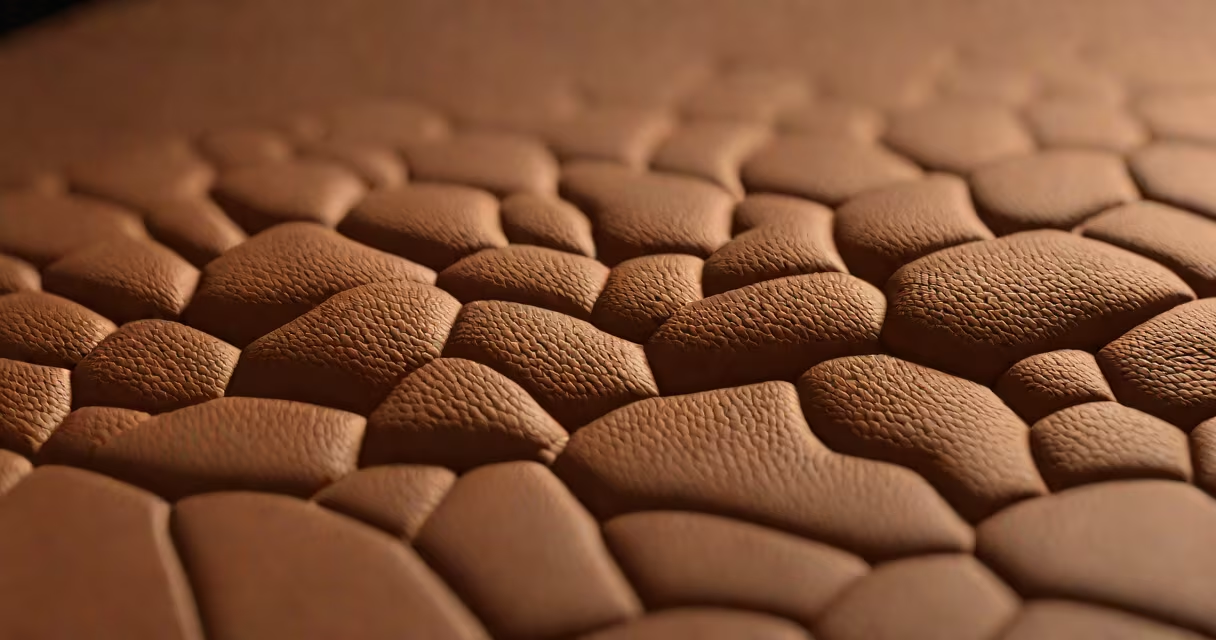
Regenerative leather is a biologically grown material derived from plant waste, microbial cultures, and agricultural byproducts, engineered to restore soil health and sequester carbon during production. Unlike conventional leather, which relies on livestock and toxic tanning processes, or synthetic leather, which uses fossil fuels, regenerative leather actively improves environmental conditions.
It is produced using mycelium (fungus roots), agricultural residues like rice husks or pineapple leaf fibers, and engineered microbes that convert organic waste into dense, flexible biomaterials. These materials are cultivated in controlled environments over 3-6 weeks, then finished with natural dyes and non-toxic sealants. The process avoids deforestation, reduces water consumption by up to 90%, and generates negative carbon emissions when sourced sustainably.
According to the Ellen MacArthur Foundation, global leather production contributes 1.5% of annual greenhouse gas emissions-equivalent to the aviation industry. Regenerative leather, by contrast, can reverse that impact. A 2023 study by the University of California, Davis, confirmed that mycelium-based leather grown on food waste reduced soil degradation by 40% compared to control plots over a 12-month cycle.
Regenerative leather begins with organic feedstock-such as spent coffee grounds, corn stalks, or banana peels-that would otherwise be composted or burned. This biomass is sterilized and inoculated with specific strains of fungi, typically *Ganoderma lucidum* or *Pleurotus ostreatus*, known for rapid growth and structural strength. The mixture is placed in molds and incubated at 25°C with high humidity for 21-42 days.
During this time, the mycelium network spreads through the substrate, binding particles into a solid, fibrous mat. Once mature, the material is heat-treated to halt growth, then pressed and dried. Final steps include surface smoothing, natural dye application (e.g., indigo from fermented plants), and sealing with plant-derived waxes or resins. The result is a durable, water-resistant material with tensile strength comparable to cowhide.
Unlike traditional leather tanning-which uses chromium and formaldehyde-regenerative leather avoids toxic chemicals entirely. The entire lifecycle is closed-loop: leftover biomass is returned to soil as fertilizer, and the finished product is biodegradable within 12 months in industrial composting conditions.
Three primary categories define regenerative leather based on source material and production method:
| Type | Base Material | Production Time | Environmental Impact |
|---|---|---|---|
| Mycelium-based | Fungal root networks on crop waste | 3-6 weeks | Negative carbon footprint when scaled |
| Pulp-based | Pineapple leaf fiber, bamboo pulp, or sugarcane bagasse | 4-8 weeks | Reduces agricultural waste by 30-50% |
| Microbial biofilm | Bacteria like *Acetobacter xylinum* producing cellulose | 2-4 weeks | Uses 95% less water than animal leather |
Each variant offers different textures and durability profiles. Mycelium-based versions mimic the grain of animal hides and are ideal for handbags and footwear. Pulp-based materials have a softer, more pliable feel suitable for apparel linings. Microbial biofilms produce a smooth, semi-gloss finish often used in accessories and interior design.
A notable example is Modern Meadow's "Zoa" material, developed in partnership with the U.S. Department of Energy. Zoa uses genetically optimized yeast to ferment sugar into collagen-like proteins, then combines them with plant fibers. It passed ASTM International's abrasion resistance test at 1,000 cycles-matching commercial cowhide standards.
Regenerative leather is gaining traction in luxury fashion, automotive interiors, and home furnishings. Brands like Stella McCartney, BMW, and IKEA have integrated it into pilot collections. In 2023, BMW announced plans to replace 30% of leather seats in its iX electric SUVs with mycelium-based alternatives by 2026.
Designers favor it for its ethical sourcing and low environmental cost. A single square meter of mycelium leather requires 25 liters of water-compared to 15,000 liters for traditional leather. It also eliminates animal slaughter and reduces land use by 80% compared to cattle ranching.
One limitation is scalability. As of 2024, most regenerative leather is produced in small batches due to infrastructure constraints. However, companies like Bolt Threads and Ecovative Design are investing in modular bioreactors capable of processing 10,000 kg of waste per month, signaling a shift toward mass adoption.
Regenerative leather is frequently confused with "vegan leather," a broad term covering synthetic materials like polyurethane (PU) or polyvinyl chloride (PVC). These are petroleum-based, non-biodegradable, and release microplastics during wear. They may be labeled "plant-based" if they contain a small percentage of natural oils-but their core structure remains fossil-fuel derived.
True regenerative leather is not just "non-animal." It is actively restorative. While vegan leather merely replaces animal products, regenerative leather restores degraded ecosystems. For example, a farm in Iowa used spent corn silage to grow mycelium leather, returning nitrogen-rich residue to fields. Soil tests showed a 22% increase in microbial diversity after one growing season.
Another misconception is that all lab-grown materials are sustainable. Biotech fabrics like LabSkin (developed by L'Oréal) use synthetic biology but rely on energy-intensive fermentation and plastic-based scaffolds. Regenerative leather, by contrast, prioritizes low-energy inputs and closed-loop systems.
I once visited a pilot facility in Oregon where a team grew mycelium leather on apple pomace-a byproduct of cider production. After 28 days, the material was harvested, dyed with beetroot extract, and stitched into a small tote. The final product had a subtle texture, felt warm to the touch, and carried a faint earthy scent. It wasn't perfect-some seams cracked under stress-but it demonstrated how waste can become value.
Regenerative leather represents a shift from resource extraction to ecological restoration. It is not just a substitute for animal hide-it is a redesign of material production. As climate targets tighten and consumer demand for transparency grows, brands adopting regenerative leather gain both environmental and reputational advantages.