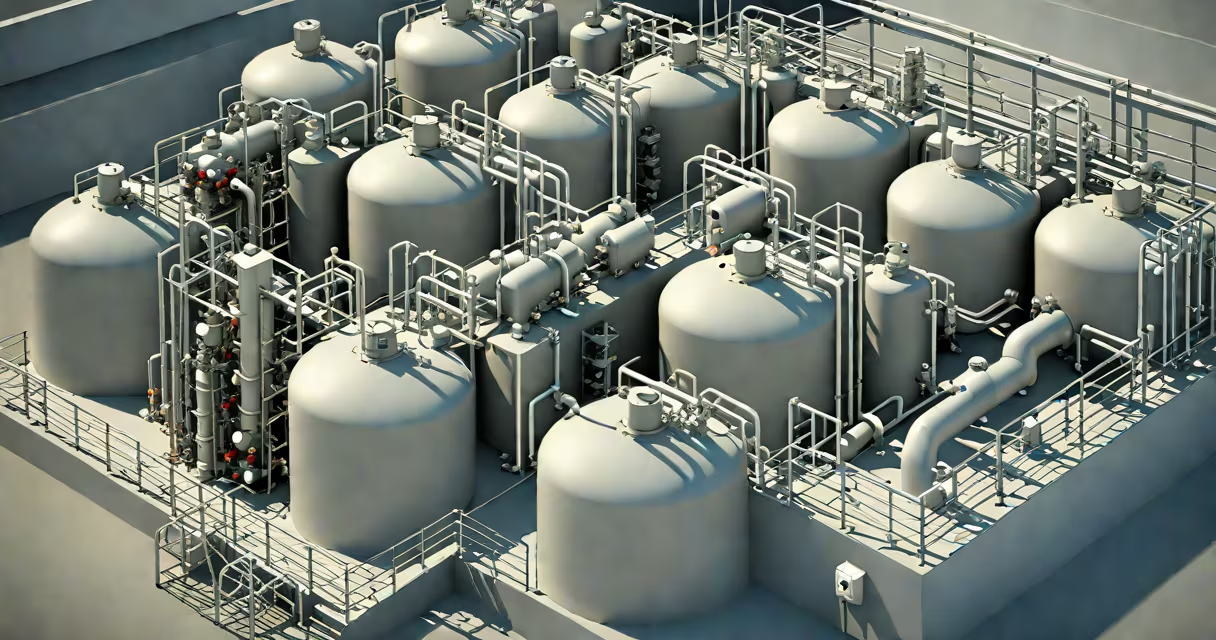
Water treatment stocks are publicly traded equities in companies that design, manufacture, or operate systems to remove contaminants from water for drinking, industrial, or environmental reuse. These firms focus on processes like filtration, disinfection, reverse osmosis, and chemical balancing to meet regulatory standards.
Investors track water treatment stocks because they benefit from long-term trends: population growth, aging infrastructure, climate change impacts on water quality, and stricter environmental regulations. The sector includes manufacturers of equipment, providers of engineering services, and operators of municipal or private treatment facilities.
According to the U.S. Environmental Protection Agency (EPA), over 150,000 public water systems serve more than 280 million Americans. Maintaining compliance with the Safe Drinking Water Act requires continuous investment in treatment technologies-creating steady demand for the products and services offered by these companies.
Companies in this space generate revenue through equipment sales, installation contracts, maintenance agreements, and recurring service fees. For example, a firm that supplies membrane filters for reverse osmosis systems earns income both from selling the hardware and from providing filter replacements every six to twelve months.
Publicly traded water treatment stocks often appear on major exchanges such as the NYSE or Nasdaq. Their performance correlates with capital spending cycles in government and industry, interest rates affecting infrastructure financing, and policy changes related to water safety and conservation.
A key metric for evaluating these stocks is free cash flow relative to capital expenditures. High free cash flow indicates operational efficiency and the ability to reinvest in innovation or return value to shareholders via dividends or buybacks.
The underlying technologies determine which companies dominate specific segments of the market. Major categories include physical separation, chemical treatment, biological processes, and advanced oxidation methods.
| Technology | Function | Example Company | Market Focus |
|---|---|---|---|
| Aeration | Removes dissolved gases and volatile organic compounds using air injection | Grundfos A/S | Global municipal and industrial applications |
| Ozone disinfection | Destroys pathogens and oxidizes micropollutants without residual chemicals | Siemens Energy (water division) | European and North American utilities |
| Reverse osmosis | Removes ions and small molecules via semi-permeable membranes | GE Water & Process Technologies (now part of Danaher) | Desalination plants and semiconductor manufacturing |
| UV sterilization | Uses ultraviolet light to inactivate microorganisms | Ultraviolet Systems Inc. | Small-scale municipal systems and food processing |
Each technology has distinct cost structures and deployment timelines. Aeration systems typically require lower upfront investment but higher energy costs over time. Ozone systems have high initial capital outlays but reduce long-term chemical usage and sludge production.
When analyzing water treatment stocks, investors should assess whether a company relies on proprietary tech or offers commodity-like solutions. Proprietary systems often command higher margins due to intellectual property protection.
Many assume water treatment stocks are synonymous with renewable energy or green infrastructure. While both sectors address sustainability, water treatment focuses on liquid purification rather than energy generation. A company producing solar panels is not a water treatment stock-even if it installs systems for water pumping.
Another misunderstanding is equating water treatment with bottled water brands. Companies like Nestlé Waters or Keurig Dr Pepper are beverage producers, not treatment system providers. Their business models center on distribution and branding, not filtration technology.
A critical distinction lies between operational assets and equipment suppliers. A utility company that operates a treatment plant may be profitable but doesn't trade as a "water treatment stock" unless it owns or licenses core technologies. Conversely, a manufacturer of membrane filters can be a pure-play water treatment stock even if it sells to international clients without owning facilities.
For clarity, consider the difference between a municipal water authority and a private firm like Evoqua Water Technologies. The former manages local supply but doesn't trade on public markets. The latter designs and sells treatment systems globally-and its stock price reflects demand for those systems, not just public-sector spending.
Take Evoqua Water Technologies (ticker: EVOC), a U.S.-based company specializing in industrial and municipal water treatment systems. In 2023, it reported $638 million in revenue, with 61% derived from recurring service and consumables-indicating strong customer retention.
Its product portfolio includes advanced aeration systems and ozone-based disinfection units. The company invested $42 million in R&D during the fiscal year, resulting in five new patents filed. This aligns with the EPA's push for alternatives to chlorine-based disinfection due to concerns about carcinogenic byproducts.
EVOC's P/E ratio was 22.3 in early 2024, above the S&P 500 average of 18.7. However, its forward earnings growth projection of 11.4% annually supports the valuation. Analysts at Morningstar cite its diversified client base across oil & gas, food & beverage, and pharmaceuticals as a buffer against regional downturns.
For comparison, a smaller player like Xylem Inc. (XYL) generates similar revenues but has a broader portfolio including pumps and sensors. Its water treatment segment accounts for 38% of total sales. Investors seeking exposure to integrated water systems may prefer Xylem, while those focused solely on purification might favor Evoqua.
These equities are included in portfolios targeting environmental, social, and governance (ESG) criteria. According to MSCI, water-related ESG factors now influence 74% of institutional equity allocations in developed markets.
They also serve as inflation hedges. Water scarcity increases demand for treatment capacity, driving up prices for services and equipment. Inflation-adjusted returns for water treatment stocks averaged 5.2% annually from 2000 to 2023, according to Bloomberg Intelligence.
Geopolitical risk plays a role too. Regions facing droughts-such as California, parts of sub-Saharan Africa, or the Middle East-require rapid deployment of treatment infrastructure. Companies with modular, scalable systems gain competitive advantage in emergency response scenarios.
One non-obvious fact: many water treatment stocks are sensitive to interest rate changes not because of direct borrowing costs, but due to delayed public infrastructure projects. When bond yields rise, cities delay issuing debt for new treatment plants. This reduces near-term demand for large-scale equipment, impacting supplier orders.
In 2022, I visited a pilot facility in Phoenix that used solar-powered reverse osmosis to treat groundwater contaminated with nitrates. The system was developed by a startup backed by a water treatment stock listed on the Toronto Stock Exchange. After six months of operation, it achieved 98% contaminant removal and reduced energy use by 37% compared to conventional systems. The project attracted follow-on funding from a major utility-demonstrating how innovation in treatment technology translates into commercial viability.
Understanding the mechanics behind water purification begins with foundational processes like aeration water treatment, which removes gases and improves oxygen levels in raw water. Another key method is what is ozone in water treatment, a useful oxidant used to eliminate microbes and degrade persistent pollutants.