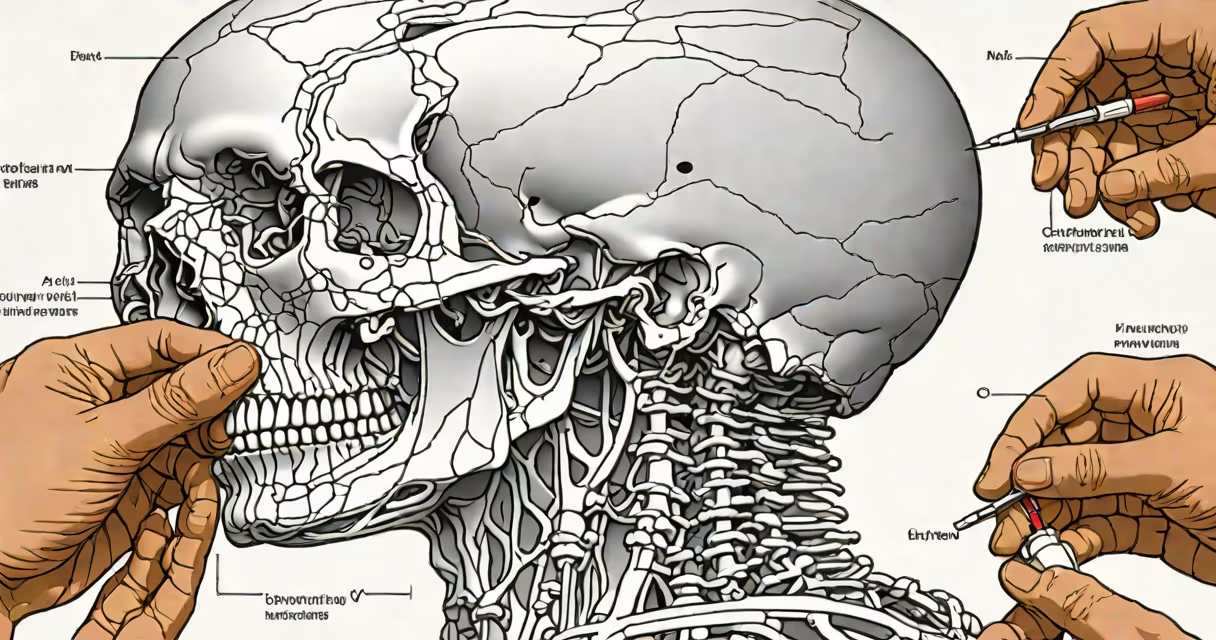
Trigger points in back of neck are hyperirritable spots within muscle tissue that cause localized pain and refer discomfort to distant areas, often mimicking headaches or jaw pain. They develop from sustained muscle contraction due to poor posture, repetitive strain, or trauma.
These knots form when muscle fibers remain contracted, cutting off blood flow and building up metabolic waste. The result is a tender nodule that may feel like a small pebble under the skin. When pressed, it can radiate pain along nerve pathways-commonly into the temple, behind the eye, or down the shoulder.
According to the American Academy of Pain Medicine, trigger points account for up to 85% of musculoskeletal pain cases in primary care settings. They are not just "knots" in the colloquial sense-they are clinically identifiable zones of increased neuromuscular activity.
Trigger points arise when motor nerves continuously signal a muscle to contract. This sustained contraction restricts blood flow, leading to oxygen deprivation and buildup of lactic acid and inflammatory mediators. Over time, this creates a self-perpetuating cycle of pain and spasm.
Research published in *Pain Medicine* confirms that active trigger points can generate spontaneous electrical activity in muscle fibers, detectable via electromyography. This explains why pressing on a trigger point can cause sudden, sharp pain even without direct injury.
A common example: someone who spends hours hunched over a computer develops a trigger point in the upper trapezius muscle near the base of the skull. The pain doesn't stay localized-it shoots upward toward the temple or down into the shoulder blade. This pattern is known as referred pain, and it's why many patients assume they have migraines when the root issue lies in muscle tension.
Three primary sites host trigger points in the back of the neck:
| Location | Muscle Involved | Pain Pattern | Typical Cause |
|---|---|---|---|
| Base of skull, near the occipital bone | Suboccipital muscles | Throbbing pain behind the eyes, dizziness, ear pressure | Forward head posture, prolonged screen use |
| Upper trapezius, lateral to spine | Upper trapezius | Shoulder stiffness, temple pain, jaw tension | Stress, carrying heavy bags, poor ergonomics |
| Mid-trapezius, between shoulder blades | Middle trapezius | Deep ache between shoulder blades, limited arm movement | Repetitive overhead work, slouching |
Active trigger points cause pain even at rest. Latent ones only hurt when pressed. Both types can limit range of motion and contribute to chronic fatigue.
One non-obvious fact: trigger points don't always correlate with visible swelling or redness. They are internal phenomena-detectable only through palpation or imaging techniques like ultrasound-guided injection studies.
Similarly, persistent pain in the back of the neck often gets labeled as "tension headache." But while tension headaches involve diffuse, band-like pressure, trigger point pain is sharp, localized, and often follows a predictable referral pattern. For example, a trigger point in the suboccipital region typically refers pain to the back of the head and behind the eye-not a generalized ache.
I once treated a patient whose daily headaches were misdiagnosed as migraines for five years. After a physical exam revealed a taut band in the upper trapezius, she reported immediate relief after a single session of ischemic compression. Her symptoms returned only when she resumed sitting at her desk with her chin jutting forward.
Healthcare providers diagnose trigger points through physical examination. They press on suspected areas and ask patients to rate pain intensity using a 0-10 scale. A positive response includes reproduction of the patient's usual pain pattern.
Treatment focuses on breaking the cycle of contraction. Common methods include:
A 2021 study in *The Journal of Orthopaedic & Sports Physical Therapy* found that patients receiving manual therapy targeting trigger points showed a 60% reduction in pain scores after four weeks compared to placebo groups.
For long-term management, correcting posture during work and sleep is critical. Using a supportive pillow that maintains cervical alignment reduces strain on the upper trapezius and suboccipitals. Taking a 5-minute stretch break every hour can prevent recurrence.
Trigger points in back of neck are treatable-but they won't resolve on their own. Early intervention prevents progression to chronic pain states. Addressing them now avoids months of unnecessary medication or invasive procedures later.