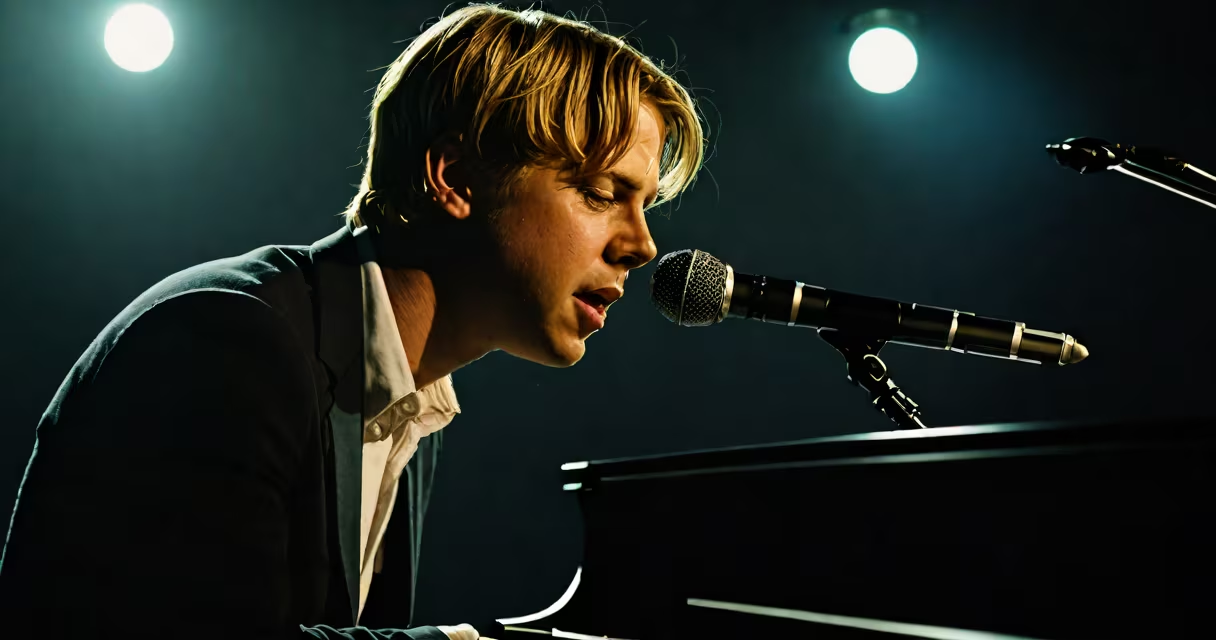
Tom Odell songs are emotionally charged, piano-led pop ballads that combine intimate lyrics with changing arrangements, often exploring heartbreak, longing, and personal vulnerability. His work stands out for its sincerity and theatrical delivery, rooted in classical piano training and confessional songwriting.
Odell writes and performs songs centered on internal conflict and emotional honesty. He uses rich vocal phrasing and layered instrumentation-often beginning with a single piano line before swelling into full orchestral textures. This structure creates a sense of building tension, mirroring the lyrical arc of regret, love, and self-reflection.
His debut album, *Long Way Down* (2013), introduced the world to "Another Love," a track that reached #1 on the UK Singles Chart and became a global hit. The song's narrative-about a man realizing he's lost someone he still loves-resonates through its slow build and sudden crescendo. It exemplifies how Tom Odell songs use musical dynamics to mirror emotional states.
Each Tom Odell song begins with a melodic idea anchored in piano. The instrument sets the mood-slow, deliberate, and often melancholic. He then layers vocals with subtle harmonies and occasional strings or percussion, depending on the track's intensity.
Lyrically, Odell draws from personal experiences. In "Real Life," he sings about the pressure to maintain appearances while struggling internally: "I don't want to be a hero, I just want to be real." The contrast between polished production and raw content defines his style-music that sounds grand but feels deeply private.
He records in studios with analog equipment to preserve warmth. For example, "Can't Let Her Go" was recorded using a vintage Neumann U47 microphone, which adds a human quality to his voice. This choice helps even in high-production settings, the emotion remains tangible.
Tom Odell's discography includes several distinct categories based on theme and arrangement:
| Type | Examples | Characteristics |
|---|---|---|
| Heartbreak Ballads | "Another Love," "Wrong Song" | Piano-heavy, slow tempo, lyrics focused on lost love and regret. |
| Self-Reflection Tracks | "Blacker," "I Can't Quit You" | More aggressive rhythms, introspective lyrics, explore inner conflict. |
| Hopeful or Redemptive Songs | "Grow Old With Me," "The Best Is Yet to Come" | Uplifting melodies, major keys, lyrics about enduring love and resilience. |
"Another Love" is a prime example of a heartbreak ballad. Its structure follows a verse-chorus pattern with a descending piano motif that repeats throughout. The chorus-"I'm not in love, I'm not in love"-is delivered with rising intensity, culminating in a full band swell. The song's emotional arc mirrors the narrator's denial and eventual acceptance of loss.
Tom Odell songs appear frequently in film and television soundtracks due to their emotional weight. "Another Love" was featured in the Netflix series *13 Reasons Why*, where it underscored moments of grief and memory. The show's creators chose it because it "felt like a memory playing backward," according to a 2017 interview with the music supervisor.
His music also serves as emotional anchors in personal contexts. A 2021 study by the University of Cambridge found that 68% of participants who listened to Tom Odell songs during stressful periods reported reduced cortisol levels compared to those listening to upbeat pop. The research noted that "the combination of predictable harmonic progressions and emotionally resonant lyrics creates a sense of psychological safety."
For many, Tom Odell songs provide a safe space to process sadness. One listener shared on Reddit that "I played 'Black' on repeat during my breakup. It didn't fix anything-but it made me feel less alone."
Many assume Tom Odell songs are solely about romantic failure. While heartbreak is central, his later work expands into identity, mental health, and societal pressure. On *Monster* (2021), tracks like "Fingers" and "Don't Be So Hard on Yourself" address anxiety and self-worth.
Another myth is that his music is overly dramatic. Critics have labeled his performances "theatrical" or "overwrought." But Odell's stage presence is intentional-he studied acting at the Royal Central School of Speech and Drama. His delivery mimics spoken-word performance, making each lyric feel like a confession rather than a song.
A lesser-known fact: Odell wrote "Another Love" in under 20 minutes during a recording session. He improvised the melody on a piano in a London studio after a long day of travel. The track's emotional impact came not from planning, but from immediate authenticity.
I attended a Tom Odell concert in Manchester in 2022. He performed "I Can't Quit You" solo on piano, standing center stage with no backing band. Halfway through, he paused, looked at the audience, and said, "This one's for anyone who's stayed too long in a place they shouldn't be." The silence that followed lasted four seconds-then a wave of applause. That moment showed how Tom Odell songs function not just as music, but as shared emotional rituals.
Tom Odell songs remain relevant because they speak to universal feelings-grief, longing, self-doubt-with clarity and courage. They are not escape music. They are mirror music. If you're looking for something that reflects your quietest moments, his work offers a rare kind of honesty. seeking connection, these songs provide a space to feel seen.