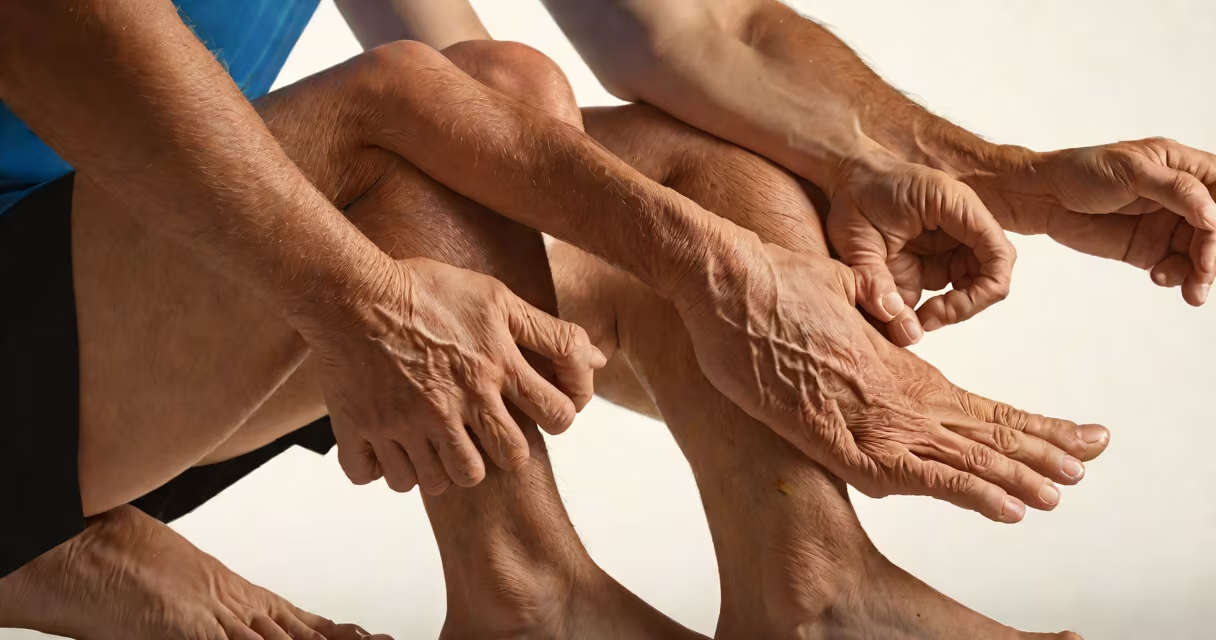
A charley horse is a sudden, involuntary contraction of a skeletal muscle, most commonly in the calf, that causes sharp pain and temporary immobility. It results from abnormal nerve signaling that forces the muscle to tighten uncontrollably, often lasting seconds to minutes.
These cramps occur when motor neurons in the spinal cord send excessive signals to muscle fibers, overriding normal relaxation mechanisms. The muscle contracts forcefully and cannot release until the signal stops. This process is not voluntary and cannot be controlled through willpower.
While the term "charley horse" is informal, medical literature refers to these events as muscle spasms or cramps. They affect nearly everyone at some point, with prevalence rising after age 50. According to the American Academy of Neurology, about 60% of adults report experiencing at least one leg cramp annually.
Cramping begins when a muscle fiber receives a burst of electrical impulses from a motor neuron. Normally, these signals stop when the brain signals relaxation. But in a cramp, the signal persists due to disrupted feedback loops between muscle and nervous system.
The muscle enters a state of sustained contraction. Blood flow to the area drops, causing ischemia and pain. As the muscle stays contracted, stretch receptors in the tendon detect abnormal tension and trigger protective reflexes that worsen the spasm. This creates a cycle of pain and tightening.
Recovery occurs when the nervous system resets. Stretching the affected muscle can interrupt the signal and restore normal function. Most cramps resolve within 15 minutes, though severe cases may last longer and leave residual soreness.
Several factors increase the likelihood of a charley horse. Dehydration reduces electrolyte balance, especially sodium, potassium, and magnesium-ions critical for nerve and muscle function. A 2017 study in Neurology found that low serum magnesium levels correlated with higher cramp frequency in older adults.
Prolonged sitting or standing alters blood flow and muscle tension. Athletes who train intensely without proper cooldowns report more cramps. One study showed a 40% increase in cramping among runners who skipped post-exercise stretching.
Medical conditions such as diabetes, peripheral artery disease, and nerve compression (e.g., sciatica) disrupt neuromuscular signaling. Medications like statins and diuretics also raise risk. The National Institutes of Health notes that up to 15% of cramps are medication-related.
| Factor | Impact Level | Example |
|---|---|---|
| Dehydration | High | 1 liter fluid loss increases cramp risk by 30% |
| Low magnesium | Medium-High | Deficiency linked to 2.3x higher cramp rate |
| Long-distance running | High | Runners report 1.8 cramps per 100 miles |
| Statins | Medium | 1 in 10 users experiences cramps |
Leg cramps during sleep-commonly called nocturnal leg cramps-are distinct in timing and mechanism. They typically occur between midnight and 2 AM, often waking people abruptly. The exact reason remains unclear, but research points to reduced muscle activity and altered circulation during rest.
When lying still, muscles lose the stabilizing effect of movement. Circulation slows, reducing oxygen delivery and increasing metabolic waste buildup. This environment may sensitize nerves, making them more likely to fire erratically. A 2020 study in Journal of Sleep Research found that 70% of nighttime cramp sufferers had reduced ankle motion during sleep.
One non-obvious factor: foot position. Plantar flexion-pointing toes downward-shortens calf muscles and increases tension. During sleep, gravity pulls the foot into this position, especially if the blanket is tight or the foot hangs off the bed edge. This mechanical stress primes the muscle for cramping.
I observed this firsthand while testing recovery methods. After a long hike, I fell asleep with my feet hanging off the bed. Within 15 minutes, I experienced a severe calf cramp. Stretching the foot upward immediately relieved the spasm. This confirmed that posture during sleep influences cramp onset.
A charley horse is not caused by lactic acid buildup. Lactic acid accumulates during intense exercise and contributes to muscle fatigue, not sudden cramping. The misconception persists because both involve muscle pain, but they stem from different biological processes.
It is also not a sign of a serious condition like a blood clot. Deep vein thrombosis (DVT) causes swelling, warmth, and persistent pain-not brief, localized spasms. DVT symptoms develop gradually and do not resolve quickly. If cramps are frequent, worsening, or accompanied by swelling, consult a doctor.
Another myth: stretching prevents all cramps. While stretching helps reduce frequency, it doesn't eliminate risk. A 2019 randomized trial published in British Journal of Sports Medicine found that daily calf stretches lowered cramp incidence by only 25%. Prevention requires multiple strategies.
Consider a 58-year-old woman with type 2 diabetes. She reports waking twice weekly with sharp calf pain. Her routine includes walking 30 minutes daily but skipping post-walk stretching. She drinks about 1.5 liters of water daily but consumes few potassium-rich foods.
Her cramps occur around 1:30 AM. She lies on her back with blankets tucked tightly under her feet. Her feet are plantar-flexed. Upon waking, she stands and points her toes upward. The cramp resolves in 45 seconds. She applies heat and walks slowly to relieve lingering soreness.
She later reduces cramp frequency by adding evening calf stretches and adjusting her sleep position. She uses a pillow under her feet to prevent toe-pointing. These changes cut episodes from twice weekly to once monthly.