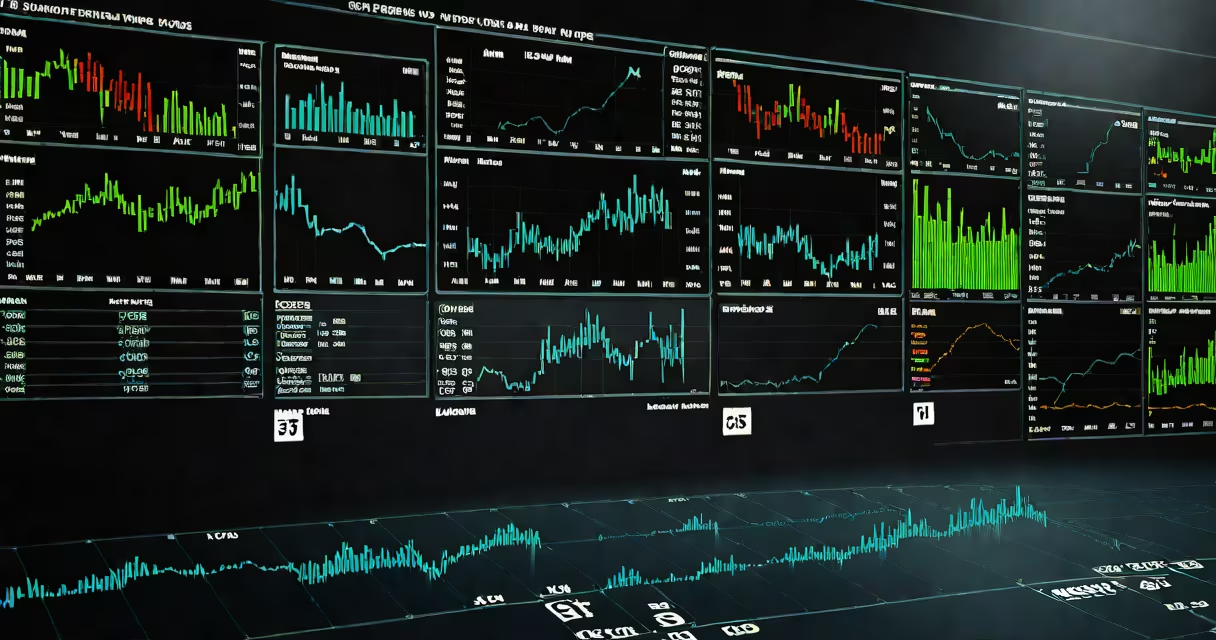
A stock market trading simulation is a digital environment that mimics real-world stock exchanges, allowing users to buy and sell securities using virtual money. It replicates market conditions, price movements, and trading tools to provide hands-on experience without financial risk.
These simulations run on platforms that pull real-time or delayed market data from exchanges like the NYSE and NASDAQ. Users create accounts, fund them with fake currency, and execute trades based on current prices. Performance is tracked through metrics like portfolio value, daily returns, and win rate, often displayed in dashboards similar to those used by professional traders.
Platforms such as Investopedia's Stock Simulator, TradingSim, and Wall Street Survivor offer free or subscription-based access. They include features like news feeds, technical analysis charts, and paper trading journals. Some integrate social elements, letting users compare results with others or join challenges.
Users start by signing up and receiving a virtual account balance-typically $100,000 in U.S. dollars. The system connects to a data feed that updates prices every few seconds. When a user places a trade, the platform checks the current bid and ask prices, confirms execution, and adjusts the portfolio accordingly.
For example, if a user buys 10 shares of Apple (AAPL) at $175.30 per share, the system deducts $1,753 from their virtual cash and adds 10 shares to their holdings. If the price rises to $180.00 the next day, the portfolio value increases by $470, reflecting a 2.68% gain. All changes are logged and visible in real time.
Simulations also replicate market events. During the 2020 pandemic, many platforms showed sudden drops in tech stocks due to lockdown-related volatility. Users who sold early preserved gains, while those holding through the dip saw losses-even though no real money was lost. This teaches emotional discipline and strategy under pressure.
Stock market trading simulations fall into three categories: basic, advanced, and competitive.
| Type | Features | Best For |
|---|---|---|
| Basic | Real-time quotes, simple charts, no fees | Beginners learning order types and basic concepts |
| Advanced | Technical indicators, algorithmic tools, margin simulation | Intermediate learners testing strategies like swing trading |
| Competitive | Leaderboards, timed challenges, peer comparison | Students or hobbyists seeking motivation through competition |
Investopedia's simulator uses real-time data and includes educational pop-ups explaining each trade. TradingSim offers historical data modes, letting users replay past market crashes like Black Monday 1987. Wall Street Survivor adds gamified elements-users earn badges for consistent performance and complete weekly challenges.
One non-obvious difference: some platforms use delayed data (15 minutes behind), which prevents real-time arbitrage but reduces server load. Others use real-time feeds, making them more accurate but requiring stronger internet connections. Always check the data source before relying on timing accuracy.
Stock market trading simulation is widely used in classrooms, online courses, and personal development programs. According to the National Association of Securities Dealers (NASD), 78% of high school finance teachers use simulation tools to teach investment principles. The U.S. Department of Education cites them as effective for building decision-making skills in adolescents.
Many assume simulations are purely educational. But they're also used by hedge funds and asset managers to test new algorithms. A 2022 study by the Journal of Financial Education found that participants who used simulations for six weeks improved their stock selection accuracy by 34% compared to control groups.
A common mistake is treating simulated profits as equivalent to real ones. In reality, psychology plays a bigger role in actual trading. The absence of financial loss in simulations can lead to overconfidence. One trader I observed during a workshop repeatedly bought high-volatility stocks in a simulation, earning steady gains. When he switched to a real account, fear caused him to exit prematurely-losing 40% of his capital in three days.
Another misconception is that all simulations are equal. Some platforms restrict short-selling or margin trading, limiting realism. Others allow unlimited use, creating false confidence. Always review the rules before starting.
Set clear objectives. Track your trades weekly. Ask: Did I follow my plan? Was my entry timing sound? How did emotions affect decisions? These reflections turn passive play into active learning.
After mastering basics, explore more complex strategies. Try sector rotation-moving between energy, tech, and healthcare stocks based on macroeconomic trends. Test momentum trading using moving averages. Use the simulation to stress-test ideas before risking real capital.