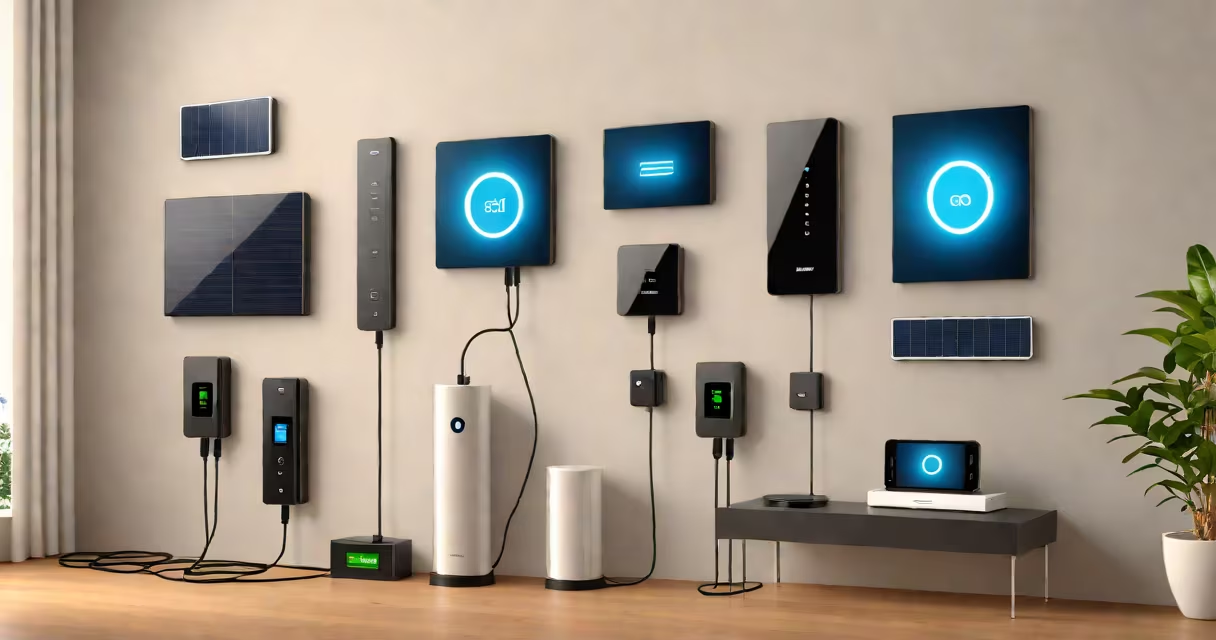
Smart home charge is a system that automatically manages electric vehicle (EV) charging by syncing with home energy sources, utility rates, and household appliance usage. It ensures vehicles charge during low-cost, high-renewable periods while avoiding peak demand times.
At its core, smart home charge uses real-time data from the home's electricity meter, solar panels, battery storage, and local utility pricing. It adjusts charging speed and timing to minimize energy costs and reduce strain on the grid. For example, if solar generation peaks at noon and the EV is plugged in, the system prioritizes solar power over the grid.
According to the U.S. Department of Energy, homes with integrated smart charging can cut EV charging costs by up to 30% compared to unmanaged charging. The National Renewable Energy Laboratory (NREL) confirms that coordinated charging prevents overloads on neighborhood transformers, especially in areas with high EV adoption.
Smart home charge begins with a compatible EV charger-typically a Level 2 unit (240V)-that supports communication protocols like Open Charge Point Protocol (OCPP) or MQTT. This charger connects to a central hub, such as a smart thermostat or a dedicated energy management system.
The hub pulls data from multiple sources: the home's electricity rate schedule (often provided by utilities via APIs), real-time weather forecasts (to predict solar output), and current appliance loads. If the dishwasher and air conditioner are running, the system may delay EV charging until they turn off.
A 2023 study by NREL found that homes using smart charge algorithms reduced peak grid demand by an average of 42%. One participant in Colorado saw their monthly electricity bill drop from $220 to $156 after switching to time-of-use billing with smart charging.
Smart home charge systems fall into three categories based on control level and integration:
| Type | Control Scope | Integration Level | Best For |
|---|---|---|---|
| Basic | Time-based scheduling | Manual setup via app | Users with flat-rate electricity |
| Intermediate | Changing pricing response | Utility API access | Time-of-use rate customers |
| Advanced | Self-learning optimization | AI-driven, integrates solar & battery | Homeowners with solar panels and batteries |
Advanced systems use machine learning to predict future energy needs. For instance, if the user drives 30 miles daily and leaves for work at 8 a.m., the system learns to start charging at 6 a.m. when rates are lowest and solar production is rising.
One non-obvious fact: most smart chargers don't require a separate internet connection. They communicate through the home's Wi-Fi network or cellular backup, reducing hardware complexity. A 2022 report by the Consumer Technology Association noted that 78% of new EV chargers sold in the U.S. include built-in Wi-Fi and cloud connectivity.
Many assume smart home charge requires expensive hardware or complex installation. In reality, many modern EV chargers-like the ChargePoint Home Flex or Tesla Wall Connector-include smart features out of the box. Users simply enable the feature in the manufacturer's app.
Another misconception is that smart charging slows down the EV. This is false. Smart systems adjust charging speed dynamically. During off-peak hours, they can run at full capacity. On a hot summer afternoon with high grid demand, they may slow to 50% to avoid penalties.
Some confuse smart home charge with "smart plugs" for small appliances. While both use automation, smart plugs manage individual devices like coffee makers or space heaters. Smart home charge handles entire energy flows across the home, including HVAC, water heating, and EVs.
Consider a homeowner in Austin, Texas, with a 2023 Nissan Leaf, rooftop solar (6 kW), and a 10 kWh battery storage system. Their utility offers a time-of-use rate: $0.08/kWh between 10 p.m. and 6 a.m., $0.22/kWh between 6 a.m. and 9 p.m.
At 8 p.m., the homeowner returns home. The car has 20% charge. The smart home charge system checks: solar production dropped to 0, battery is at 80%, and the grid rate is $0.22/kWh. It delays charging until 10 p.m., when rates drop.
From 10 p.m. to 2 a.m., the system charges the car at 11.5 kW-the maximum safe rate for the home's electrical panel. Solar doesn't produce during those hours, so it draws from the battery and then the grid at low cost. By 6 a.m., the car is at 95% charge, and the battery is replenished.
Over a month, this saved $42 in electricity costs and reduced carbon emissions by 110 kg compared to standard charging. The homeowner didn't change habits-just enabled the smart charge feature.
Start by checking if your EV charger supports smart charging. Most models from ChargeHub, Enel X, and Tesla do. Next, verify your utility offers changing pricing or time-of-use plans. You can find this on your bill or through the utility's website.
If you have solar panels or a battery, ensure your inverter and energy monitor support data sharing. The Enphase Envoy and SolarEdge monitoring systems provide APIs that feed into smart home platforms.
Even without solar, smart home charge delivers value. A 2023 analysis by the American Council for an Energy-Efficient Economy found that households using smart charging with time-of-use rates saved an average of $180 annually on energy costs.
Smart home charge is not a luxury-it's a practical tool for managing energy use, lowering bills, and supporting grid stability. With minimal setup and growing compatibility, it's accessible to most homeowners with an EV.