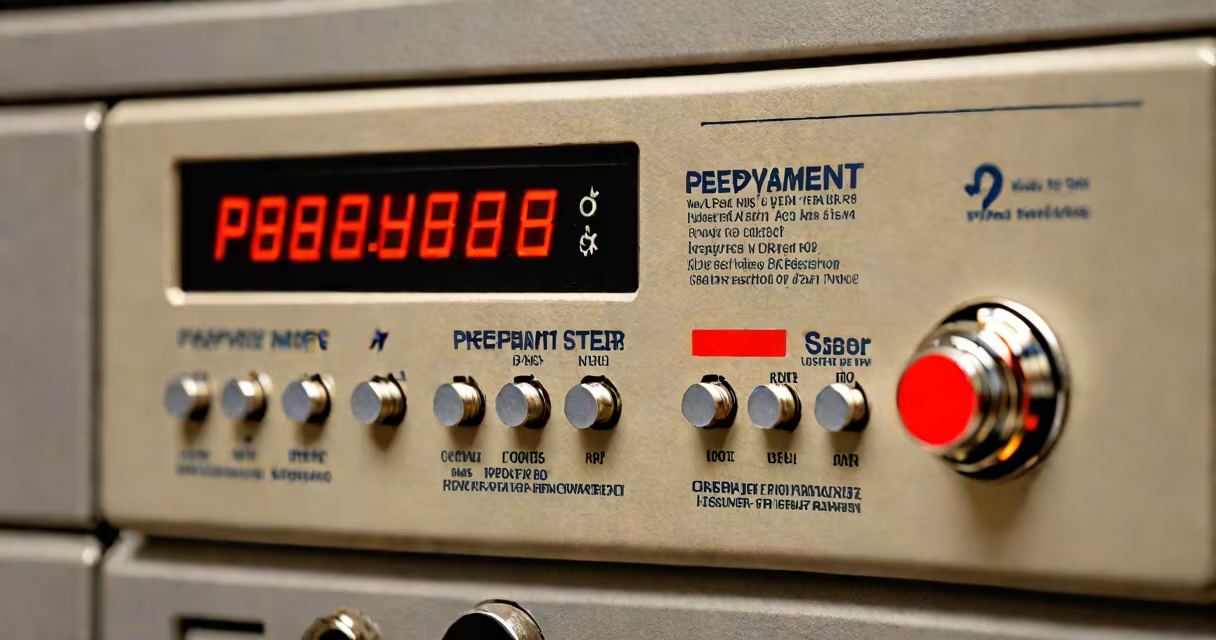
A prepayment meter is a type of electricity meter that requires users to pay for energy before consumption begins. Unlike traditional meters that bill after usage, prepayment meters deduct units from a stored balance as power is drawn. This system prevents debt accumulation and gives users direct control over spending.
Prepayment meters operate using a credit system. Users load money onto a prepaid card or through a mobile app, which then transfers funds to the meter's internal account. Once credit is available, electricity flows. When the balance reaches zero, the meter cuts off supply until more funds are added. These meters are widely used in the UK and parts of Europe, especially in social housing and low-income households.
The system was developed to reduce energy debt and improve affordability. According to the UK's Energy Ombudsman, prepayment meters accounted for 12% of all electricity meters in 2023, with higher adoption in regions with lower average incomes. They are distinct from standard meters, which bill monthly based on readings, and from smart meters, which automatically transmit usage data but do not require upfront payments.
When a user adds funds to a prepayment meter, the amount is converted into kilowatt-hours (kWh) based on the current unit rate. The meter stores this value and subtracts from it as electricity is consumed. A digital display shows remaining credit, often in pounds and pence or kWh. Some models show real-time usage rates, helping users track spending patterns.
For example, a household with a £10 top-up at a rate of £0.25 per kWh receives 40 kWh of credit. If a 2 kW heater runs for 1 hour, it consumes 2 kWh, reducing the balance by £0.50. The meter updates instantly and may emit a warning beep when credit drops below 10%. Once the balance hits zero, the power shuts off automatically.
Users can reload via physical cards, online portals, or mobile apps. In the UK, providers like British Gas and EDF offer online top-ups. Some systems allow automatic top-ups when balances fall below a set threshold, though this feature is less common due to concerns about overspending.
Prepayment meters come in several forms, each suited to different environments and user needs.
| Type | Key Features | Best For |
|---|---|---|
| Standard Prepayment Meter | Manual top-up via card; basic display; no remote communication | Rental properties, low-tech users |
| Smart Prepayment Meter | Remote top-up via app; real-time usage alerts; integration with home energy monitors | Households wanting budget control and data visibility |
| Pay-as-you-go Smart Meter | Combines prepayment logic with automated data transmission; supports changing pricing | Users in time-of-use tariff areas |
Smart prepayment meters are increasingly replacing older models. The UK government's Smart Meter rollout includes over 30 million installations, with 6 million incorporating prepayment functionality. These devices support remote monitoring and can send notifications when credit is low. However, they still require users to fund the account manually or via scheduled top-ups.
Many people misunderstand how prepayment meters differ from standard or smart meters. A common error is assuming that prepayment meters are less accurate. In reality, all UK meters must meet strict accuracy standards under the National Measurement Office (NMO) regulations. Prepayment meters are tested to within ±2% tolerance, matching standard meters.
Another misconception is that prepayment meters lead to higher bills. Data from Ofgem shows that prepayment users pay similar average rates as those on standard tariffs. However, prepayment users are more likely to choose cheaper tariffs due to budget awareness. A 2022 study by the University of Sussex found that 68% of prepayment users adjusted their behavior-such as turning off lights during peak hours-after seeing real-time usage data.
Some believe prepayment meters are only for people with poor credit. While historically linked to debt management, they are now used by over 1.2 million households in the UK who prefer the financial discipline they provide. A 2023 survey by Which? revealed that 41% of prepayment users chose the system voluntarily for better spending control.
Consider a family in Manchester using a smart prepayment meter. They receive a weekly allowance of £15 from a local energy assistance program. Using the provider's app, they top up £10 on Monday, leaving £5 for emergencies. The meter displays 40 kWh at £0.25/kWh. On Tuesday, they run a washing machine (1.5 kWh) and a kettle (0.5 kWh), totaling 2 kWh. The meter deducts £0.50, showing £9.50 remaining.
On Wednesday, the app sends a notification: "Low credit-add £5 now." The family tops up again. The meter resets and continues operating. Over the month, they avoid late fees and stay within budget. Their average monthly bill is £65, compared to £72 for similar households on standard tariffs-mainly due to reduced evening usage.
As someone who installed a prepayment meter in a rental flat, I noticed immediate changes in my energy habits. Seeing the balance drop in real time made me turn off unused devices. Within two weeks, my electricity use fell by 18%, saving £12 monthly. The meter didn't force savings-it simply made the cost visible.
Prepayment meters are most common in situations where financial oversight is critical. They are required in many social housing units in the UK and are often recommended for vulnerable customers, such as those with mental health conditions or unstable income. The Energy Entitlement Scheme allows local authorities to assign prepayment meters to prevent disconnection during hardship.
They are also used in temporary housing, student accommodations, and commercial premises with variable loads. In Germany, prepayment systems are standard in new apartment buildings to prevent unpaid bills. In contrast, countries like the US rarely use them, relying instead on net metering and credit checks.
Despite their benefits, prepayment meters face criticism. Critics argue they limit access to time-of-use tariffs and can create stress during low-credit periods. However, the introduction of smart prepayment meters has addressed many of these issues by offering predictive alerts and flexible top-up options.