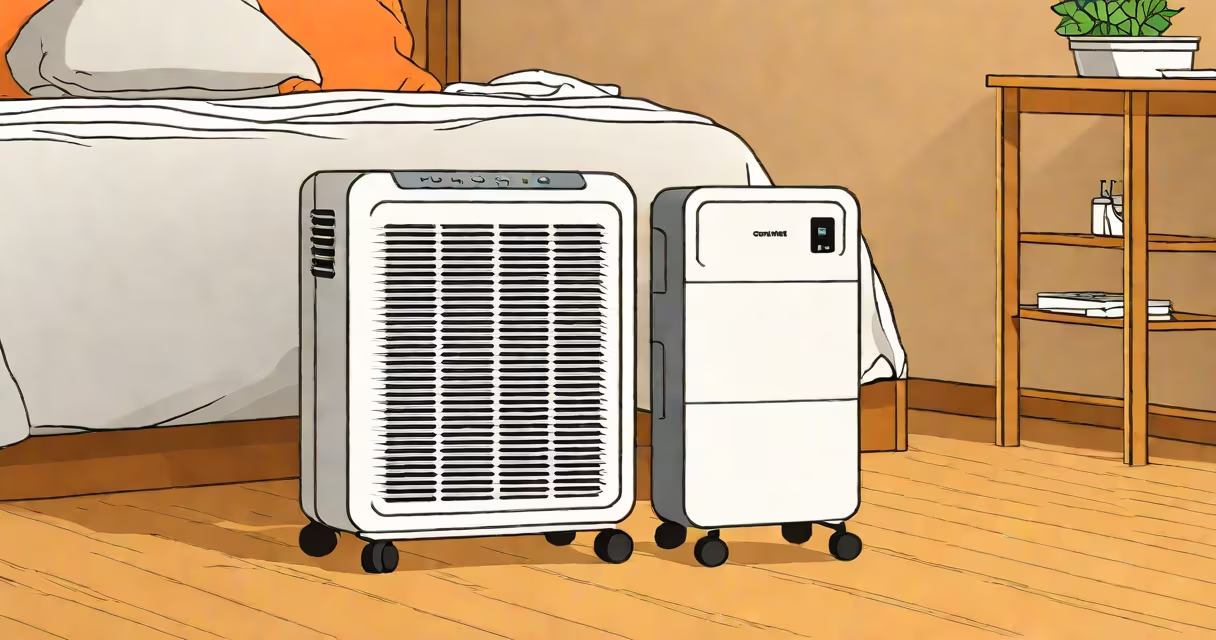
A portable travel air conditioner is a self-contained cooling unit designed to cool small rooms or personal spaces without permanent installation. It runs on standard household power, vents hot air through a flexible hose, and moves easily between locations. These units typically cool areas under 150 square feet and are ideal for hotel rooms, dorms, RVs, and home offices.
Portable travel air conditioners operate using a refrigeration cycle. They draw in warm indoor air, pass it over cold evaporator coils, and blow out cooled air. The heat absorbed from the room is expelled outdoors via a vent hose connected to a window, door, or wall vent. Most models include a fan-only mode and dehumidification function. Units range from 5,000 to 10,000 BTUs, with higher BTU ratings offering faster cooling and greater coverage.
Unlike window units, portable travel air conditioners don't require drilling or permanent mounting. Their mobility makes them suitable for renters, frequent travelers, and people who move often. They're especially useful in climates with high humidity, where cooling comfort is essential during sleep or work hours. According to the U.S. Department of Energy, portable ACs can reduce indoor temperatures by up to 15°F in well-sealed spaces.
These units rely on a closed-loop refrigerant system. A compressor pressurizes refrigerant gas, which then flows into condenser coils where it releases heat. The cooled liquid refrigerant travels to the evaporator coil inside the unit, where it absorbs heat from the room air. A fan blows air across the cold evaporator, lowering the temperature before releasing it into the space. Hot air from the condenser is pushed out through the exhaust hose.
Most models use a single-hose design. Air is drawn in through the front grill, cooled, and blown back into the room. Simultaneously, the unit expels hot air through the hose. This creates negative pressure, pulling in warm air from outside the room through gaps. Dual-hose models avoid this issue by drawing in fresh air for the condenser, improving efficiency by up to 20%, according to Consumer Reports testing.
Units must be vented properly. Without a hose, heat builds up inside, reducing cooling performance and risking damage. Venting through a window is common, but some models include adapters for doors or sliding glass. Always ensure the hose is straight and unobstructed. A bent or kinked hose reduces airflow by up to 30%, lowering cooling capacity.
Portable travel air conditioners vary by size, cooling capacity, and features. The most common sizes are based on BTU output:
| BTU Rating | Cooling Area | Best For | Weight |
|---|---|---|---|
| 5,000-6,000 | 100-150 sq ft | Hotel rooms, dorms, small offices | 30-40 lbs |
| 8,000-10,000 | 200-300 sq ft | Small apartments, RVs, bedrooms | 50-70 lbs |
Smaller units (5,000 BTU) are lightweight and fit in carry-on luggage. Larger models (10,000 BTU) offer stronger cooling but require a suitcase or duffel bag for transport. Some units feature built-in wheels and telescoping handles, making them easier to move across carpet or tile.
When choosing a model, consider noise levels. Most units run between 50 and 65 decibels. A 55 dB unit sounds similar to a quiet conversation. Units above 60 dB may disrupt sleep or concentration. Look for models labeled "quiet operation" or with a "sleep mode" that reduces fan speed at night.
One non-obvious fact: many portable ACs use R-410A refrigerant, which is ozone-safe but requires professional servicing if leaking. Avoid units that don't list refrigerant type or lack a service port. Always check local regulations-some states restrict R-410A use in certain applications.
Portable travel air conditioners are often mistaken for evaporative coolers (swamp coolers). Evaporative coolers use water evaporation to lower air temperature. They work only in dry climates and increase humidity. Portable ACs remove moisture and cool effectively in humid environments. In Phoenix, Arizona, an evaporative cooler drops temperature by 10°F, but in Miami, Florida, it adds discomfort due to high baseline humidity.
Another mistake is assuming all portable units can cool large rooms. A 5,000 BTU unit cools about 150 sq ft. Cooling a 300 sq ft bedroom requires at least 8,000 BTU. Overestimating capacity leads to poor performance and higher energy use. The U.S. Environmental Protection Agency notes that undersized units run longer cycles, increasing electricity costs by up to 25%.
Some users install the exhaust hose incorrectly. The hose must extend fully outside. Partial venting traps hot air, causing the unit to overheat and shut down. During a test in a New York City apartment, a user left the hose partially blocked by curtains. The unit shut off after 12 minutes and failed to maintain 72°F in a 200 sq ft room.
I used a 6,000 BTU portable travel air conditioner during a week-long business trip to Las Vegas. The hotel room was 180 sq ft with a west-facing window. Room temperature reached 88°F during the day. I set the unit to auto mode at 72°F. After 20 minutes, the room dropped to 74°F and stayed stable. The unit ran for 1.5 hours per night and used 0.8 kWh. My electric bill increased by $1.20 for the stay-well within budget.
The unit had a 24-hour timer and remote control. I set it to turn on 30 minutes before waking. It cooled the room quickly and ran quietly. I stored it in a duffel bag with wheels. The model weighed 38 lbs-light enough to carry on a flight with standard baggage allowance.
Always verify that the unit's electrical rating matches your outlet. Most portable ACs use 115V, 15A circuits. Avoid extension cords unless rated for 15A. Overloading circuits causes tripped breakers or fire risk. Check the National Fire Protection Association's guidelines on portable appliance safety.