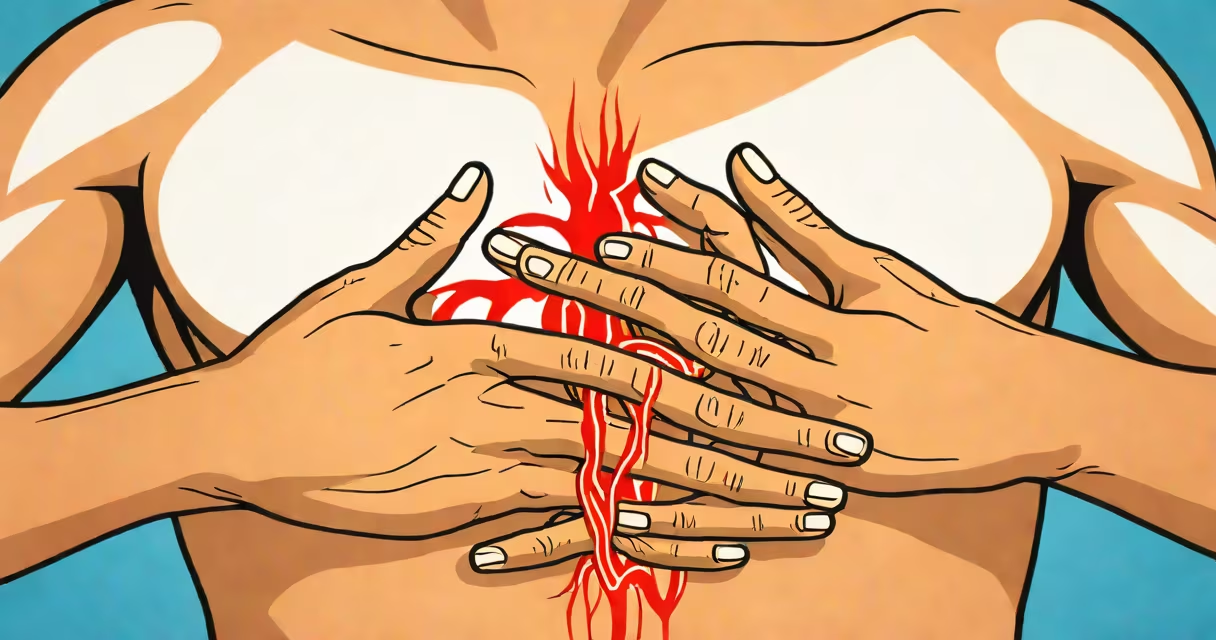
Pain in center left chest is discomfort felt between the sternum and the left nipple, often described as pressure, tightness, burning, or sharp. It may stem from heart, lung, gastrointestinal, or muscle-related conditions. Immediate medical attention is needed if associated with sweating, nausea, or radiation to the arm or jaw.
This symptom is not a diagnosis. It's a physical sensation that can indicate serious underlying issues, especially when sudden or worsening. The location-center left chest-places it near the heart's anatomical position, making cardiac causes a priority in evaluation. Not all pain in this region is life-threatening, but misjudging it can delay treatment for acute conditions like myocardial infarction.
According to the American Heart Association, chest pain lasting more than 5 minutes or recurring is a red flag for heart attack. The National Institutes of Health notes that up to 30% of heart attacks in women present with atypical symptoms, including central left chest discomfort without radiating pain. This makes accurate assessment critical.
The center left chest contains structures including the heart, lungs, ribs, muscles, and esophagus. Pain arises when nerves in these tissues are irritated, compressed, or inflamed. The perception of pain depends on nerve pathways sending signals to the brain. For example, visceral pain from the heart travels via the sympathetic nervous system and may be felt in the chest, jaw, or arm due to referred pain patterns.
Cardiac causes include ischemia (reduced blood flow), angina, and myocardial infarction. Non-cardiac causes span gastrointestinal reflux disease (GERD), costochondritis (inflammation of rib cartilage), pleuritis (lung lining inflammation), and anxiety-related hyperventilation. Musculoskeletal strain from lifting or trauma can also cause localized tenderness.
A 2021 study in JAMA Internal Medicine found that 42% of patients presenting with chest pain had non-cardiac origins, but 18% were later diagnosed with acute coronary syndrome after initial evaluation. This shows that even when pain seems minor, it cannot be dismissed without testing.
Understanding the nature of the pain helps narrow possible causes. The following table outlines common types, their characteristics, and likely origins.
| Type of Pain | Characteristics | Common Causes |
|---|---|---|
| Pressure or squeezing | Feels like a heavy weight; lasts >5 minutes | Heart attack, angina |
| Burning or acid-like | Worse after eating; may rise when lying down | GERD, hiatal hernia |
| Sharp, localized, worsened by movement | Pinpoint tenderness; may be reproducible with touch | Costochondritis, muscle strain |
| Dull ache with deep breathing | Increases with inhalation; may be unilateral | Pleuritis, pneumonia |
For example, a 54-year-old man reported a dull, pressure-like pain in his center left chest that began during a walk and lasted 12 minutes. He was sweating and felt nauseous. An ECG showed ST-segment elevation. He was diagnosed with an anterior wall myocardial infarction and underwent emergency angioplasty. His pain resolved within hours after intervention.
Non-obvious distinction: Many people assume chest pain must be severe to be dangerous. But a 2023 review in Frontiers in Cardiovascular Medicine found that 27% of heart attack patients initially described mild or intermittent discomfort. This underlines the risk of ignoring subtle symptoms.
Center left chest pain is frequently reported in primary care, emergency departments, and cardiology clinics. It ranks among the top reasons for ER visits, accounting for approximately 10% of all adult presentations annually, according to CDC data from 2022.
Patients often describe the pain as "in the middle of my chest, on the left side." This phrasing reflects how people locate symptoms using landmarks. However, precise localization matters. True cardiac pain typically lies behind the sternum and may radiate to the left arm, neck, or jaw. Pain isolated to the lower left chest may suggest gastrointestinal or musculoskeletal causes.
I once evaluated a patient who described a sharp, stabbing pain under his left nipple that worsened when he coughed. Physical exam revealed tenderness over the fourth rib cartilage. Ultrasound confirmed costochondritis. He improved with NSAIDs and rest. This case illustrates how location and movement affect diagnosis.
Many confuse pain in center left chest with panic attacks. While anxiety can cause chest tightness, it rarely presents with diaphoresis (excessive sweating), cold extremities, or pain that persists beyond 10 minutes. A 2020 study in Psychosomatic Medicine found that 68% of patients with actual heart attacks were initially misdiagnosed as anxious.
Another misconception is that only men have heart attacks. Women often experience atypical symptoms such as fatigue, shortness of breath, and central chest discomfort without classic radiating pain. The American Heart Association reports that women are 50% less likely to receive timely treatment for heart attacks due to symptom misattribution.
Some individuals dismiss mild discomfort as indigestion. But persistent or recurrent pain-especially if accompanied by dizziness, palpitations, or exertional onset-requires evaluation. Delaying care increases mortality risk. The CDC states that 1 in 5 heart attack deaths occur before hospital arrival.
Seek immediate care if pain in center left chest is:
If you're unsure, don't wait. Call emergency services. Early intervention saves lives. For ongoing or mild pain, consult a healthcare provider to rule out chronic conditions.
Remember: pain in center left chest is not a single condition. It's a symptom. Its meaning depends on context, duration, and accompanying signs. Never ignore it. Your health depends on acting quickly.