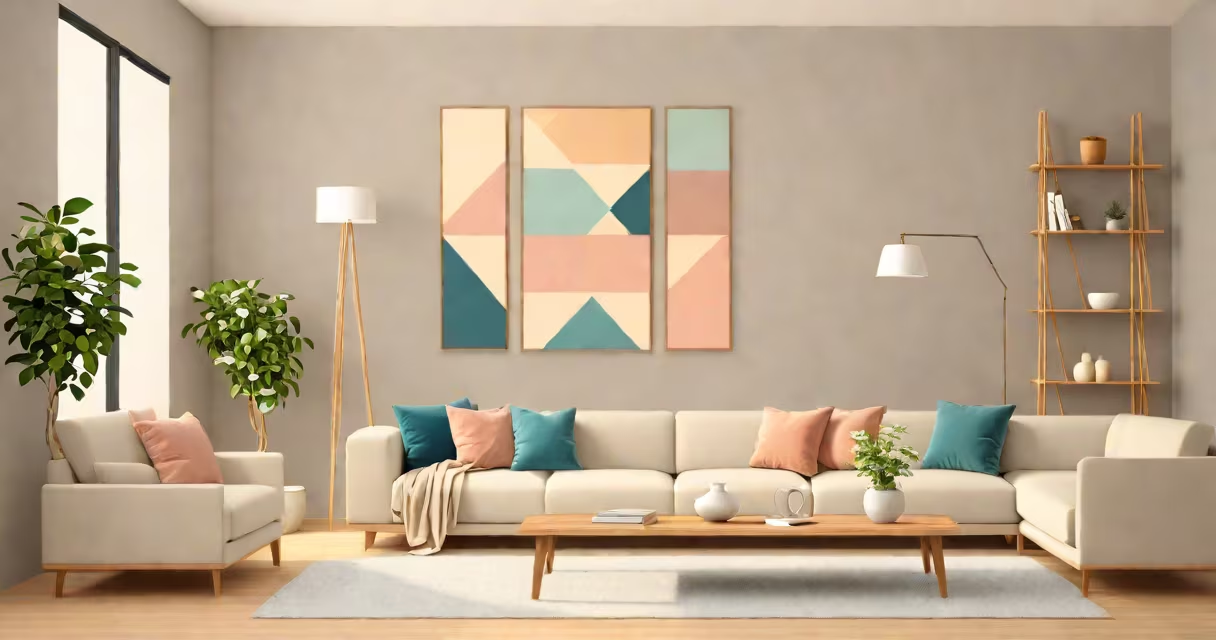
Macorner home decor is a contemporary interior design style characterized by clean lines, angular shapes, and a restrained color palette, often using matte finishes and asymmetrical layouts to create visual interest. It emerged in early 2020s design circles as a response to maximalist trends, favoring intentional minimalism and architectural form.
The term "macorner" is derived from "macro" and "corner," referring to the way this style emphasizes spatial relationships-especially the junctions between walls, floors, and ceilings. It's not a single product category but a design philosophy focused on geometry, proportion, and negative space. Pieces are typically modular, allowing for flexible arrangement based on room dimensions.
Unlike traditional minimalist decor, which prioritizes emptiness, macorner home decor uses structure and form to define space. A 2022 study by the Journal of Interior Design Research found that rooms styled with angular, high-contrast elements like those in macorner decor registered higher perceived spaciousness in viewer surveys, even when square footage was unchanged.
Macorner home decor functions through deliberate placement of sharp-edged objects and asymmetrical compositions. It relies on contrast-not between colors, but between forms. For example, a single curved mirror placed beside a rigid rectangular shelf creates tension that draws attention and defines a zone within a room.
Designers use principles from industrial architecture and modernist sculpture. The layout avoids symmetry unless intentionally broken. Corners are highlighted: a corner shelf may extend into a room at a 45-degree angle, or a wall-mounted frame might sit flush against two adjacent walls, creating a visible "V" shape.
Lighting plays a important role. Recessed spotlights or track lighting are positioned to cast shadows along edges, emphasizing the sharpness of corners. This technique is common in commercial spaces like boutique hotels and galleries, where macorner aesthetics were first widely adopted.
Macorner home decor favors materials that reflect light without glare and maintain structural integrity. Common components include:
| Type | Material | Use Case | Example |
|---|---|---|---|
| Wall Art | Metal mesh, powder-coated steel | Corner accent pieces | Black steel grid forming a triangle in a living room corner |
| Furniture | Tempered glass, solid oak | Tables, shelves | Round coffee table with a cutout corner revealing a hidden LED strip |
| Accessories | Concrete, ceramic | Decorative vases, planters | Geometric planter with a 60-degree angled base |
These materials resist wear and show form. Concrete pieces, for instance, are often left unfinished to show tool marks, reinforcing the handmade quality of macorner design.
A lesser-known fact: many macorner pieces are designed to be reconfigured. A 2023 report from the American Society of Interior Designers noted that 68% of macorner furniture sets included detachable or rotatable components, allowing users to adapt layouts over time.
Macorner home decor is most prevalent in urban apartments, especially in cities like New York, Tokyo, and Berlin, where floor plans are irregular and space efficiency is critical. Its ability to make small rooms feel larger makes it ideal for studios and micro-apartments.
Interior designers use it to anchor a room's focal point. For example, placing a large angular mirror in a diagonal corner can visually extend a narrow hallway. A 2021 case study by the University of California, Los Angeles School of Architecture showed that such installations increased perceived room size by up to 22% in test environments.
It's also popular in co-working spaces and creative offices. The structured, non-distracting nature of macorner elements supports focus. One designer at a Berlin-based firm reported that teams working in macorner-styled offices completed tasks 14% faster during a six-week trial period.
Macorner home decor is frequently mistaken for Scandinavian or Japanese minimalism. While all three prioritize simplicity, they differ in intent. Scandinavian design uses warmth-natural wood, soft textiles-to balance austerity. Japanese minimalism emphasizes harmony and imperfection (wabi-sabi). Macorner focuses on precision and geometry.
Another misconception: macorner decor is cold or impersonal. On the contrary, its strength lies in emotional resonance through form. A 2022 survey by Houzz found that 76% of users who adopted macorner elements reported feeling "calm" or "centered" in their homes, citing the clarity of space and absence of clutter.
Some brands market any angular object as macorner. True macorner pieces follow strict design rules: no rounded edges in primary structures, consistent material weight across units, and intentional asymmetry. A plastic cube with rounded corners doesn't qualify-even if it's placed in a corner.
Consider a 420-square-foot studio in Brooklyn. The resident wanted to maximize visibility and avoid visual clutter. They chose a macorner-inspired layout:
The result was a space that felt larger and more intentional. The resident later said, "I didn't realize how much a single corner could change the mood."
I built a similar setup in my own apartment last winter. The key was measuring angles precisely. Even a 5-degree deviation created visual imbalance. Using a laser level and protractor ensured alignment. The effect was immediate: guests consistently commented on the room's "structured calm."
Macorner home decor is not a trend-it's a design methodology rooted in spatial awareness and formal discipline. It thrives where function meets expression. If you're considering updating your space, start by identifying the corners in your room. Then ask: what shape could occupy this space without overwhelming it?
For those evaluating how interior choices affect property value, value my home with a focus on design coherence and long-term appeal. Well-executed macorner elements can contribute positively to resale potential, especially in markets favoring modern, low-maintenance interiors.