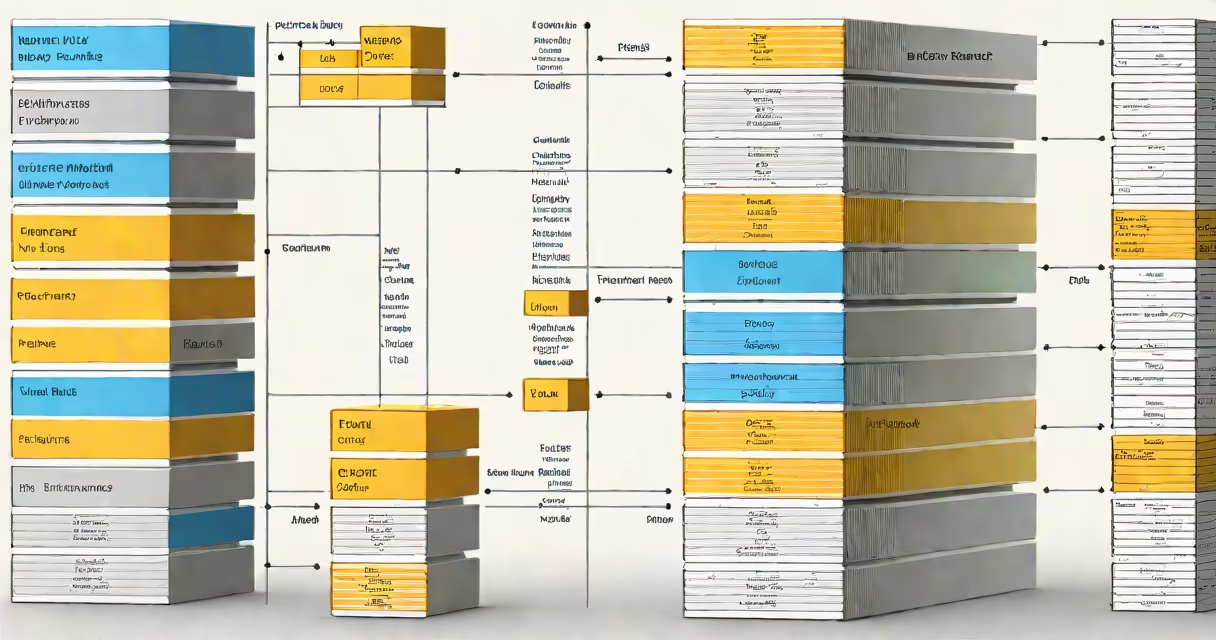
The layers of OSI model are seven standardized layers that define how data travels from one device to another across a network. Each layer handles specific tasks in data transmission, ensuring compatibility between different systems. This structure enables consistent communication across diverse hardware and software environments.
The OSI model was developed by the International Organization for Standardization (ISO) in 1984 and remains a foundational reference for understanding network architecture. It divides data communication into seven distinct layers, each with a defined role. These layers work together to ensure reliable data transfer, from physical signal transmission to application-level interaction.
Understanding the layers of OSI model helps diagnose network issues, design secure systems, and implement interoperable technologies. For example, when a user experiences slow web access, knowing which layer handles DNS resolution (Layer 7) or packet routing (Layer 3) allows faster troubleshooting.
Data begins at Layer 7, the Application layer, where user-facing programs like browsers or email clients generate information. As data moves down the stack, each layer adds control information-headers, trailers, or flags-before passing it to the next lower layer. This process is called encapsulation.
At the physical level, Layer 1 converts data into electrical, optical, or radio signals. Layer 2, the Data Link layer, packages data into frames and manages MAC addresses. Layer 3, the Network layer, uses IP addresses to route packets across networks. Layer 4, the Transport layer, ensures complete delivery via protocols like TCP or UDP.
When data reaches the destination, the process reverses. Each layer strips off its header and passes the remaining data upward. This reverse process is known as decapsulation. By separating responsibilities, the OSI model allows engineers to isolate problems-such as a faulty router (Layer 3) or misconfigured firewall (Layer 4)-without needing to understand every component.
Each layer performs a unique function in the data transmission pipeline. The following table outlines the roles, common protocols, and real-world examples.
| Layer | Name | Function | Protocols & Examples |
|---|---|---|---|
| 7 | Application | Direct interface with software applications | HTTP, HTTPS, FTP, SMTP, DNS |
| 6 | Presentation | Translates data formats and encrypts content | SSL/TLS, JPEG, MPEG, ASCII |
| 5 | Session | Manages connections between devices | NetBIOS, RPC, SIP |
| 4 | Transport | Ensures end-to-end data integrity and flow control | TCP, UDP, SCTP |
| 3 | Network | Routes data across multiple networks | IP, ICMP, OSPF, BGP |
| 2 | Data Link | Handles frame synchronization and error detection | Ethernet, PPP, HDLC, MAC addressing |
| 1 | Physical | Transmits raw bits over a medium | RS-232, USB, Ethernet cables, fiber optics |
A practical example: sending an email involves multiple layers. The email client (Layer 7) creates the message. Layer 6 may compress or encrypt it. Layer 5 establishes a session. Layer 4 splits the data into segments using TCP. Layer 3 assigns an IP address and routes it through routers. Layer 2 adds a MAC address and frames the packet. Layer 1 transmits the signal over a cable or wireless channel.
When the recipient receives the signal, each layer strips off its header and processes the data accordingly. This layered structure prevents errors from propagating and simplifies debugging.
Many people confuse the OSI model with the TCP/IP model. While both describe network communication, they differ in structure. The TCP/IP model has four layers: Application, Transport, Internet, and Network Interface. It's more practical and widely used in real-world networking, especially on the internet.
Despite this, the OSI model remains essential for teaching and standardizing concepts. For instance, while HTTP operates at Layer 7 in the OSI model, it runs over TCP (Layer 4) and IP (Layer 3) in practice. Engineers often refer to the OSI model to explain how protocols interact across boundaries.
A less obvious point: the OSI model is not a strict implementation. Devices don't always follow the layers in perfect sequence. Some systems skip or merge layers. A router may handle both Layer 3 and Layer 2 functions simultaneously. Still, the model provides a consistent mental map for analyzing network behavior.
I once diagnosed a network outage at a small business where employees couldn't reach internal servers. Ping tests failed, but the Wi-Fi signal was strong. Using a packet analyzer, I traced the issue to a misconfigured VLAN setting. That problem resided at Layer 2-the Data Link layer-where switches assign traffic to virtual networks.
Without the OSI model, isolating the fault would have taken hours. Knowing that VLANs operate at Layer 2 allowed me to focus on switch settings rather than checking cables or IP configurations. The model helped me narrow the scope quickly.
Another example: when a website loads slowly, the issue could be at Layer 7 (application performance), Layer 4 (TCP congestion), or Layer 1 (slow physical connection). The OSI model guides systematic testing-start at the top and move down until the root cause appears.
Security tools also rely on layer awareness. Firewalls inspect traffic at Layers 3 and 4 to block malicious packets. Intrusion detection systems monitor patterns across multiple layers. Understanding the layers of OSI model improves the ability to configure and manage these defenses effectively.
The layers of OSI model provide a structured way to understand how data flows through networks. They define responsibilities across seven levels, enabling interoperability and targeted troubleshooting. While modern systems often use the TCP/IP model, the OSI model remains important for education, documentation, and system analysis.