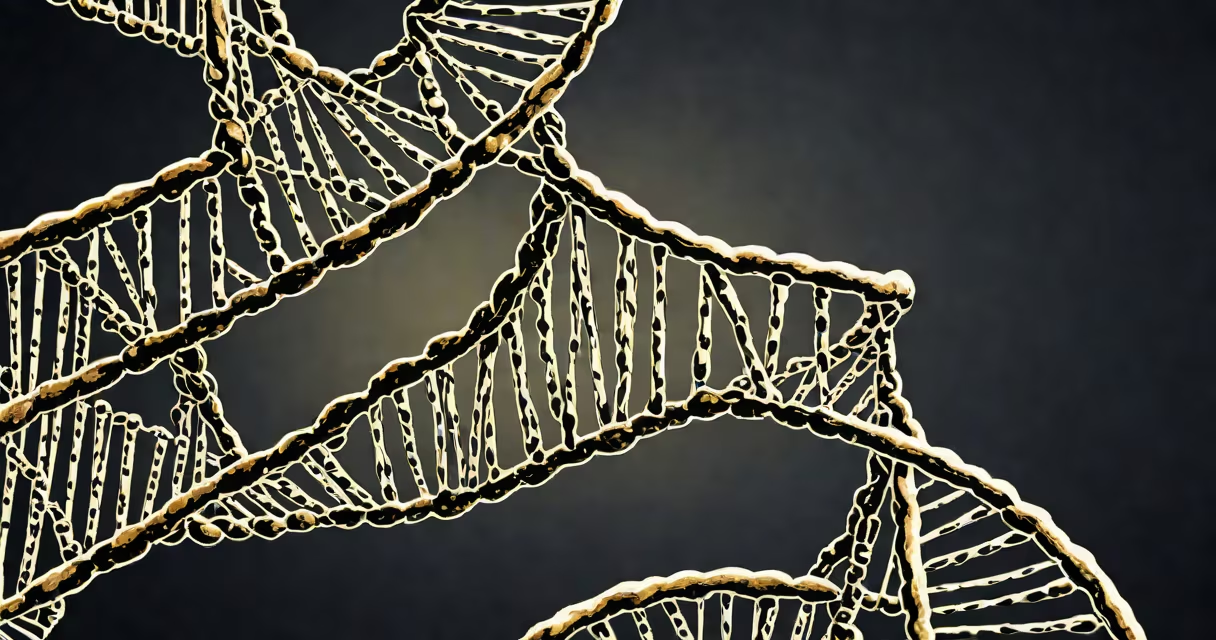
DNA is not a protein. It is a nucleic acid composed of nucleotides containing sugar-phosphate backbones and nitrogenous bases. Proteins are chains of amino acids folded into functional structures. These two molecules serve distinct roles in cellular processes.
DNA stores genetic information in the sequence of four nitrogenous bases: adenine (A), thymine (T), cytosine (C), and guanine (G). This sequence encodes instructions for building proteins through transcription and translation. Proteins, in contrast, are polymers of 20 standard amino acids linked by peptide bonds. Their function depends on precise folding into three-dimensional shapes.
The confusion between DNA and protein arises because both are essential to life and involve sequences. However, their chemical makeup, synthesis pathways, and biological roles differ fundamentally. DNA acts as a stable blueprint; proteins act as changing machines that carry out most cellular tasks.
DNA consists of two antiparallel strands forming a double helix. Each strand is made of repeating units called nucleotides-each containing a deoxyribose sugar, a phosphate group, and one of four nitrogenous bases. The two strands pair via hydrogen bonds: A with T, C with G.
Proteins are linear chains of amino acids joined by peptide bonds. There are 20 standard amino acids, each with a unique side chain (R-group). The sequence of these amino acids determines how the protein folds into secondary, tertiary, and quaternary structures. For example, hemoglobin-a protein in red blood cells-has four subunits folded into a specific shape that binds oxygen efficiently.
DNA is synthesized by enzymes called DNA polymerases during replication. These enzymes read a template strand and add complementary nucleotides using energy from nucleoside triphosphates (dATP, dCTP, dGTP, dTTP).
Proteins are built by ribosomes using messenger RNA (mRNA) as a template. Transfer RNA (tRNA) delivers amino acids based on codon sequences in mRNA. The ribosome catalyzes peptide bond formation between adjacent amino acids. This process occurs in the cytoplasm or on the rough endoplasmic reticulum.
Table: Core Differences Between DNA and Proteins
| Feature | DNA | Protein |
|---|---|---|
| Monomer | Nucleotide (sugar, phosphate, base) | Amino acid (20 types) |
| Core | Deoxyribose sugar and phosphate | Peptide bonds between α-amino and carboxyl groups |
| Information Storage | Yes - sequence encodes genes | No - sequence determines structure and function |
| Stability | High - resistant to hydrolysis | Low - easily denatured |
DNA serves as the long-term repository of genetic information in all known life forms. It is passed from generation to generation and maintained through cell division. In humans, the genome contains approximately 3 billion base pairs across 23 chromosome pairs.
Proteins perform nearly all cellular functions. Enzymes catalyze metabolic reactions, structural proteins maintain cell shape, transport proteins move molecules across membranes, and signaling proteins relay messages between cells. Insulin, for example, is a protein hormone that regulates blood glucose levels. Its failure causes diabetes.
One non-obvious distinction: DNA does not directly interact with cellular machinery. It must be transcribed into RNA first. Proteins, however, are the direct effectors of cellular activity. The central dogma of molecular biology-DNA → RNA → protein-explains this flow of information.
Some assume DNA codes for proteins directly. But DNA sequences are translated into proteins via intermediate RNA. The genetic code uses triplets of bases (codons) to specify amino acids. For example, the codon AUG codes for methionine and also serves as the start signal for translation.
Another misconception is that all biomolecules are either DNA or protein. In reality, lipids, carbohydrates, and small regulatory molecules also play important roles. For instance, ATP (adenosine triphosphate) provides energy for protein synthesis, yet it is neither DNA nor protein.
I once observed a student confuse DNA with protein during a lab exercise. They attempted to run a gel electrophoresis on a DNA sample using a protein stain. The result was no visible bands-because the stain binds to amino acid residues, not nucleic acids. This mistake highlights the importance of understanding molecular identity before experimental design.
No, DNA is not a protein. It is a nucleic acid with a different chemical composition, synthesis pathway, and biological function. Confusing the two undermines foundational knowledge in genetics and biochemistry. DNA holds the instructions; proteins execute the tasks.