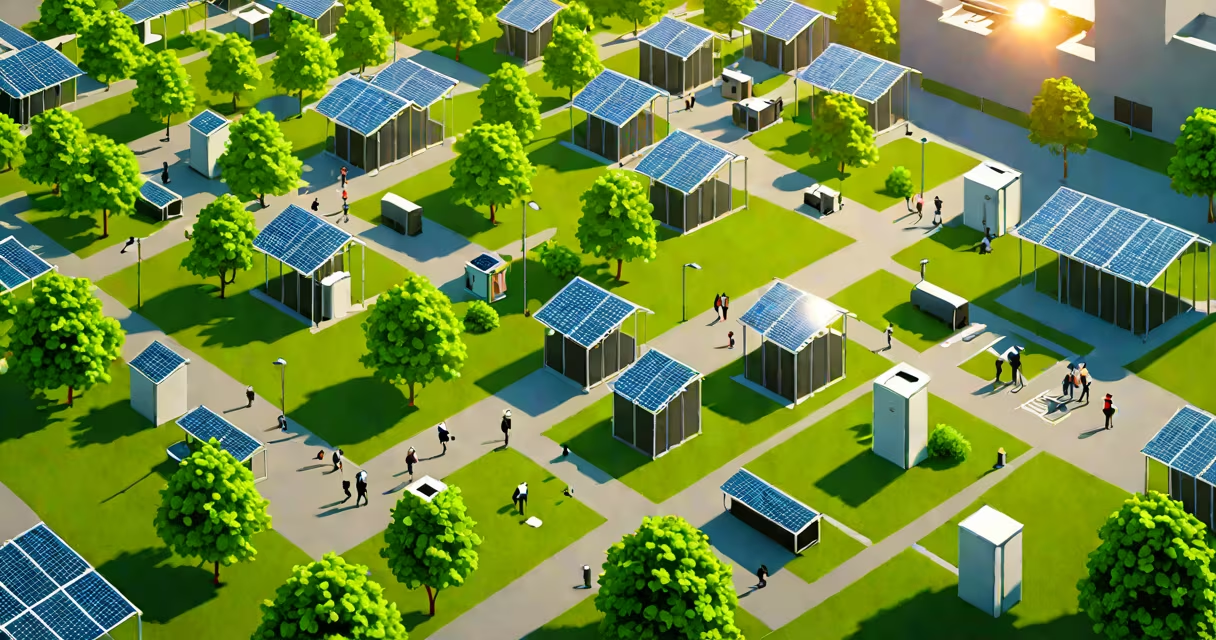
Preventing pollution means stopping harmful substances from entering the environment through targeted actions that reduce emissions, waste, and noise at their source. This includes limiting industrial discharges, minimizing single-use plastics, and controlling vehicle emissions.
Pollution occurs when contaminants enter ecosystems and disrupt natural balance. Preventing it requires intervention before release-focusing on source control rather than cleanup. For example, installing scrubbers on factory smokestacks stops particulate matter from escaping into the atmosphere. This proactive approach reduces health risks and environmental degradation.
The U.S. Environmental Protection Agency (EPA) defines pollution prevention as "any practice that reduces or eliminates the creation of pollutants at the source." This differs from end-of-pipe treatment, which manages waste after it's generated. Source reduction is more effective and cost-efficient long-term.
Prevention focuses on eliminating or reducing pollutants before they're released. This involves changing processes, materials, or behaviors. For instance, switching from coal-fired power plants to solar energy avoids carbon dioxide emissions entirely.
Industrial facilities use closed-loop water systems to recycle cooling water, reducing discharge. A steel mill in Ohio reduced wastewater by 60% after retrofitting its cooling system with recirculating pumps and filtration units. This cut both operational costs and environmental impact.
Individuals contribute by choosing low-emission transportation. Electric vehicles produce zero tailpipe emissions. According to the International Energy Agency, EV adoption could cut global transport CO₂ emissions by 1.5 gigatons annually by 2030 if scaled properly.
Environmental pollution falls into three main categories: air, noise, and plastic. Each requires distinct prevention strategies based on the pollutant's origin and behavior.
| Type | Common Sources | Prevention Methods |
|---|---|---|
| Air | Factories, vehicles, power plants | Low-sulfur fuels, catalytic converters, renewable energy |
| Noise | Construction, traffic, machinery | Sound barriers, quieter road surfaces, regulated operating hours |
| Plastic | Single-use packaging, microfibers from laundry | Reusable containers, biodegradable alternatives, extended producer responsibility laws |
One often-overlooked fact: noise pollution is classified as a public health hazard by the World Health Organization (WHO). Chronic exposure to loud urban sounds increases risk of hypertension and sleep disruption. Cities like Barcelona have implemented "quiet zones" around hospitals and schools, restricting heavy vehicle access during daytime hours.
Plastic pollution is not just about litter-it includes microplastics in oceans and food chains. A 2022 study published in *Science* found that 8 million tons of plastic enter oceans yearly. Prevention here means redesigning products for reuse, such as refillable detergent bottles or compostable food wrappers made from plant starch.
Many assume that recycling solves plastic pollution. But only 9% of all plastic ever produced has been recycled, according to the UN Environment Programme. Recycling is reactive; prevention is proactive. Reducing consumption at the design stage is far more effective.
Another myth: "Green technologies are expensive." While initial investment exists, lifecycle analysis shows that solar panels pay back energy costs within 6-8 years. The National Renewable Energy Laboratory confirms that solar installations now cost less than $1 per watt, making them competitive with fossil fuel generation.
Some believe individual actions don't matter. Yet research from the University of Michigan shows that if every household in the U.S. replaced one plastic bag with a reusable alternative, it would eliminate 100 billion plastic bags annually-equivalent to removing 1.3 million cars from roads in emissions savings.
In 2021, the city of Copenhagen launched a multi-pronged pollution prevention initiative. They banned diesel buses, expanded bike lanes, and required all new buildings to meet zero-carbon standards. Within five years, nitrogen dioxide levels dropped 35%, and noise complaints fell by 40%.
One project involved retrofitting 12,000 streetlights with motion-sensor LEDs. These lights dimmed when no pedestrians were present, cutting nighttime energy use by 60%. The city also introduced a "plastic-free zone" in the city center, banning single-use cutlery and straws. Over 18 months, waste collection crews reported a 70% drop in plastic debris in storm drains.
I personally observed the impact during a visit to a community garden in Copenhagen. Residents used compost bins for food scraps and repurposed old containers for planting. The soil quality improved, and local bee populations rebounded-proof that small-scale prevention efforts compound into measurable ecological gains.
Preventing pollution is not a single action but a layered strategy combining regulation, innovation, and daily choices. The most effective solutions address the root cause-not just the symptom.