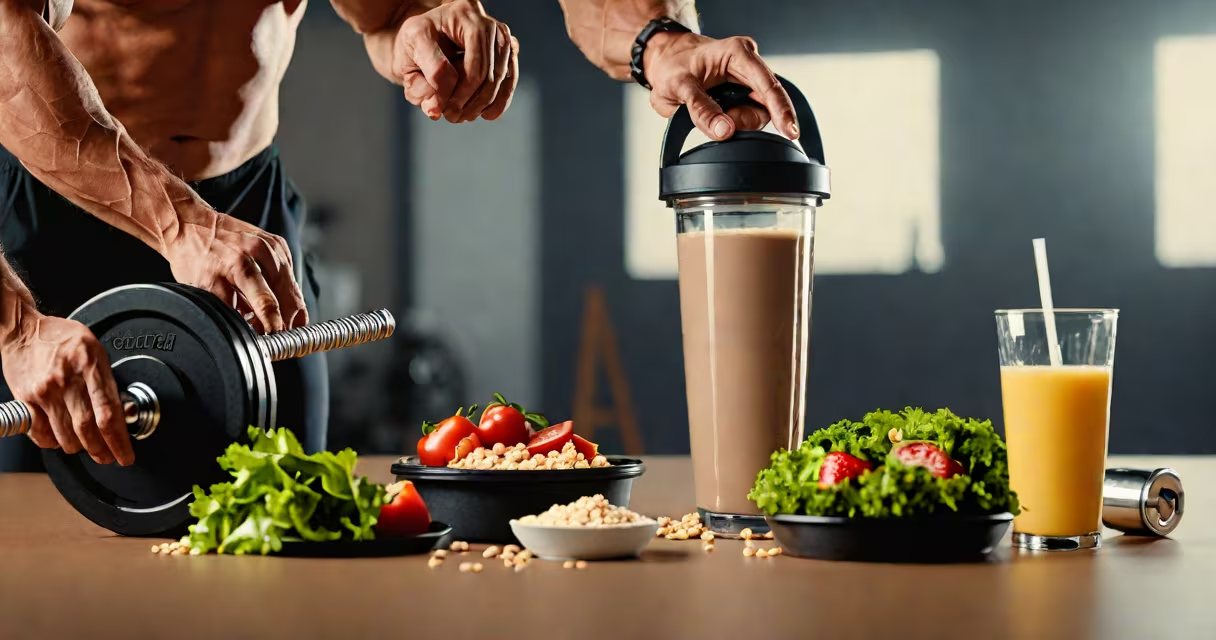
Fast weight gain means adding body mass quickly through calorie surplus, resistance training, and nutrient-dense food-without relying on unhealthy shortcuts. It's not about rapid fat accumulation but building lean muscle and maintaining energy balance.
Weight gain occurs when daily caloric intake exceeds energy expenditure. To gain weight rapidly, you must consistently consume more calories than your body burns. This creates a surplus that fuels tissue growth, primarily muscle when paired with strength training. A surplus of 500-750 kcal/day typically leads to 0.5-1 kg (1-2 lbs) of weight gain per week, according to the American Council on Exercise (ACE).
Many people assume fast weight gain means eating junk food or using supplements aggressively. That approach increases fat mass and risks metabolic strain. True fast weight gain focuses on quality calories-high-protein, complex carbs, and healthy fats-to support muscle synthesis and recovery.
The body stores excess energy as glycogen in muscles and liver, then as fat in adipose tissue. When you eat more than you burn, insulin rises and promotes storage. But not all stored energy becomes muscle. Muscle growth requires mechanical tension from resistance training and adequate protein intake.
For example, a 70 kg male with a maintenance level of 2,500 kcal/day who eats 3,200 kcal/day while lifting weights three times weekly can expect to gain ~1.2 kg (2.6 lbs) in two weeks. His gains come from both muscle and some fat, but the proportion shifts toward lean mass with consistent training.
Without resistance exercise, most added weight is fat. A study published in the Journal of the International Society of Sports Nutrition found that participants who lifted weights gained 75% more lean mass than those who only increased calories.
Successful fast weight gain hinges on three elements: calorie surplus, progressive resistance training, and optimal macronutrient distribution.
Calorie surplus: You must exceed maintenance by 500-750 kcal/day. Use a tracking app like MyFitnessPal or Cronometer to log meals and adjust intake based on weekly scale changes. Aim for 0.5-1 kg (1-2 lbs) gain per week.
Resistance training: Focus on compound lifts-squats, deadlifts, bench press, pull-ups. Train 3-4 days/week with progressive overload. Increase weight or reps weekly to stimulate muscle growth.
Nutrient timing: Consume 1.6-2.2 g of protein per kg of body weight daily. Spread intake across 3-4 meals. Post-workout, aim for 20-40 g of protein within 45 minutes of finishing a session.
| Type | Primary Source | Typical Rate | Health Impact |
|---|---|---|---|
| Muscle gain | Resistance training + high protein | 0.5-1 kg/month | Improves strength, metabolism, posture |
| Fat gain | Excess calories without training | 1-2 kg/month | Increases disease risk if sustained |
| Water retention | High sodium or sudden carb increase | 0.5-2 kg in 24-48 hours | Temporary; resolves with hydration adjustment |
Many confuse water weight with real progress. Gaining 2 kg overnight after eating a high-carb meal is mostly fluid. True muscle gain takes weeks to show on the scale. Track body measurements, strength gains, and photos-not just numbers.
A common mistake is assuming weight gain must happen fast to be effective. Research shows that steady, moderate gains (0.5-1 kg/week) lead to better long-term adherence and higher lean mass retention compared to rapid gain phases.
People often think fast weight gain means eating unlimited fast food or drinking protein shakes all day. That leads to fat gain, bloating, and digestive issues. One client I trained-a college athlete-tried to gain weight by consuming 5,000 kcal/day from pizza and soda. He gained 6 kg in six weeks, but 80% was fat. After switching to whole foods and training, he gained 4 kg in eight weeks with 70% lean mass.
Another myth: "I have a fast metabolism, so I can't gain weight." Metabolism affects energy needs, not ability to gain. Even people with high resting metabolic rates can gain weight if they eat enough. A 2021 study in Obesity Reviews showed that individuals with high metabolic rates still gained lean mass when consuming 1.8 g/kg protein and training consistently.
Some believe supplements like creatine or mass gainers are essential. They're optional. Creatine improves strength and muscle volume-research supports 5 g/day increasing lean mass by ~1.5 kg over 12 weeks. Mass gainers may help meet calorie targets, but whole foods are superior for micronutrients and satiety.
Start with a baseline: calculate your maintenance calories using a tool like the Mifflin-St Jeor equation. For a 25-year-old female, 165 cm tall, 55 kg, sedentary: BMR ≈ 1,380 kcal/day. Multiply by 1.2 (sedentary multiplier): 1,656 kcal/day. Add 600 kcal surplus: target = 2,256 kcal/day.
Sample day:
Total: ~3,050 kcal. Adjust portion sizes downward if gaining faster than 1 kg/week. Track progress weekly.
Train 3-4 days/week with compound lifts. Example routine:
Progressive overload means increasing weight or reps each week. Record every session.
If weight gain stalls despite consistent effort, consult a registered dietitian or physician. Underlying conditions like hyperthyroidism, malabsorption, or eating disorders can interfere. The National Eating Disorders Association reports that 1 in 10 people with anorexia develop weight gain difficulties due to hormonal disruption.
For women aiming to gain weight quickly, hormonal factors such as low estrogen or irregular cycles can affect appetite and fat storage. how to gain weight fast for females includes tailored nutrition and cycle-aware training to support hormonal balance.
True fast weight gain isn't about breaking records-it's about building a stronger, healthier body. Use science, track progress, and stay patient. Results take time, but they last.