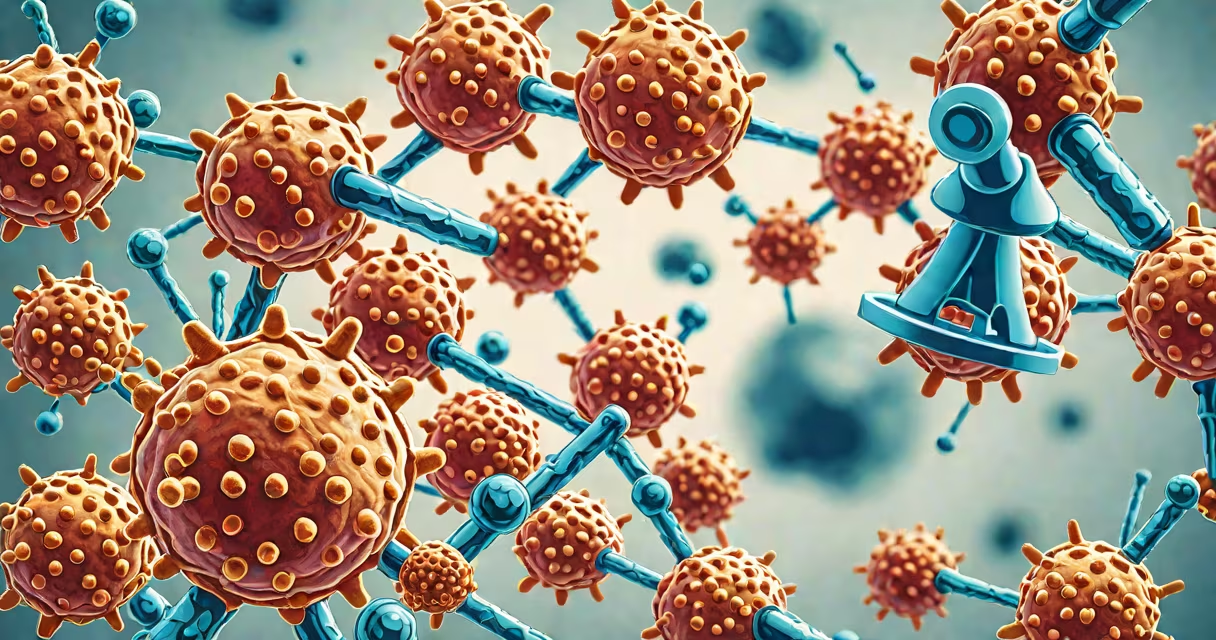
Monoclonal antibodies are laboratory-created proteins engineered to bind to a single specific antigen, such as a protein on a virus or cancer cell. They replicate the precision of natural antibodies but are produced in large quantities with uniform structure and function.
These proteins are derived from a single parent B-cell clone, ensuring they all recognize the same molecular target. This specificity allows them to interfere with disease processes without broadly affecting healthy tissues-a key advantage over many traditional drugs.
Monoclonal antibodies are used in cancer immunotherapy, autoimmune disease management, and antiviral treatments. Their mechanism involves direct binding to a target, triggering immune responses, blocking signaling pathways, or delivering toxins directly to diseased cells.
When injected into the bloodstream, monoclonal antibodies circulate until they encounter their intended antigen. Once bound, they initiate one or more biological actions depending on their design.
For example, in cancer therapy, antibodies like trastuzumab (Herceptin) bind to HER2 receptors on breast cancer cells. This blocks signals that promote uncontrolled growth and marks the cell for destruction by immune cells such as natural killer cells through antibody-dependent cellular cytotoxicity (ADCC).
In autoimmune conditions, monoclonal antibodies like infliximab (Remicade) target tumor necrosis factor-alpha (TNF-α), a protein that drives inflammation. By neutralizing TNF-α, these agents reduce joint swelling and tissue damage in rheumatoid arthritis and Crohn's disease.
Monoclonal antibodies are classified by structure and function. The most common types include chimeric, humanized, and fully human antibodies, each differing in origin and potential for immune reaction.
| Type | Origin | Binding Action | Common Use |
|---|---|---|---|
| Chimeric | Mouse variable region + human constant region | Direct binding, immune activation | Rituximab (lymphoma) |
| Humanized | Small mouse portion grafted onto human structure | Reduced immunogenicity, longer half-life | Adalimumab (rheumatoid arthritis) |
| Fully human | Entirely derived from human sequences | Low risk of allergic reactions | Bevacizumab (colorectal cancer) |
The choice of type depends on the balance between efficacy, safety, and manufacturing cost. Fully human antibodies have lower rates of anti-drug antibodies, which can reduce effectiveness over time.
A non-obvious distinction: not all monoclonal antibodies kill cells directly. Some act as blockers-preventing proteins from interacting. For instance, pembrolizumab (Keytruda) binds to PD-1 on T-cells, releasing a "brake" on the immune system to allow it to attack melanoma cells.
Consider a patient diagnosed with HER2-positive breast cancer. HER2 is a receptor protein that promotes rapid cell division. In 20-30% of cases, HER2 overexpression leads to aggressive tumors.
Doctors administer trastuzumab, a humanized monoclonal antibody. After infusion, trastuzumab binds to HER2 receptors on cancer cells. This prevents dimerization-the process where two receptors join to activate growth signals.
Trastuzumab recruits immune cells via Fc receptor engagement. These immune cells release cytokines and enzymes that destroy the cancer cell. Clinical trials show that adding trastuzumab to chemotherapy increases survival rates by 30% compared to chemotherapy alone.
Patients typically receive trastuzumab every 3 weeks for a year. Side effects are generally mild-fatigue, nausea, and low-grade fever-but cardiac toxicity occurs in about 2% of patients, requiring monitoring.
Monoclonal antibodies are not vaccines. While both involve immune recognition, vaccines train the body to respond to future threats. Monoclonal antibodies deliver immediate, passive immunity and are not long-lasting.
They are also not small-molecule drugs. Unlike oral medications such as tyrosine kinase inhibitors, monoclonal antibodies are large proteins (150 kDa) that cannot cross the blood-brain barrier. This limits their use in treating brain cancers or central nervous system infections.
Another misconception: monoclonal antibodies don't work instantly. Effects may take days to weeks to appear because immune system recruitment and cell death require time. Patients often begin seeing results after 4-6 weeks of treatment.
I observed a patient with refractory Hodgkin's lymphoma who had failed multiple chemotherapy regimens. After starting brentuximab vedotin-a conjugated monoclonal antibody that delivers a toxic payload to CD30-expressing cells-tumor size reduced by 60% within three months. The response was durable, lasting over 18 months. This outcome underscored how targeted delivery enhances therapeutic precision.
Monoclonal antibodies are standard in oncology, autoimmune disorders, and infectious diseases. FDA-approved uses include:
They are administered intravenously or subcutaneously. Infusion times range from 30 minutes to several hours, depending on the agent and dose escalation protocol.
Cost remains a major barrier. A typical course of treatment can exceed $100,000 annually. However, biosimilar versions-such as adalimumab-adbm (Humira biosimilar)-are reducing prices by 15-30% in U.S. markets.
Unlike chemotherapy, which damages rapidly dividing cells indiscriminately, monoclonal antibodies target only cells expressing the specific antigen. This reduces side effects like hair loss and severe nausea.
Compared to gene therapies, monoclonal antibodies offer shorter treatment duration and reversible effects. If adverse events occur, dosing can be paused or discontinued without permanent changes to DNA.
They are also distinct from polyclonal antibodies-naturally produced mixtures from multiple B-cell clones. Polyclonal antibodies lack the uniformity and specificity required for consistent clinical outcomes.
According to the National Institutes of Health (NIH), monoclonal antibodies represent over 15% of new drug approvals since 2010. The FDA approved 13 new monoclonal antibody therapies in 2023 alone, reflecting growing investment in biologic development.