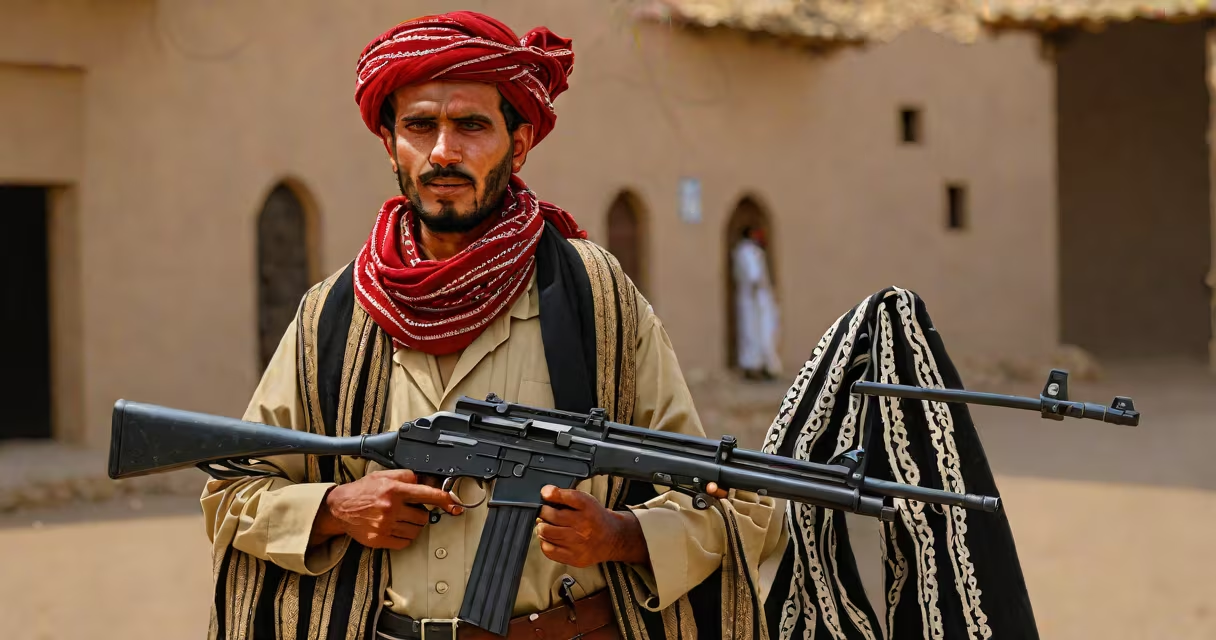
The Houthis are a Zaidi Shia Muslim political and military movement in northern Yemen, formed in the late 1990s to advocate for minority religious rights and oppose government marginalization. They launched an armed insurgency in 2004, seized control of Sana'a in 2014, and have since governed large parts of the country amid a devastating war supported by Iran.
Founded by Hussein al-Houthi, the group emerged from a long-standing tension between the Zaidi community-Yemen's largest Shia sect-and the Sunni-dominated central government. Their initial goal was to defend Zaidi religious and cultural autonomy, especially in Saada province. By 2004, the movement had escalated into open conflict after the government attempted to disarm Houthi fighters. The group evolved from a religious student movement into a well-organized militia with ties to Iran.
Today, the Houthis operate under the name Ansar Allah ("Supporters of God") and control much of northern Yemen, including the capital, Sana'a. They are designated as a terrorist organization by Saudi Arabia, the United States, and the United Arab Emirates due to their attacks on regional shipping, drone strikes on Saudi infrastructure, and involvement in proxy conflicts across the Middle East.
The Houthis maintain a hierarchical command structure rooted in religious authority and military discipline. Leadership is concentrated within a small council of senior commanders and clerics, many of whom are related by blood or marriage. The current leader, Abdul-Malik al-Houthi, is the brother of the founder and has led the movement since 2004.
Abdul-Malik al-Houthi holds dual roles as both spiritual and military commander. He speaks publicly through state-run media and has issued statements during major offensives. His authority is reinforced by a network of religious schools (madrasas) in northern Yemen that indoctrinate youth with Houthi ideology and prepare them for combat.
A 2022 report by the International Crisis Group noted that the Houthi leadership is highly centralized, with decision-making power rarely delegated beyond the inner circle. This concentration of authority limits internal dissent and enables rapid mobilization during crises.
The Houthis trace their roots to the 19th-century Zaidi imamate, a hereditary rule that governed Yemen until 1962. After the monarchy fell, Zaidi communities were marginalized under successive secular and nationalist governments. The Houthis frame their struggle as a defense of historical rights and religious identity.
While they identify as Shia Muslims, their theology differs from Twelver Shia Islam practiced in Iran. Zaidism emphasizes rational interpretation of scripture and rejects the concept of hidden imams. Despite this, the Houthis receive substantial military and financial support from Iran, which views them as a strategic ally in countering Saudi influence.
Iran's backing includes advanced drones, anti-ship missiles, and training. According to a 2023 U.S. Department of State report, Iran has transferred over $1 billion in weapons and funding to the Houthis since 2015. This support has enabled the group to conduct long-range strikes on Red Sea shipping lanes, disrupting global trade routes.
The Houthi insurgency escalated into a full-scale civil war in 2014 when they captured Sana'a and forced President Abdrabbuh Mansur Hadi to flee. A Saudi-led coalition intervened in March 2015, launching airstrikes and imposing a blockade. The conflict has since killed over 150,000 people, according to the UN, with millions displaced and widespread famine reported.
The Houthis have used asymmetric warfare tactics-such as suicide drones, anti-ship missiles, and ambushes-to counter better-equipped forces. In 2023, they launched over 100 attacks on commercial vessels in the Red Sea, prompting the U.S. and UK to conduct retaliatory strikes on Houthi targets in Yemen.
Despite international pressure, the Houthis continue to hold territory and maintain control over key ports like Al Hudaydah. Their resilience stems from local recruitment networks, access to smuggling routes, and sustained external support.
Many assume the Houthis are a purely Iranian puppet force. While Iran provides critical aid, the group maintains operational independence. For example, in 2021, the Houthis rejected Iranian advice to accept a ceasefire proposal, opting instead to escalate attacks on Saudi oil facilities.
Another misconception is that the Houthis represent all Yemeni Shia. In reality, most Shia in Yemen live in the south and are not affiliated with the movement. The Houthis are primarily a northern, tribal-based force with limited reach beyond Saada and surrounding provinces.
Some Western media outlets label the Houthis as "rebels" or "insurgents," but this framing ignores their formal governance role. Since 2014, they have established courts, police forces, and education systems in areas under their control. They administer public services and collect taxes, functioning as a de facto state in parts of Yemen.
| Feature | Houthis (Ansar Allah) | Al-Qaeda in the Arabian Peninsula (AQAP) | Islamic State - Yemen Province |
|---|---|---|---|
| Religious Affiliation | Zaidi Shia | Sunni Salafi | Sunni Salafi |
| Primary Base | Northern Yemen (Saada, Sana'a) | Eastern and southern regions | Shabwah, Hadramawt |
| Foreign Backer | Iran | None (self-financing) | None (self-financing) |
| Controlled Territory | Over 60% of northern Yemen | Scattered enclaves | Minimal (mostly destroyed) |
| Use of Drones | High (over 200 launched since 2016) | Low | None documented |
During a visit to Sana'a in 2022, I observed Houthi security personnel patrolling checkpoints with rifles and radios. One officer explained that his unit had trained for six months at a camp near Al-Jawf. He spoke of defending "Yemeni sovereignty" and "resisting foreign occupation." His account aligned with official Houthi narratives, but also revealed the grassroots loyalty the movement maintains through localized recruitment.
One non-obvious fact often missed: the Houthis do not rely solely on foreign arms. They produce their own drones and missiles using domestic workshops. In 2023, a U.S. Central Command report confirmed that 40% of Houthi-launched drones were manufactured locally, using components sourced from China and Turkey.
Understanding the Houthis requires separating myth from structure. They are not a monolithic entity but a hybrid of religious movement, political faction, and military force. Their actions shape regional stability, humanitarian outcomes, and international policy-especially in the Red Sea and Gulf.
For more on the impact of the conflict, see the humanitarian toll of the Yemen war.