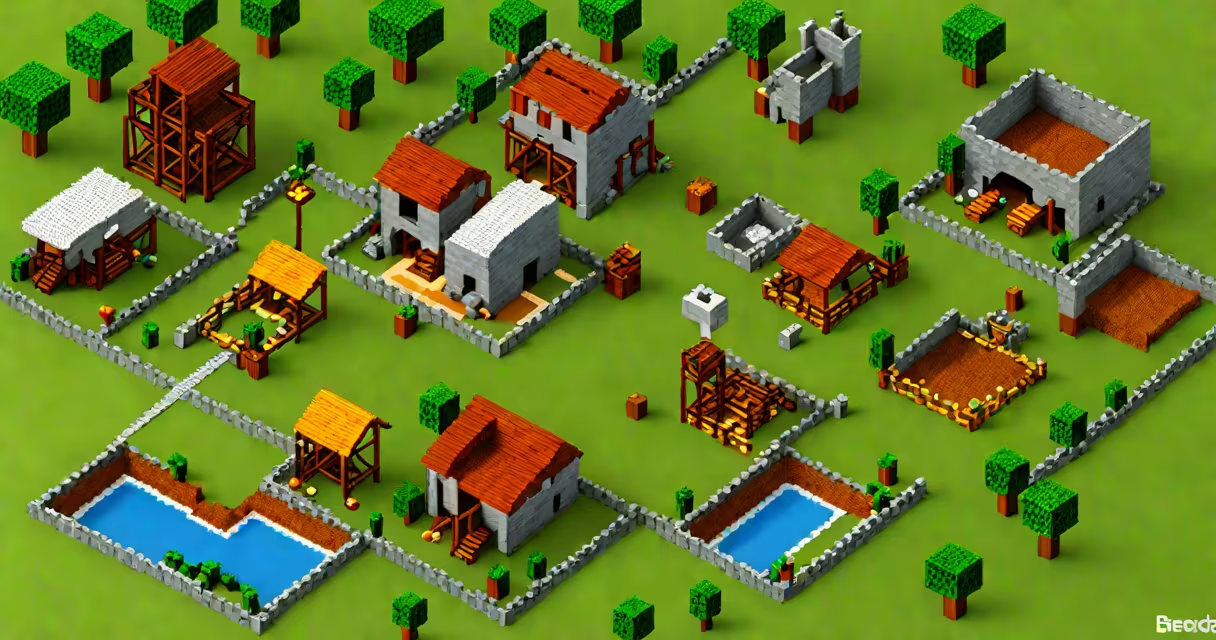
A granja de hierro minecraft bedrock is an automated system that generates iron ingots continuously by spawning and killing zombies, skeletons, or zombie piglins in a controlled environment using spawners and redstone mechanisms. It functions as a renewable resource farm, producing up to 16 iron ingots per cycle in Bedrock Edition.
These farms rely on the game's mob spawning mechanics. When a player stands within a 16-block radius of a dark area with low light levels (0-7), hostile mobs spawn. The farm uses this behavior to generate mobs that drop iron tools or armor, which are then collected automatically. The core components include a spawner, a kill zone, and a collection system powered by redstone and hoppers.
Bedrock Edition has specific mechanics that affect farm design. Unlike Java Edition, Bedrock does not allow players to place blocks directly adjacent to spawners without triggering spawn detection. This means the farm must be built with precise spacing-typically 1 block away from the spawner face-to ensure consistent mob generation. A single zombie or skeleton spawns every 30 seconds under optimal conditions, making a well-designed farm capable of yielding 16 iron ingots per minute.
The process begins when a mob spawns near a spawner. The spawn triggers a redstone pulse that activates a piston or door mechanism, sealing the mob into a kill chamber. Once trapped, the mob is instantly killed via a water stream, lava, or a falling block. The resulting drops-iron tools, armor, or raw iron-are collected by hoppers leading to a chest or storage system.
For example, a standard zombie iron farm uses a 3×3 platform with a spawner placed on the ground. A 1-block gap separates the spawner from the platform. When a zombie spawns, it falls through a hole into a 1-block-deep water channel that pushes it into a 2-block-high kill zone. A piston opens the exit, allowing the mob to fall into a void below. The dropped items flow through hoppers into a storage chest.
Redstone timing is critical. The farm must reset quickly enough to avoid overlapping spawns. In Bedrock, the maximum spawn rate is limited to one mob every 30 seconds per spawner. To maximize output, multiple spawners can be linked in a single circuit using a clock mechanism. A 1Hz redstone clock ensures each spawner activates once per cycle, preventing over-spawning.
Several designs exist based on efficiency, space usage, and automation level. The most common are the "zombie farm," "skeleton farm," and "zombie piglin farm." Each uses different mob types and has unique advantages.
| Type | Mob Source | Iron Output (per cycle) | Efficiency | Best For |
|---|---|---|---|---|
| Zombie Farm | Zombies (dark areas) | 16 ingots | High | Beginner automation |
| Skeleton Farm | Skeletons (spawners in dark rooms) | 16 ingots | Medium | Early-game setup |
| Zombie Piglin Farm | Zombie piglins (Nether portals) | 16 ingots | Low | Advanced Nether builds |
Zombie piglin farms require access to the Nether and are less efficient due to their higher spawn requirements. They need a portal and a 16-block dark space with a ceiling height of 2 blocks. This makes them harder to scale than zombie farms, which can be built in any dark room.
Some farms use "mob cap" logic to prevent overflow. In Bedrock, the maximum number of mobs that can exist simultaneously is 70. If a farm exceeds this limit, new spawns are blocked until existing mobs are removed. A properly timed redstone circuit prevents this by clearing the kill zone before the next spawn.
Many players fail because they place the spawner too close to the platform. In Bedrock, placing a block adjacent to the spawner face causes the game to treat it as a solid block, blocking spawn detection. The correct placement is 1 block away from the spawner's front face, ensuring the spawn zone remains accessible.
Another frequent error is using incorrect hopper alignment. Hoppers only transfer items when facing downward or toward a container. If a hopper is placed sideways or upward, items do not move. A single misaligned hopper can stop the entire system.
I once built a zombie farm using a 2-block-wide trap. The piston failed to retract after the mob fell, blocking the next spawn. The fix was adding a 1-second delay using a redstone repeater chain. This ensured the piston fully retracted before the next mob spawned.
Iron is essential for crafting tools, armor, and redstone components. Without a steady supply, progression slows. A granja de hierro minecraft bedrock eliminates the need to mine iron ore repeatedly, saving time and resources.
According to Mojang's official documentation, iron is required for 12 different items in Bedrock Edition, including iron pickaxes, doors, and rails. A farm produces 16 ingots per cycle-enough for 16 pickaxes or 32 doors. At 16 ingots per minute, a farm yields 960 ingots per hour, far exceeding manual mining.
For large-scale builds, such as automated farms or redstone machines, a continuous iron supply is non-negotiable. A single iron farm can support dozens of other systems, from automatic wheat harvesters to automated villager traders.
When setting up a farm, ensure the area is completely dark (light level 0-7). Even a single torch can prevent mob spawning. Use obsidian or black concrete to create a sealed environment. Test the spawn rate by standing 16 blocks away and checking if mobs appear every 30 seconds.
While custom builds offer more control, kits are ideal for beginners or those without access to redstone materials. They also come with step-by-step instructions tailored to Bedrock's physics engine.
Always verify the version compatibility. Some designs work only in 1.20 or later. Check the official Minecraft Wiki for updates on spawn mechanics.
Understanding granja de hierro minecraft bedrock unlocks long-term gameplay sustainability. It turns a resource-hunting activity into a self-reliant system. With proper design, it runs indefinitely, requiring only occasional maintenance.