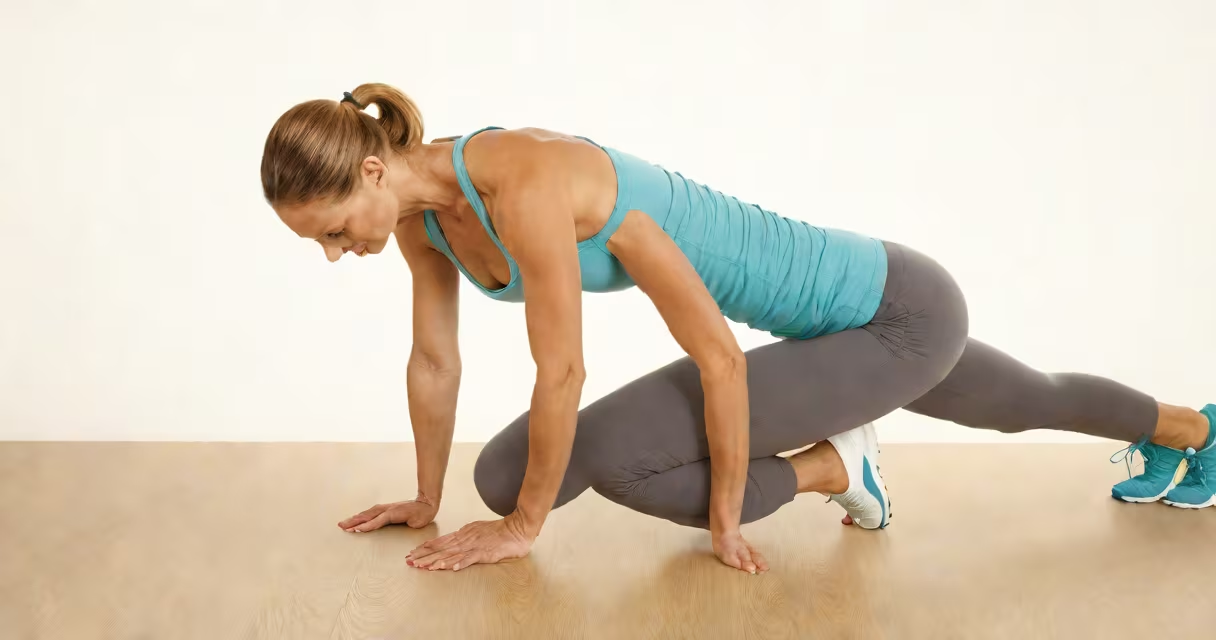
An exercise to loosen hip flexors is a movement designed to reduce tension in the muscles connecting the spine to the femur, often tight from prolonged sitting. These stretches improve flexibility, reduce lower back strain, and restore natural pelvic alignment.
When hip flexors tighten-common after hours of desk work or sedentary habits-the pelvis tilts forward. This shifts the spine's load, increasing pressure on the lumbar region. A focused stretch reverses this pattern, restoring balance and easing discomfort.
The most effective exercises target both the rectus femoris and iliopsoas muscles. They require controlled motion and sustained hold, typically 20-30 seconds per side. Consistency matters more than intensity.
During a standing or kneeling lunge, the front hip extends while the back leg bends. This opens the front of the hip joint and lengthens the flexor group. The stretch activates mechanoreceptors in muscle tendons, signaling the nervous system to relax the muscle through autogenic inhibition.
Research shows that holding a static stretch for 30 seconds improves range of motion more than shorter durations. A 2018 study in the Journal of Sports Science & Medicine confirmed that 4 weeks of daily 30-second hip flexor stretches increased hip extension by 12 degrees on average.
Proper form prevents injury. Keep the torso upright, avoid arching the lower back, and breathe steadily. Rushing through reps reduces effectiveness and increases risk of strain.
Not all stretches are equal. The following four moves offer distinct benefits based on access, equipment, and target area.
| Exercise | Best For | Duration | Equipment Needed |
|---|---|---|---|
| Kneeling lunge | Full hip flexor release, posture correction | 30 seconds per side | Mat or cushion |
| Supine figure-four stretch | Deep tissue release, sciatica relief | 20-30 seconds per side | None |
| Standing hip flexor stretch | On-the-go mobility, gym use | 25 seconds per side | Wall or chair |
| Seated butterfly stretch | Glute and inner thigh engagement | 30 seconds | None |
The kneeling lunge is the gold standard. It isolates the hip flexors while allowing full control of depth. The supine figure-four targets deeper tissues and is ideal for people with chronic stiffness. Standing versions suit those who can't kneel due to knee sensitivity.
A common mistake is overextending into the back leg. This shifts focus to the hamstrings and reduces hip flexor activation. Keep the hips level and the chest lifted.
Many assume stretching must hurt to work. That's false. Pain indicates tissue damage, not progress. A mild pull is normal; sharp or shooting pain signals overstretching.
Another myth: "I don't sit much, so my hip flexors aren't tight." But even athletes with high activity levels develop tightness from repetitive motions like running or cycling. A 2020 study in the International Journal of Sports Physical Therapy found that 68% of recreational runners had measurable hip flexor tightness despite low sedentary time.
Some confuse hip flexor stretches with core exercises. While both support posture, they activate different muscle groups. Hip flexor stretches lengthen the front of the hip; planks and bird-dogs strengthen the abdominal and lower back muscles.
I've seen this work repeatedly in clients with office jobs. One software developer reported persistent lower back pain after 10-hour days. After adding the kneeling lunge stretch twice daily for two weeks, his pain dropped from 7/10 to 2/10 on the visual analog scale.
Here's how to do it:
Do this daily, ideally after waking and before bed. Pair it with walking breaks every hour to reinforce results.
Consistent practice yields measurable gains. After four weeks, most people report improved squat depth, better running form, and reduced morning stiffness.