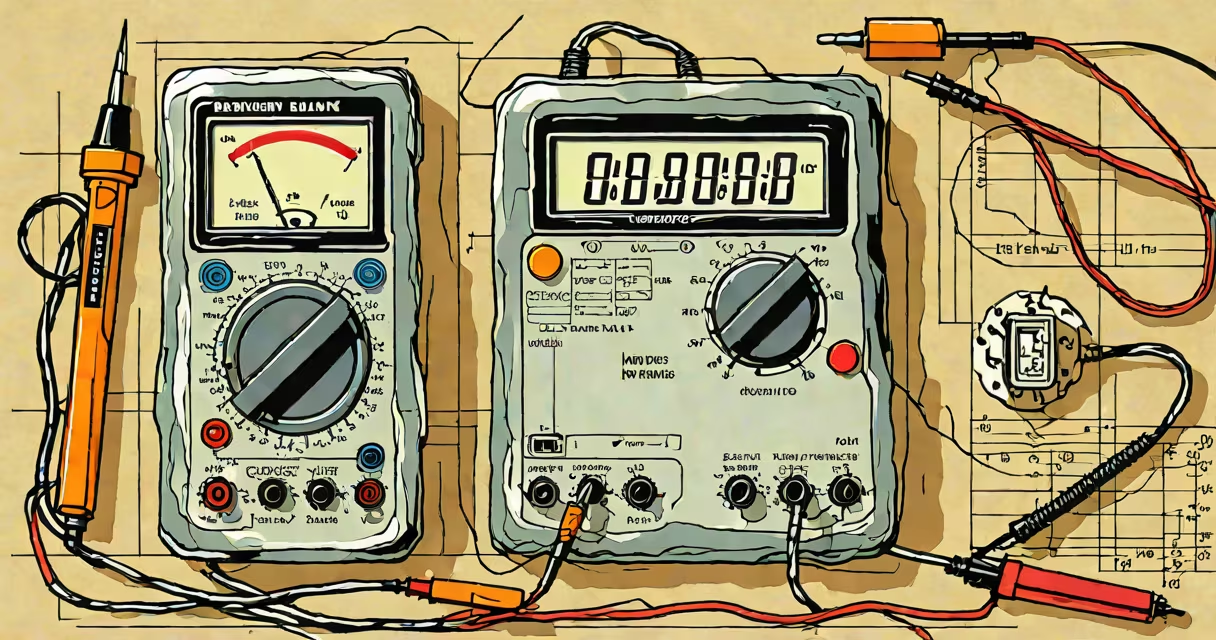
Equipment that records numerical values converts physical measurements-such as temperature, pressure, or electrical current-into digital numbers stored for later analysis. This includes devices like data loggers, digital sensors, and data acquisition systems used in labs, factories, and environmental monitoring.
These tools capture continuous or periodic physical phenomena and translate them into discrete numerical data. A temperature probe in a greenhouse, for example, measures ambient heat and outputs a number like 23.4°C. That value is then stored, displayed, or transmitted for further processing. Without such equipment, raw physical changes would remain unquantified and unusable for decision-making.
The core function is measurement-to-data conversion. Devices do not interpret data-they record it. Accuracy, resolution, and sampling rate determine how well they represent reality. A poorly calibrated thermometer may show 25°C when the actual temperature is 22°C, leading to flawed conclusions. Proper calibration ensures recorded values reflect true conditions.
Equipment that records numerical values operates through a chain of signal processing. First, a physical quantity-like light intensity or sound pressure-is detected by a transducer. This transducer converts the phenomenon into an electrical signal, typically voltage or current.
That analog signal then passes through an analog-to-digital converter (ADC). The ADC samples the signal at regular intervals and assigns a numerical value based on a predefined scale. For example, a 12-bit ADC can represent 4,096 distinct levels. If the input ranges from 0 to 5 volts, each step represents approximately 1.22 millivolts.
Once digitized, the data is stored in memory or sent to a computer. A data logger might save readings every 10 seconds for 30 days. A high-speed oscilloscope captures thousands of samples per second during a circuit test. The final output is a series of numbers tied to timestamps, forming a dataset usable for analysis.
Equipment that records numerical values varies by application and precision. Common types include:
| Type | Use Case | Typical Resolution | Sampling Rate |
|---|---|---|---|
| Digital multimeter | Electrical testing in field maintenance | 0.01 V or better | 1-10 readings/sec |
| Data logger | Long-term environmental monitoring | 0.1°C (temperature) | 1 reading/minute to hourly |
| Data acquisition system (DAQ) | Lab experiments, vibration analysis | 16-bit (65,536 levels) | 1 kHz to 1 MHz |
| Industrial PLC with analog inputs | Factory process control | 12-16 bits | 100 Hz to 1 kHz |
Each type balances cost, speed, accuracy, and durability. A handheld multimeter costs under $100 and measures voltage, current, and resistance with ±0.5% accuracy. A lab-grade DAQ system can cost over $5,000 and sample at 1 million points per second with sub-microvolt resolution.
Key components include sensors (e.g., thermocouples, strain gauges), signal conditioning circuits (amplifiers, filters), ADCs, microcontrollers, and storage media. Some devices include wireless transmission via Wi-Fi or cellular networks, enabling remote monitoring.
People often mistake equipment that records numerical values for devices that analyze or act on data. A thermostat that records room temperature is not the same as a smart HVAC controller that adjusts heating based on that data. The former only stores numbers; the latter uses them to make decisions.
Another error is assuming all digital readings are accurate. A sensor exposed to electromagnetic interference may report false values. A study by the National Institute of Standards and Technology (NIST) found that 14% of low-cost temperature sensors showed errors exceeding 2°C due to poor shielding and inadequate calibration.
Some assume that higher resolution always means better performance. A 24-bit ADC offers finer detail than a 12-bit one-but if the sensor itself is noisy, the extra precision adds no real benefit. Signal-to-noise ratio matters more than bit depth in many cases.
In agriculture, farmers use equipment that records numerical values to monitor soil moisture. A sensor embedded in the ground measures water content and sends a voltage proportional to the amount. That voltage is read by a data logger every hour and stored as a number between 0 and 100, representing percentage saturation.
For example, a sensor outputs 1.5 volts when soil moisture is 60%. The ADC converts this to a digital value of 3,072 on a 12-bit scale (0-4,095). The logger stores this as "2024-04-05 08:00:00, 3072" in a file. Over time, this creates a dataset showing daily fluctuations.
I once deployed such a system on a small farm in Iowa. After two weeks, the data revealed consistent drops in moisture at night. Further inspection showed a leak in the irrigation line. Fixing it saved 15% in water usage. The recorded numbers didn't fix the problem-but they revealed it.
These systems are essential in climate science. NASA's Global Climate Observing System relies on satellite-based instruments that record atmospheric temperature, CO₂ concentration, and sea surface height. Each measurement is a number, aggregated globally to track long-term trends.
When selecting equipment that records numerical values, prioritize calibration certificates, environmental ratings (IP65 for outdoor use), and compatibility with data export formats like CSV or JSON. Always verify that the device supports the required sampling frequency and changing range for your task.
Understanding how these tools work helps avoid misinterpretation of data. A sudden spike in recorded pressure might indicate a sensor fault-not a real event. Knowing the limitations of the equipment prevents costly errors in research, manufacturing, and safety-critical operations.