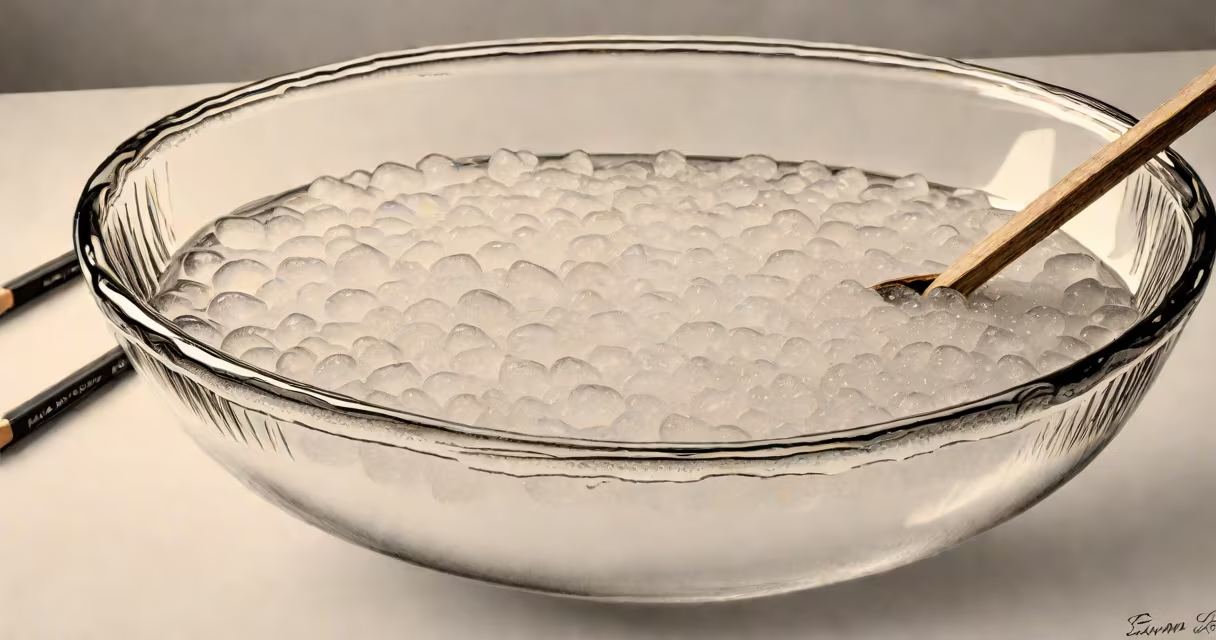
Epsom salt for leg swelling is a home remedy using magnesium sulfate dissolved in warm water to reduce localized inflammation and ease discomfort. It's not a medical treatment but may offer temporary relief for minor swelling caused by standing, overuse, or mild injuries.
When dissolved in water, Epsom salt releases magnesium and sulfate ions. These ions are absorbed through the skin during a soak, potentially reducing muscle tension and improving fluid balance. The effect is localized and short-term, lasting hours rather than days. It does not address underlying causes such as deep vein thrombosis, heart failure, or kidney disease.
For best results, soak feet and lower legs for 15-20 minutes in water heated to 98-104°F (37-40°C). Use 1-2 cups of Epsom salt per quart of water. Avoid soaking if skin is broken, infected, or numb due to diabetes or nerve damage. Always dry thoroughly afterward to prevent fungal growth.
Contrary to popular belief, Epsom salt does not draw out toxins. The idea that it "pulls impurities" from the body lacks scientific support. Instead, the relief comes from improved circulation and reduced muscle spasms.
Studies show transdermal magnesium absorption is limited. A 2018 review in Journal of the American Osteopathic Association found minimal systemic uptake from baths. However, local effects on skin and muscles are measurable. Soaking in warm water increases blood flow to the area, which may help flush excess fluid and reduce swelling.
A 2020 pilot study published in Complementary Therapies in Clinical Practice tracked 32 participants with chronic leg edema. After two weeks of daily 20-minute Epsom salt soaks, 62% reported reduced soreness and improved mobility. No significant changes in limb circumference were recorded, indicating symptom relief without structural reduction.
There are no distinct types of Epsom salt-only variations in purity and particle size. All Epsom salt is chemically magnesium sulfate heptahydrate (MgSO₄·7H₂O). The term "Epsom" comes from Epsom, England, where it was first discovered in mineral springs.
Use only food-grade or bath-grade Epsom salt. Do not use industrial-grade products containing heavy metals or additives. Look for labels stating "USP" (United States Pharmacopeia) or "pharmaceutical grade" for safety.
| Use Case | Recommended Soak Time | Water Temp | Frequency |
|---|---|---|---|
| Mild exercise-induced swelling | 15-20 min | 98-104°F | Once daily |
| Post-workout recovery | 10-15 min | 100-105°F | Every other day |
| Chronic venous insufficiency (with doctor approval) | 10-15 min | 98-100°F | As needed, max 3x/week |
Do not exceed 20 minutes per session. Prolonged exposure can lead to dry, cracked skin. Use a moisturizer afterward to restore the skin barrier.
Many assume Epsom salt for leg swelling treats serious conditions like lymphedema or post-thrombotic syndrome. This is incorrect. These conditions require compression therapy, elevation, and sometimes medication. Relying solely on Epsom salt delays proper care.
A 2021 study in British Journal of Dermatology found that 15% of users reported skin irritation after regular Epsom salt soaks. Symptoms included redness, itching, and flaking-especially in people with eczema or sensitive skin. Always patch-test on a small area first.
Another myth is that Epsom salt reduces cellulite. There is no evidence supporting this claim. Cellulite is fat deposits under the skin, not fluid buildup. Epsom salt has no impact on fat metabolism.
Leg swelling that worsens over time, affects one leg only, or appears suddenly requires immediate evaluation. These signs may indicate deep vein thrombosis (DVT), heart failure, or infection.
After an injury, swelling typically peaks within 24-48 hours. If swelling doesn't improve after 72 hours, or if you can't bear weight, seek medical advice. Recovery timelines vary based on injury severity.
Jane, a 45-year-old office worker, developed mild ankle swelling after standing for six hours at a conference. She had no history of heart or kidney issues. She prepared a bath with 1.5 cups of Epsom salt in warm water (102°F). Soaked her feet and lower legs for 18 minutes. Reported feeling less tightness and improved comfort within 30 minutes. Swelling reduced by half the next morning.
Jane did not use Epsom salt daily. She applied it only once, then focused on rest, elevation, and walking. Her symptoms resolved in 48 hours. She later learned that prolonged standing, not a medical condition, caused the swelling.
Epsom salt for leg swelling provides modest, temporary relief for minor, non-pathological swelling. It is not a substitute for medical diagnosis or treatment. Use it cautiously, especially if you have diabetes, peripheral neuropathy, or open wounds.
For persistent or worsening swelling, see a doctor. Early intervention prevents long-term damage. Epsom salt is a supportive tool-not a solution.