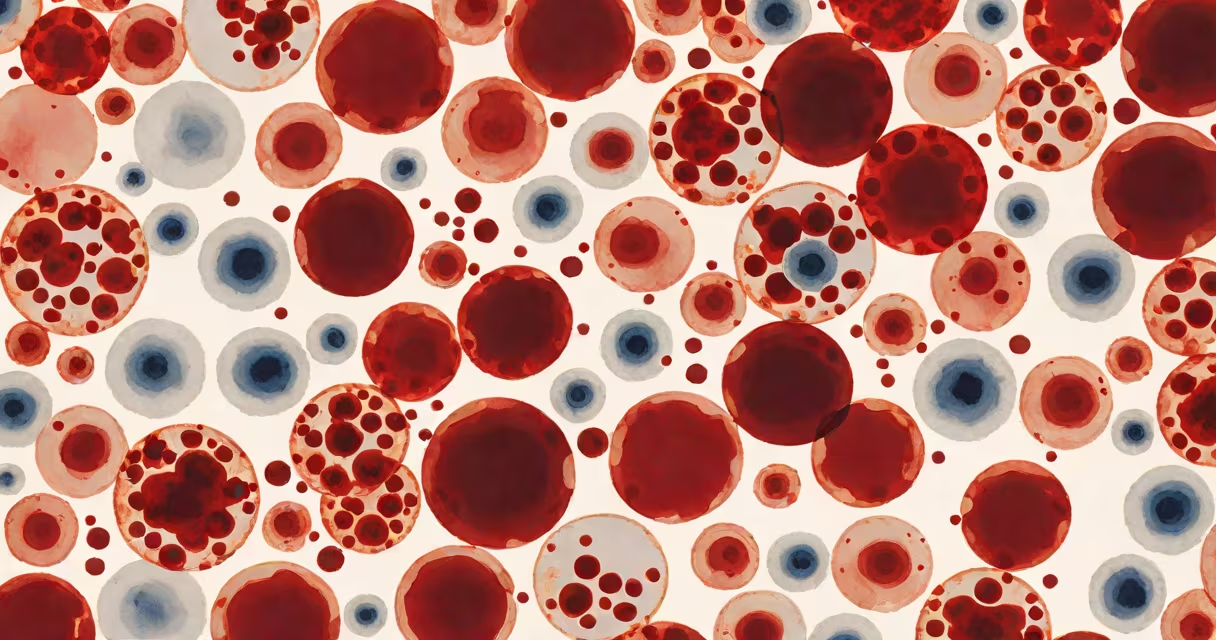
An elevated platelet count, or thrombocytosis, means the blood contains more than 450,000 platelets per microliter. This condition may result from infection, inflammation, or underlying disorders such as essential thrombocythemia.
Platelets are cell fragments produced in the bone marrow that stop bleeding by forming clots. A normal platelet count ranges between 150,000 and 450,000 per microliter. When counts rise above 450,000, it's classified as thrombocytosis. This threshold is based on clinical guidelines from the American Society of Hematology (ASH).
Thrombocytosis is not a disease itself but a sign of an underlying process. It can be reactive-caused by temporary conditions-or primary, stemming from a bone marrow disorder. The distinction determines treatment and long-term risk.
Platelets form in the bone marrow from megakaryocytes. When the body detects tissue damage or infection, it releases cytokines like interleukin-6 and thrombopoietin. These signals boost platelet production. After the threat resolves, platelet levels return to normal.
In reactive thrombocytosis, this mechanism runs too long. For example, after surgery, platelet counts often spike within 24 hours and normalize in 7-10 days. Persistent elevation beyond this window suggests a deeper issue.
Primary thrombocytosis occurs when the bone marrow produces platelets uncontrollably. This happens due to mutations in genes like JAK2, CALR, or MPL. These mutations cause megakaryocytes to overproduce platelets without external triggers. The condition is known as essential thrombocythemia (ET).
Reactive thrombocytosis accounts for over 90% of cases. Common triggers include:
Primary thrombocytosis is less common but carries higher risk. Essential thrombocythemia affects about 2 in 100,000 people annually, according to the National Institutes of Health (NIH). It typically presents in adults aged 50-70, with no gender preference.
| Type | Definition | Common Triggers | Typical Platelet Range |
|---|---|---|---|
| Reactive | Temporary increase due to illness or injury | Infection, surgery, iron deficiency | 450,000-1,000,000/µL |
| Primary | Uncontrolled production from bone marrow disorder | JAK2/CALR/MPL mutations | 600,000-2,000,000/µL |
A key distinction missed by many sources: reactive thrombocytosis rarely exceeds 1 million platelets per microliter. If counts surpass this level without an obvious trigger, primary causes must be ruled out. This threshold is critical for diagnosis.
Doctors assess elevated platelet count during routine blood tests like a complete blood count (CBC). A result above 450,000 prompts further evaluation. The goal is to determine whether the rise is temporary or indicative of a serious condition.
For example, a 62-year-old woman with a CBC showing 680,000 platelets was referred to hematology. She had no fever, recent surgery, or bleeding. Further testing revealed a JAK2 mutation. She was diagnosed with essential thrombocythemia and began low-dose aspirin therapy to reduce clotting risk.
Screening for primary thrombocytosis includes genetic testing and bone marrow biopsy in persistent cases. The Mayo Clinic recommends evaluating platelet counts above 600,000 with a peripheral smear and mutation analysis.
Many assume elevated platelet count always increases stroke or heart attack risk. This is incorrect. While high platelets can contribute to clot formation, the actual risk depends on the cause. Reactive thrombocytosis carries minimal clotting risk. Primary thrombocytosis increases risk -up to 10% over 10 years, per ASH guidelines.
Another misconception: elevated platelets always require medication. Not true. In reactive cases, treating the underlying cause-like antibiotics for infection-resolves the issue. Medication is reserved for primary thrombocytosis or high-risk patients.
One non-obvious fact: platelet counts can fluctuate widely in healthy individuals. A study in the journal Blood found that up to 15% of people have platelet counts above 450,000 at least once without disease. This variability underscores the need for repeat testing before diagnosing thrombocytosis.
A 44-year-old man presented with fatigue and headaches. His CBC showed 720,000 platelets. He had no history of infection, surgery, or autoimmune disease. Initial workup included CRP (C-reactive protein) and ESR (erythrocyte sedimentation rate), both normal. Iron studies were negative.
Genetic testing revealed a CALR mutation. Bone marrow biopsy confirmed hypercellular marrow with increased megakaryocytes. He was diagnosed with essential thrombocythemia. Treatment began with hydroxyurea to control platelet production and aspirin to prevent clots.
This case illustrates that isolated elevated platelets without symptoms still require investigation. The absence of inflammation markers doesn't rule out primary thrombocytosis.
Elevated platelet count meaning matters most when it persists. A single high reading may reflect stress or lab error. Repeat testing after 2-4 weeks is standard. If counts remain high, referral to hematology is recommended.
Red flags include unexplained bruising, nosebleeds, or sudden vision changes. These suggest abnormal clotting or bleeding. Patients with a family history of blood disorders should be evaluated earlier.
Monitoring platelet count over time remains central to management. Most reactive cases resolve within two weeks. Primary cases require ongoing surveillance and treatment adjustments.