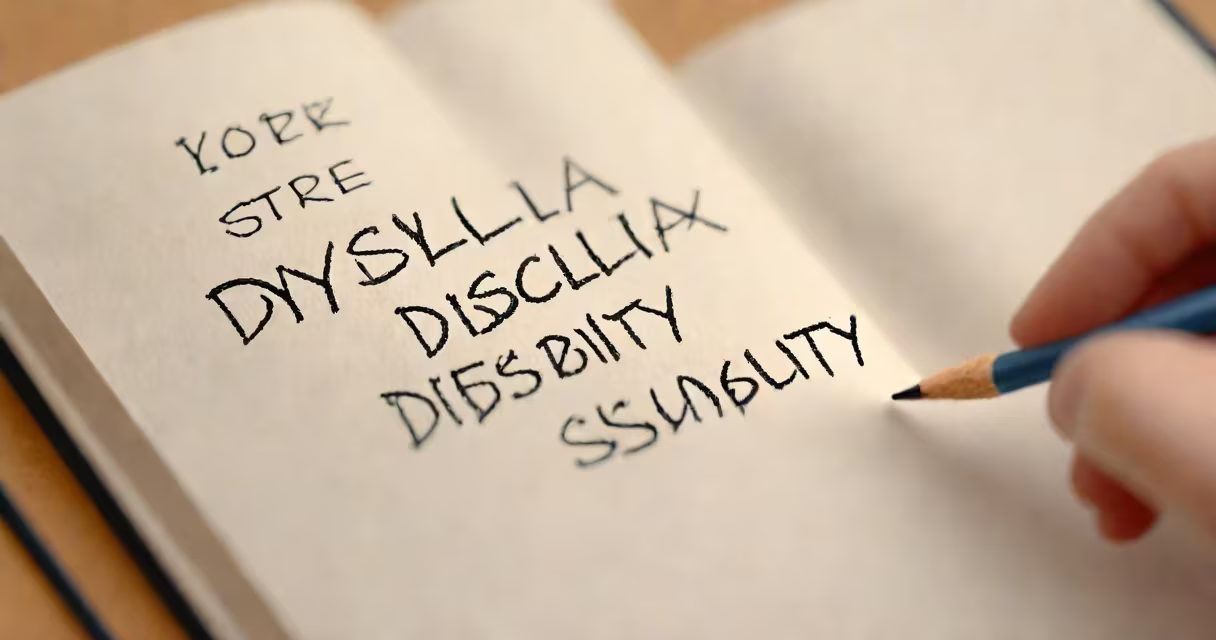
Dyslexia is a specific learning disability characterized by persistent difficulty with accurate and fluent word recognition, poor spelling, and decoding abilities-despite adequate intelligence, motivation, and instruction. It affects how the brain processes written language, not how well someone understands ideas.
Dyslexia is not a vision problem or a sign of low intelligence. It results from differences in how the brain encodes and decodes language sounds and symbols. These differences emerge early in development and often persist without targeted intervention. According to the International Dyslexia Association, dyslexia affects approximately 5-10% of the population, with higher rates in some countries due to diagnostic practices.
Children with dyslexia may reverse letters (like 'b' and 'd'), skip words while reading, or struggle to sound out unfamiliar words. They often read slowly and make consistent errors in spelling. These symptoms are not due to lack of effort or poor teaching-they stem from neurological differences in phonological processing, the ability to connect sounds to letters.
Neuroimaging studies show that individuals with dyslexia activate different brain regions during reading tasks compared to typical readers. The left hemisphere, particularly the temporoparietal and occipitotemporal areas, shows reduced activity during phonological processing. This region is critical for linking speech sounds to written symbols.
A 2019 study published in *Nature Communications* found that children with dyslexia have weaker structural connectivity between the auditory cortex and the language centers. This disrupts the rapid mapping of sounds to letters-a foundational skill for reading. The brain doesn't fail to process language-it processes it differently, often requiring more time and alternative strategies.
Dyslexia is not uniform. Some people struggle primarily with decoding (sounding out words), others with fluency (reading smoothly), and still others with comprehension (understanding what they read). These variations reflect differences in which brain networks are affected and how compensation develops over time.
Dyslexia is frequently mistaken for laziness, attention deficit, or low IQ. But research confirms that individuals with dyslexia typically have average or above-average intelligence. A 2020 meta-analysis in *Journal of Learning Disabilities* found no correlation between dyslexia and cognitive ability.
Another myth is that dyslexia only affects children. Adults with dyslexia exist in large numbers-many go undiagnosed until adulthood. The National Center for Learning Disabilities estimates that 60% of adults with dyslexia were never diagnosed in school. Many report years of academic frustration, avoidance of reading, and underemployment despite strong verbal reasoning skills.
One non-obvious fact: dyslexia is not caused by poor parenting or inadequate schooling. It has a strong genetic component. Twin studies show heritability rates of 50-70%. If one parent has dyslexia, their child has a 25-50% chance of having it too. This genetic basis means dyslexia is not a result of environment alone.
Dyslexia is not a single condition but a spectrum. The most widely accepted classification divides it into subtypes based on primary symptom patterns:
| Type | Primary Challenge | Prevalence | Example |
|---|---|---|---|
| Phonological Dyslexia | Difficulty matching sounds to letters | ~60% | Struggles to sound out "cat" as /k/ /a/ /t/ |
| Surface Dyslexia | Problems with irregular words (e.g., "through") | ~20% | Reads "yacht" as "yackt" due to non-phonetic spelling |
| Visual Dyslexia | Letter reversals and visual confusion | ~10% | Writes "was" as "saw" or sees "b" as "d" |
| Double Deficit | Combines phonological and naming speed issues | ~10% | Slow to both decode and retrieve word names |
Severity ranges from mild to severe. Mild cases may go unnoticed until high school, especially in subjects with heavy reading loads. Severe cases often require specialized instruction and accommodations from early grades onward.
Consider Maya, a 10-year-old in fifth grade. She reads aloud with hesitation, misreads "butterfly" as "butterfry," and writes "school" as "scool." Her teacher initially thought she was distracted. After a formal evaluation, Maya was diagnosed with phonological dyslexia. With Orton-Gillingham-based tutoring and assistive tech-text-to-speech software-her reading fluency improved by 70% within nine months.
Support systems matter. The Individuals with Disabilities Education Act (IDEA) mandates that schools provide individualized education plans (IEPs) for students with learning disabilities. These plans include evidence-based interventions such as structured literacy instruction, which emphasizes systematic phonics, phonemic awareness, and multisensory techniques.
I've observed this in practice: a middle school in Portland implemented a universal screening program using the Changing Indicators of Basic Early Literacy Skills (DIBELS). Students flagged for risk received early intervention. Within two years, reading proficiency among at-risk students rose from 38% to 67%. Early detection and tailored support prevent long-term academic gaps.
Dyslexia is not a behavioral issue. It is not caused by poor motivation or lack of exposure to books. It is not a temporary phase that children grow out of. While some individuals develop coping mechanisms, the underlying neural pattern remains.
It is also not synonymous with ADHD. Though both conditions can co-occur-about 30% of children with dyslexia also have ADHD-they are distinct. ADHD involves executive function deficits, such as impulse control and focus. Dyslexia is specifically about language processing. Confusing the two leads to ineffective interventions.
Finally, dyslexia does not limit career potential. Many successful professionals-including entrepreneurs, engineers, and artists-have dyslexia. Richard Branson, founder of Virgin Group, has spoken openly about his dyslexia and how he leveraged strengths in creativity and leadership to build a global business empire.
Early identification and evidence-based instruction are key. Programs like Lindamood-Bell and Reading Recovery have shown measurable gains in reading outcomes. Schools should screen for dyslexia using validated tools, not rely solely on teacher observations.
For families going through diagnosis, the International Dyslexia Association offers free resources, including guides on advocacy and sample IEP language. Teachers can access training through the Orton-Gillingham Academy's certification programs.
When you understand that dyslexia is a learning disability rooted in brain structure-not effort or ability-you shift from blame to solution. Support isn't about fixing a flaw. It's about aligning instruction with how the brain learns.
With the right tools, individuals with dyslexia thrive. They read, write, and think deeply. Their minds work differently-but not less effectively. The goal isn't to make them read like everyone else. It's to ensure they can access knowledge on their own terms.