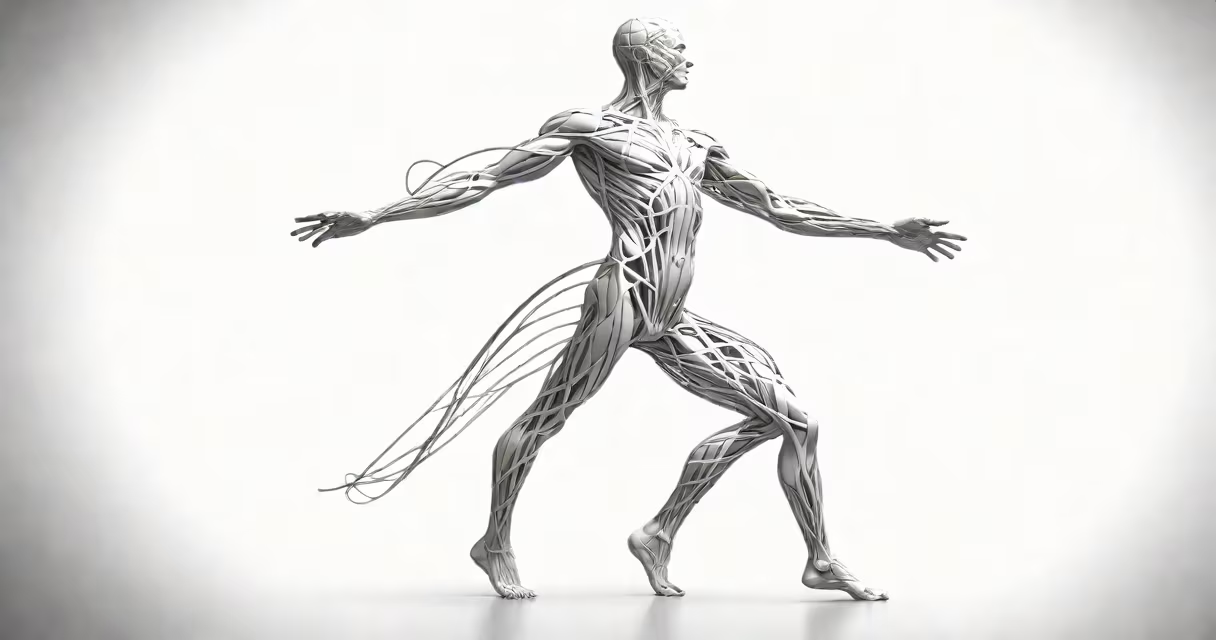
A drawing of a person is a visual representation of the human form using lines, shapes, and shading to convey posture, anatomy, and expression. It ranges from quick gesture sketches to detailed portraits and is foundational in art education and professional illustration.
Artists begin with basic forms-circles for heads, ovals for torsos, cylinders for limbs-to establish proportion and balance. The figure's center of gravity determines stance and movement. A standing person typically places their weight on one foot, shifting the hips and shoulders to maintain stability. This principle applies whether the subject stands still or moves dynamically.
Gesture drawing captures motion in 30 seconds or less. It focuses on the flow of energy through the body rather than anatomical precision. For example, a dancer mid-leap may be drawn with a single curved line suggesting momentum, not individual muscles. This technique trains the eye to see action, not just static form.
Every drawing of a person starts with a structural skeleton. Artists use overlapping shapes-such as a sphere for the head, a tapered cylinder for the torso, and segmented cylinders for arms and legs-to build volume. These forms are then refined into recognizable human features.
Proportion is critical. The average adult human is about seven to seven-and-a-half heads tall. The distance from the top of the head to the navel equals one head. The shoulders span about two head widths. Deviations from these norms signal stylization-e.g., cartoon characters often have exaggerated proportions for expressive effect.
Shading adds depth. Light falls on the side facing the source, creating highlights and shadows. A shoulder cast a soft shadow across the chest, while the back of a hand may show subtle gradients from light to dark. Without this, the figure appears flat, like a cutout.
Drawings of people vary by purpose and medium. Here are common categories:
| Type | Use Case | Common Tools | Example |
|---|---|---|---|
| Gestural Sketch | Capturing movement and rhythm | Pencil, charcoal, ink | Quick 30-second poses in life drawing classes |
| Figure Study | Anatomical accuracy and proportion | Graphite pencils, blending stumps | Leonardo da Vinci's anatomical drawings from the 1500s |
| Portrait | Facial expression and identity | Charcoal, pastels, ink | Rembrandt's etchings of aging faces |
| Stylized/Comic | Character design, storytelling | Ballpoint pen, marker, digital tablet | Scott Adams' Dilbert comic strip figures |
Each type serves a different goal. Gestural drawings train observational speed. Figure studies improve understanding of muscle and bone placement. Portraits emphasize emotional nuance. Stylized work prioritizes clarity and impact over realism.
Many assume a drawing of a person must look realistic to be valid. That's false. Expressionist and abstract styles-like those by Egon Schiele or Käthe Kollwitz-show emotion and tension without accurate anatomy. Their figures distort proportions to heighten psychological impact.
Another myth: "You need perfect hands to draw a person." Not true. Even master artists like Michelangelo struggled with hand anatomy early in their careers. He famously wrote in his notebooks that hands were "the most difficult part of the body to draw" due to complex joint movements.
A lesser-known fact: the human figure in Western art evolved from rigid, symbolic forms to naturalistic ones over centuries. Ancient Egyptian art depicted bodies in profile with frontal eyes and feet-idealized, not realistic. By the Renaissance, artists like Raphael studied cadavers to understand internal structure, leading to more lifelike depictions.
Consider a student drawing a person sitting cross-legged on a bench. They start with a small circle for the head, a vertical line for the spine, and a horizontal oval for the pelvis. Arms extend from the shoulders; legs bend at the knees. The artist then refines the outline, adding joints and muscle definition.
Next, they define the face: eyes spaced one eye-width apart, nose centered, mouth below the nose. The left arm rests on the knee; the right hand holds a book. Shadows fall under the chin, along the forearm, and beneath the book. The background includes faint lines suggesting a park bench and distant trees.
This process takes 45 minutes. The result is not a photograph, but a clear, readable depiction of a person in a specific moment. It communicates mood-calm, focused, quiet-through posture and detail.
I once spent a week observing people at a city bus stop, sketching each one in a notebook. One woman reading a novel had her head tilted slightly, her fingers resting on the page. Her posture conveyed absorption. I captured that in a 10-minute pencil sketch. Later, someone recognized her from the drawing. It wasn't perfect-but it was truthful.
Understanding a drawing of a person connects to broader topics in visual literacy. Depression can alter how a person perceives themselves and others, affecting both mental health and creative output. A person struggling with depression may draw themselves as smaller, hidden, or fragmented-visual metaphors for isolation. Recognizing these cues can aid early intervention.
For those developing empathy and self-awareness, being a good person involves seeing others -not just their appearance, but their inner state. Art practice fosters this skill. Observing how a person sits, stands, or holds their hands reveals unspoken emotions.
When studying figure drawing, refer to authoritative sources like the *Drawing on the Right Side of the Brain* by Betty Edwards, which outlines perceptual training techniques. The *Anatomy of the Human Body* by Gray's Anatomy remains a standard reference for medical and artistic accuracy.
A drawing of a person is not just a copy of reality-it's a translation of observation, intention, and feeling. Whether done in five minutes or five hours, it reflects how the artist sees the world.