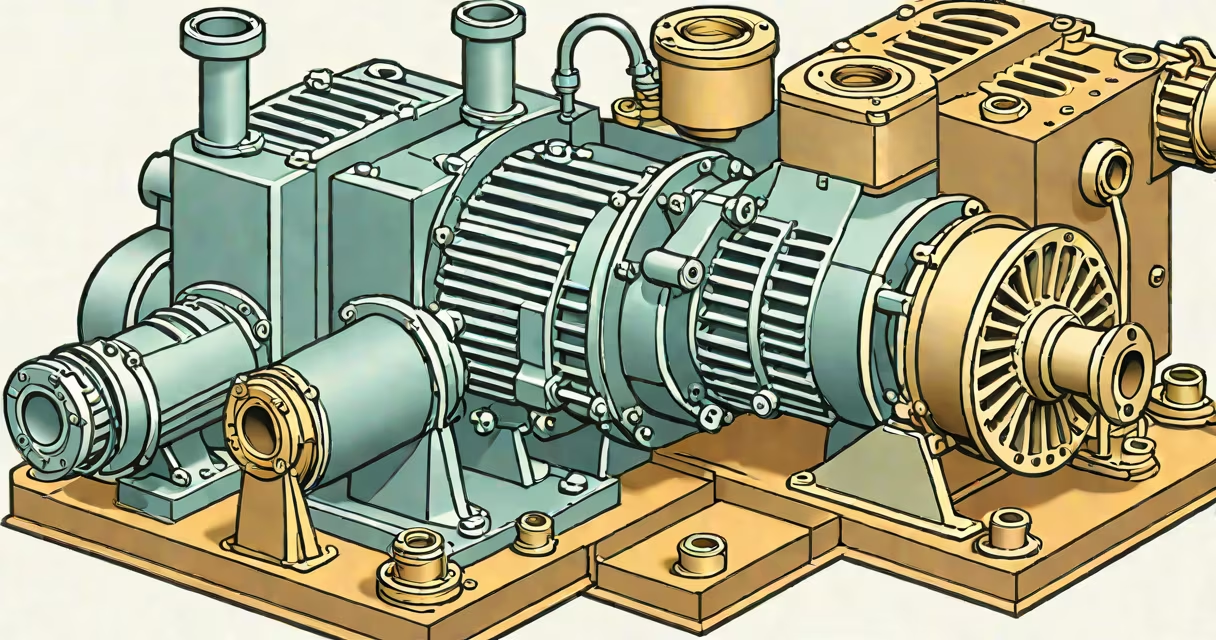
A dc water pump uses direct current electricity to move liquids through a system, typically powered by batteries, solar panels, or low-voltage sources. Unlike ac pumps, it operates efficiently at lower voltages and is ideal for remote or off-grid setups.
These pumps rely on a brushless or brushed dc motor connected to an impeller or rotor. When current flows through the motor windings, it generates rotational force that pushes fluid through the pump housing. The flow rate and pressure depend on voltage, motor design, and impeller size. Most common models run on 12V or 24V dc, though some operate at 5V or 48V.
DC water pumps are widely used in irrigation, aquariums, cooling systems, and solar-powered water delivery. They're especially effective in locations without access to standard electrical grids. Their efficiency, quiet operation, and compatibility with renewable energy make them a practical choice for sustainable fluid transfer.
Inside a dc water pump, a motor converts electrical energy into mechanical rotation. This motion drives a rotating component-usually an impeller-that creates pressure differences to draw fluid in and push it out. The pump's inlet and outlet ports align with plumbing or tubing, enabling continuous flow.
The motor's performance depends on voltage stability. A 12V dc pump may deliver 100 liters per hour at full voltage but drop to 60 L/h if voltage sags below 10V. Voltage fluctuations affect speed and output, so many models include internal regulators or work best with stable power sources like solar charge controllers.
Pumps with permanent magnet motors offer high efficiency and minimal heat generation. Brushless designs last longer than brushed ones because they lack physical contact between moving parts. These features reduce wear and maintenance, making them suitable for long-term deployment in outdoor or submerged environments.
DC water pumps come in several configurations based on application. The most common types are:
| Type | Power Source | Use Case | Example Application |
|---|---|---|---|
| Submersible | 12V-48V dc | Underwater or well-based pumping | Drinking water extraction from shallow wells |
| Inline | 12V dc | Recirculation or cooling | Water cooling in home-built PCs |
| Centrifugal | 5V-24V dc | Small-scale irrigation or hobby projects | Automated plant watering systems |
| Solar-powered | 12V-24V dc via solar panel | Off-grid water supply | Remote farm irrigation using solar range |
Submersible dc pumps are often used in small wells or rainwater harvesting tanks. They're sealed to prevent water ingress and designed to operate underwater. A typical model rated at 12V, 3W, can lift water up to 3 meters vertically and deliver 150 L/h under optimal conditions.
For solar applications, a 12V dc pump paired with a 50W solar panel can run for 4-6 hours daily during peak sunlight. This setup powers drip irrigation in gardens without relying on grid electricity. The pump activates automatically when light levels rise, thanks to a built-in photocell or external controller.
Many assume dc water pumps are weaker than ac models. That's not true. A 12V dc pump can match or exceed the performance of a similarly sized 110V ac unit in low-power applications. The difference lies in efficiency under load and energy source compatibility.
Another misconception is that all dc pumps are small. While many are compact-some fit in a palm-they come in sizes capable of handling large volumes. Industrial-grade dc pumps exist for wastewater treatment and agricultural systems, though they're less common than consumer models.
Crucially, dc pumps are not interchangeable with ac pumps. Using a dc pump on an ac line without a converter causes damage. Conversely, connecting an ac pump to a battery requires an inverter, which adds inefficiency and cost. Always match the pump's voltage rating to the power source.
A non-obvious fact: dc pumps often have higher startup torque than ac equivalents. This allows them to begin moving fluid faster from a standstill, reducing lag time in automated systems. This trait makes them better suited for applications requiring rapid response, such as emergency drainage or cooling activation.
I installed a 12V dc water pump in a rooftop garden in Tucson, Arizona, to automate watering using a 100W solar panel. The system included a charge controller, a 50Ah battery, and a timer to regulate pump cycles.
The pump lifted water from a 200-liter storage tank to a network of drip lines. With 6 hours of sunlight daily, the solar panel generated enough power to run the pump for 2 hours each morning. Flow rate averaged 120 L/h, sufficient for 150 square feet of vegetable beds.
Over six months, the system reduced manual watering by 90%. Power consumption was 1.2 kWh/month-less than a single incandescent bulb. Maintenance was minimal. Only once did the pump fail due to sediment buildup, which was cleared with a filter upgrade.
This setup demonstrates how a dc water pump integrates smoothly with renewable energy. It's reliable, low-cost, and sustainable-ideal for urban farms, remote cabins, or disaster recovery kits.
When selecting a dc water pump, verify voltage compatibility, flow rate at operating pressure, and whether the pump is rated for continuous duty. Check manufacturer specs for max head height and maximum dry-run duration. Some models shut down automatically if the intake is blocked, preventing overheating.