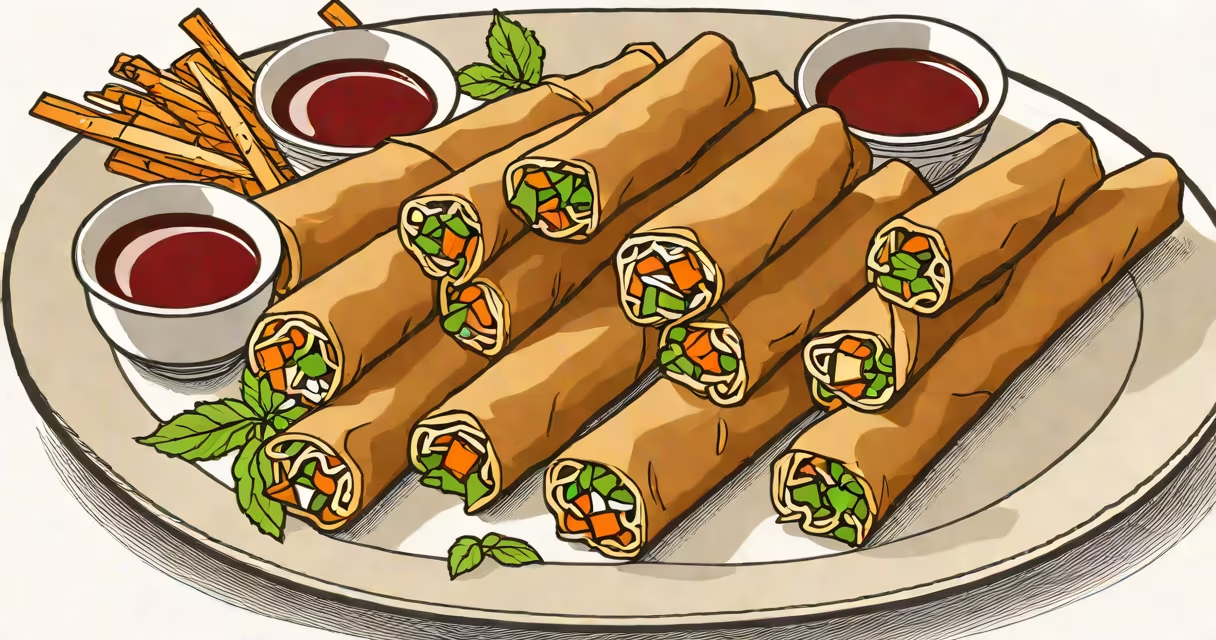
Chinese spring rolls are deep-fried appetizers made from thin wheat-based wrappers filled with julienned vegetables, sometimes meat, then rolled and cooked until golden and crisp. They are a staple in Chinese-American cuisine and widely available in restaurants and takeout menus.
The core structure consists of a thin, unleavened wrapper-typically made from wheat flour, water, and a touch of oil-that encases a filling. Once sealed, the roll is deep-fried at 350°F (175°C) until the exterior turns brittle and light gold. This process creates a contrast between the crunchy shell and the tender, savory interior.
Originating in southern China, particularly Guangdong province, spring rolls evolved through trade and migration into versions seen globally. The dish gained widespread popularity in the United States during the mid-20th century, often appearing on dim sum menus and holiday spreads.
Each spring roll begins with a wrapper that's about 6 inches wide and 8 inches long. These sheets are usually sold dried in supermarkets or Asian grocery stores, though they can be made from scratch using a simple dough of flour and water. The wrapper is pliable when moistened slightly but becomes rigid when fried.
Filling preparation follows a standard sequence: julienne the ingredients, sauté them briefly in oil with seasonings, then cool before wrapping. Common fillings include cabbage, carrots, mushrooms, and bamboo shoots. For meat-based versions, pork or chicken is stir-fried until browned and mixed with the vegetables.
Wrapping involves placing the filling near one edge of the wrapper, folding the sides inward, then rolling tightly toward the opposite end. A small amount of water applied to the edge seals the roll. The sealed rolls are then dropped into hot oil and fried for 2-3 minutes until evenly golden.
Spring rolls vary by region and culinary tradition. The most common categories are:
| Type | Fillings | Texture | Origin |
|---|---|---|---|
| Vegetable | Cabbage, carrots, mushrooms, bean sprouts | Crunchy exterior, soft interior | Guangdong, China |
| Pork | Ground pork, cabbage, scallions, garlic | Rich, savory, slightly greasy | China, Southeast Asia |
| Shrimp | Chopped shrimp, water chestnuts, ginger | Light, delicate, slightly sweet | Malaysia, Singapore |
| Vegetarian (Vegan) | Carrots, bell peppers, tofu, mushrooms | High fiber, low fat | Global adaptation |
A lesser-known variant is the "fried egg roll," which uses a thicker wrapper and larger size-often associated with American-Chinese takeout. These are not authentic spring rolls but rather a localized evolution.
One non-obvious distinction: authentic Chinese spring rolls are not the same as Vietnamese summer rolls. The latter are fresh, uncooked, and wrapped in rice paper with herbs and raw ingredients. Confusion arises because both are called "spring rolls" in English, but they differ in preparation, texture, and cultural context.
Chinese spring rolls are frequently served as appetizers at Chinese restaurants, especially in Western countries. They appear on menus under names like "crispy vegetable rolls" or "golden rolls." In home kitchens, they're popular during Lunar New Year celebrations, festivals, and family gatherings.
They are often paired with dipping sauces such as sweet chili sauce, soy sauce with vinegar and sugar, or a spicy sriracha mayo blend. The dipping sauce enhances flavor and adds moisture to balance the crispiness.
When I made them at home last winter, I used leftover roasted chicken and shredded cabbage. After mixing in sesame oil and a pinch of five-spice powder, I wrapped each roll tightly and fried them in batches. The result was a satisfying crunch with a warm, aromatic center-perfect for sharing.
Spring rolls are frequently mistaken for dumplings, potstickers, or wontons. While all involve wrappers and fillings, they differ in shape, cooking method, and cultural origin. Wontons are typically boiled or steamed and served in soup. Potstickers are pan-fried with a crispy base and soft top. Spring rolls are exclusively deep-fried and have a thinner, crisper shell.
Another error is assuming all spring rolls are vegetarian. While many are, traditional recipes often include pork or seafood. The term "spring roll" in English doesn't specify the filling, so checking the menu or ingredient list is essential for dietary accuracy.
According to the USDA FoodData Central, a single medium-sized fried spring roll contains approximately 130 calories, 6 grams of fat, and 1 gram of protein. The calorie count increases with added meat or heavy frying.
For readers exploring symbolic meanings in food, the concept of "2 in Chinese" appears in various dishes, including spring rolls. The number two represents harmony and duality-common in Chinese philosophy. Some families serve two spring rolls per person during feasts to symbolize unity and balance.
Understanding the difference between authentic Chinese spring rolls and their Westernized versions improves both cooking accuracy and cultural appreciation. Whether enjoyed as a snack or part of a festive meal, these rolls remain a flavorful gateway to Chinese culinary traditions.