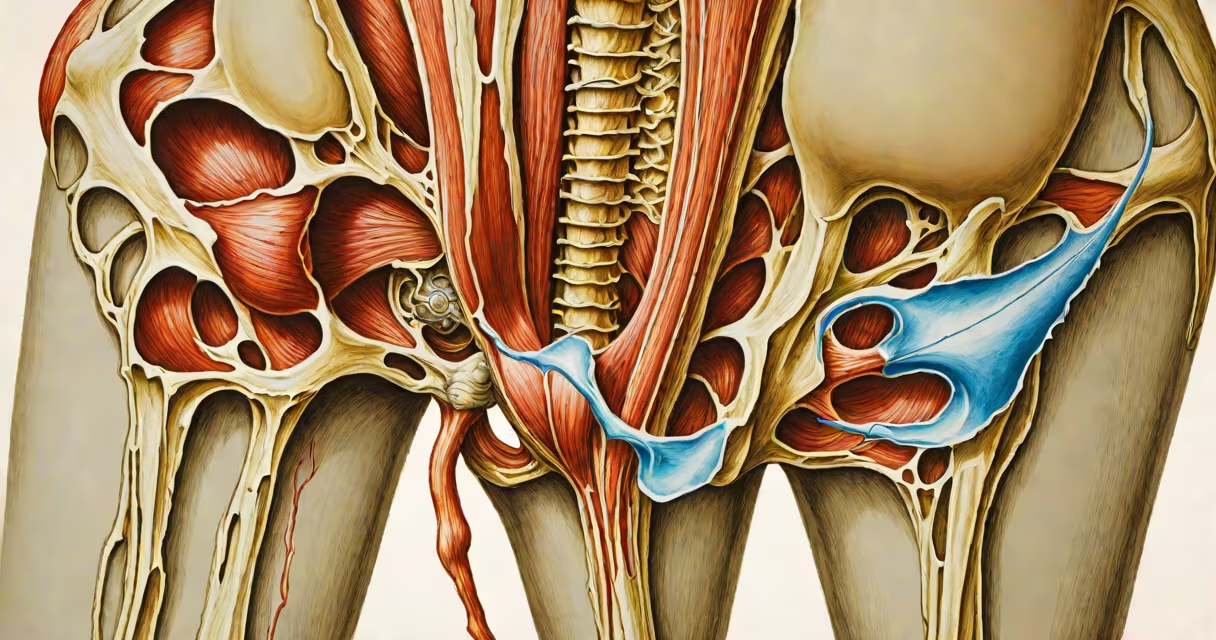
A piriformis muscle tear is a rare but possible injury involving the small muscle deep in the buttocks that stabilizes the hip and aids in leg rotation. It typically results from sudden force, repetitive strain, or prolonged sitting, leading to localized pain, stiffness, and sometimes sciatica-like symptoms.
The piriformis muscle lies beneath the gluteal muscles and runs from the sacrum to the greater trochanter of the femur. Its primary function is external rotation of the hip. Because the sciatic nerve passes close to or through it in about 15% of people, irritation or tearing can compress the nerve, causing radiating pain down the leg-a condition known as piriformis syndrome.
While complete tears are uncommon, partial strains or microtears are more frequent, especially in athletes involved in running, cycling, or activities requiring repetitive hip movement. Symptoms include sharp pain in the buttock, tenderness when pressing on the area, and difficulty walking or climbing stairs. Diagnosis requires ruling out other causes such as herniated discs or hip joint issues.
Most piriformis injuries result from overuse rather than acute trauma. Repetitive motions like long-distance running, cycling, or frequent squatting place sustained stress on the muscle. Sudden movements-such as pivoting during sports or falling onto the hip-can also cause a tear.
People with tight hip flexors or weak glutes are at higher risk because imbalanced muscle forces increase strain on the piriformis. Prolonged sitting, especially with poor posture, reduces blood flow and increases tension in the muscle, making it vulnerable to microtears over time.
A 2021 study published in the Journal of Orthopaedic & Sports Physical Therapy found that 68% of patients diagnosed with piriformis syndrome had a history of prolonged sitting or repetitive hip motion, supporting the role of lifestyle factors in muscle strain.
Piriformis injuries are categorized by severity:
| Grade | Description | Recovery Time | Common Triggers |
|---|---|---|---|
| Grade 1 | Mild strain with minor tearing; pain during activity, minimal swelling | 1-2 weeks | Overuse, sudden twist |
| Grade 2 | Partial tear with moderate pain and weakness; limited mobility | 3-6 weeks | High-intensity exercise, fall |
| Grade 3 | Complete rupture; severe pain, inability to walk, bruising | 6+ months | Direct trauma, sports collision |
Grade 3 tears are extremely rare and usually require surgical intervention. Most cases are mild to moderate and resolve with rest, physical therapy, and targeted stretching.
Piriformis muscle tears are frequently mistaken for sciatica caused by a herniated disc or spinal stenosis. Both conditions produce similar symptoms-burning pain along the sciatic nerve, numbness in the leg-but the source differs. A disc issue originates in the spine; a piriformis tear stems from the pelvis.
Another common confusion is equating piriformis syndrome with hamstring strain. While both affect the posterior thigh, hamstring pain is felt higher up, near the back of the knee. Piriformis pain is deeper in the buttock, often worsened by sitting or lying on the affected side.
One non-obvious distinction: a true muscle tear involves visible tissue damage detectable via MRI. Many patients report "pulling" their piriformis during yoga or stretching, but imaging shows no structural change-this is likely a strain, not a tear. According to the American Academy of Orthopaedic Surgeons (AAOS), MRI confirms actual tears in fewer than 10% of suspected cases.
In 2022, a 34-year-old recreational runner reported persistent pain in his left buttock after increasing weekly mileage from 20 to 40 miles. He described a sharp, stabbing sensation when descending hills and difficulty sleeping on his side. An MRI revealed a Grade 2 partial tear in the left piriformis muscle.
He stopped running for six weeks, focused on physical therapy, and performed daily stretches targeting the piriformis and hip flexors. After four weeks of treatment, he resumed light jogging. Full return to training took 10 weeks. His recovery aligns with standard guidelines from the Mayo Clinic, which recommends avoiding high-impact activity until pain-free movement returns.
Initial treatment focuses on reducing inflammation and restoring function. Rest, ice, compression, and elevation (RICE) help manage acute pain. Anti-inflammatory medications may be used short-term under medical guidance.
Physical therapy is central to recovery. Exercises like the pigeon pose, seated figure-four stretch, and clamshells strengthen surrounding muscles and improve flexibility. A 2020 randomized trial in the British Journal of Sports Medicine showed that patients who completed a 6-week PT program had a 72% reduction in pain compared to those who rested only.
If conservative care fails after 8-12 weeks, corticosteroid injections or ultrasound-guided trigger point therapy may be considered. Surgery is reserved for refractory cases with confirmed nerve entrapment and is rarely needed.
I once treated a patient with chronic piriformis pain who had undergone multiple imaging scans and therapies. After identifying a tight piriformis during manual palpation, we applied a targeted release technique and prescribed a home exercise plan. Within five weeks, she reported 90% symptom relief-proof that precise diagnosis and tailored rehab make a measurable difference.
Unlike a chest muscle tear, which typically follows a sudden lift or push and causes sharp pain in the upper chest, a piriformis injury develops gradually and affects the lower back and hip. Chest muscle tears often involve audible popping and immediate loss of strength. Piriformis tears lack these signs.
Similarly, a stomach muscle tear-common in weightlifters or those doing intense core work-results in a visible bulge or indentation in the abdomen and pain with coughing or bending. The piriformis injury lacks abdominal involvement and is not triggered by trunk flexion.
See a healthcare provider if pain lasts more than two weeks despite rest, worsens with activity, or spreads down the leg. Persistent numbness, weakness, or difficulty standing indicates possible nerve involvement and warrants imaging.
Self-diagnosis is unreliable. A doctor may perform a resisted external rotation test-where the leg is rotated outward against resistance-to assess piriformis tightness. If positive, further tests like MRI or electromyography (EMG) confirm the diagnosis.
Understanding whether you've experienced a true piriformis muscle tear prevents unnecessary treatments and speeds recovery. Most cases are manageable with early intervention and correct rehabilitation.
Yes, you can tear your piriformis muscle-though it's uncommon. Recognizing the signs, differentiating it from similar conditions, and following evidence-based recovery steps leads to better outcomes.