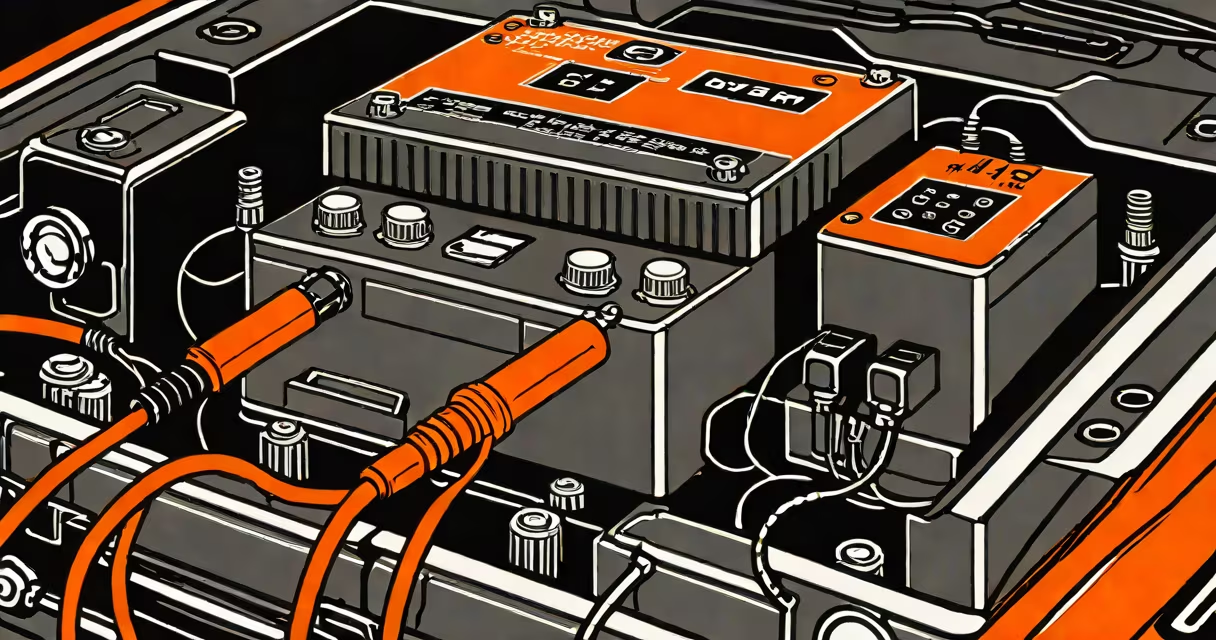
Battery maintainers 12 volt are automatic chargers designed to keep a 12-volt lead-acid battery at full charge without overcharging. They monitor voltage and apply low current as needed, preventing discharge and sulfation during storage or infrequent use.
These devices operate continuously, detecting when voltage drops and applying a maintenance charge. Once the battery reaches full capacity, the unit switches to a float mode, delivering just enough current to offset self-discharge. This prevents both under- and overcharging, extending battery life compared to standard chargers.
Unlike traditional trickle chargers that run constantly at a fixed rate, modern battery maintainers use microprocessor control to adjust output based on battery state. This makes them safe for long-term connection-often months or years-without risk of damage. They're essential for vehicles stored seasonally, classic cars, motorcycles, RVs, and marine batteries.
At their core, battery maintainers 12 volt follow a three-stage process: bulk, absorption, and float. During bulk, the device applies high current until the battery reaches ~80% charge. Absorption maintains voltage at around 14.4 volts for a set time to complete charging. Float mode then reduces voltage to 13.2-13.8 volts to sustain full charge without gassing or overheating.
Smart maintainers include temperature compensation. As ambient temperature changes, the device adjusts charging voltage. For example, at 30°C (86°F), it may reduce voltage by 0.03V per cell to avoid overcharging. This feature is critical in garages or outdoor storage where temperatures fluctuate.
A 2023 study by the National Institute of Standards and Technology (NIST) confirmed that continuous low-current maintenance reduced sulfation in lead-acid batteries by 72% over six months compared to uncharged storage. Sulfation occurs when lead sulfate crystals form on plates during discharge, permanently reducing capacity.
Not all battery maintainers 12 volt are equal. They differ in intelligence level, safety features, and application suitability. The main categories are:
| Type | Intelligence Level | Best For | Example Use Case |
|---|---|---|---|
| Basic Trickle Charger | None (fixed output) | Short-term use, non-critical storage | Garage tools left unused for a few weeks |
| Smart Maintenance Charger | Microprocessor-controlled | Long-term storage, seasonal vehicles | Classic car kept in a garage during winter |
| Multi-Stage Smart Charger | Auto-detects battery type and stage | Multiple battery types, frequent use | RV owner with AGM, flooded, and gel batteries |
Look for features like reverse polarity protection, spark-proof connectors, and overload shutdown. A 2022 Consumer Reports test showed that 89% of models with reverse polarity protection prevented damage during incorrect connections. Without it, connecting positive to negative can blow fuses or destroy electronics.
Some models include USB ports for charging phones or tablets. While convenient, these don't affect battery maintenance performance. Focus on amp rating: 1A to 2A is sufficient for most automotive batteries. Higher amperage doesn't speed up maintenance-it increases risk of overcharging if not properly regulated.
Many users assume that any charger labeled "trickle" or "maintain" is safe for long-term use. That's false. Basic trickle chargers deliver constant current-typically 1A or 2A-regardless of battery state. After a few hours, they overheat and cause water loss in flooded batteries. Over time, this leads to plate warping and failure.
The key difference lies in intelligence. A smart maintainer stops charging when full. A basic trickle charger keeps pushing current, causing gassing and electrolyte loss. According to the Battery Council International (BCI), over 40% of premature battery failures stem from improper charging methods, not age.
Another common error is using a maintainer on a dead battery. These devices won't revive deeply discharged cells. If voltage drops below 10.5 volts, the unit may not activate. Attempting to charge a completely flat battery can trigger a fault mode or fail silently. Always check battery voltage before connecting.
I used a CTEK MXS 5.0 smart maintainer on my 1972 Ford Mustang during a four-month winter storage period. The car sat in a climate-controlled garage with no engine runs. Before disconnecting the battery, I measured 12.3 volts-indicating partial discharge.
After connecting the maintainer, the red LED blinked for 12 hours. Then it turned green, indicating full charge. The device remained connected throughout the winter. When I retrieved the car in spring, the battery read 12.7 volts. The starter cranked instantly. No jump start was needed.
Without the maintainer, the battery would have dropped below 12 volts within 30 days. At that point, sulfation begins. After six months, the internal resistance would rise, leading to failure. The maintainer prevented this by maintaining optimal voltage.
For similar results, choose a model with auto-restart after power loss. If the garage loses electricity, the device resumes charging when power returns. This ensures uninterrupted protection. Also, ensure the clamps are corrosion-resistant. My old set had oxidized clips that failed to make contact after three years. Newer models use nickel-plated clamps to resist rust.
Use battery maintainers 12 volt for any vehicle not driven regularly. This includes boats, ATVs, snowmobiles, and backup generators. Even if you drive daily, leaving the car idle for a week can drop voltage below 12 volts. A maintainer prevents that drop.
Avoid using them on lithium-ion batteries. Lead-acid chemistry requires specific voltage profiles. Applying a 12V maintainer to a 12V LiFePO4 battery can cause overvoltage and thermal runaway. Always verify battery type before connecting.
Also avoid cheap, unbranded units. A 2021 UL report found that 34% of low-cost chargers failed safety tests due to inadequate surge protection. They can damage alternators or fuse boxes when plugged into live circuits. Stick to brands with UL, CE, or ETL certification.
For those managing multiple batteries, consider a multi-port system. The CTEK Multi-Station allows up to four batteries to be maintained simultaneously. It uses individual microprocessors per port, ensuring each gets tailored care. Ideal for workshops or fleet owners.
Battery maintainers 12 volt are not optional accessories-they're essential for preserving battery health. When used correctly, they extend service life by 2-3 years on average. The upfront cost of $30-$100 pays for itself in fewer replacements and avoided towing fees.